



As 2025 approaches, digital education 2025 stands out as a shining example of how students may access and gain from education. Traditional education, which is characterized by set classrooms, set schedules, and one-size-fits-all curricula, is confronted with escalating issues such uneven access, antiquated techniques, and restricted flexibility. By combining AI, e-learning platforms, and hybrid classroom formats, digital education 2025 aims to alter that by making learning more relevant, accessible, and individualized. With the ability for students in impoverished places or rural areas to study at their own speed, stay connected, and acquire new skills, it gives promise for reducing long-standing disparities. Digital education 2025 is allowing fair education, fostering skill development, and preparing students for a tech-driven future by fusing technology with pedagogy.
AI-Powered Personalization: Tailoring Learning for Every Student
Personalization using AI-powered learning tools is one of the main advantages of digital education in 2025. By evaluating a student’s learning style, pace, and strengths and weaknesses, adaptive learning systems may modify exercises, content, and feedback. This flexible method helps prevent scenarios where slow learners fall behind and rapid learners become disinterested. AI virtual assistants and tutors are helping schools more and more by helping students with challenging subjects and providing assistance after hours.
Additionally, AI-based tests enable immediate feedback and focused correction, which speeds up students’ progress. Teachers also gain from automated analytics and grading, which lessen their burden and spare time for mentorship. Every student will be a co-creator of their educational path with digital education in 2025. AI personalization guarantees progress is accessible, responsive, and helpful regardless of a learner’s difficulty with arithmetic or language—a significant advancement in educational equity and quality.

Hybrid & E-Learning Platforms
E-learning platforms and hybrid classrooms are essential to making digital education a reality at scale by 2025. These approaches integrate online, adaptable modules with the advantages of conventional in-person instruction. In addition to participating in interactive tasks, accessing recorded sessions, and attending virtual lectures, students can still receive in-person instructor help. Working students, distant learners, and people with restricted mobility may all access high-quality education thanks to this flexibility without having to give up time or money.
In order to allow students to study at their own speed, platforms in 2025 currently provide both synchronous (live courses) and asynchronous learning (recorded lectures, tests, and discussion boards). These systems may be used even in places with weak connectivity because to their mobile and low-bandwidth optimization.
Comparison Table: Learning Modes under Digital Education 2025
| Mode | Strengths | Challenges |
|---|---|---|
| Fully Online / E-Learning | Maximum flexibility, broad access, scalability, low infrastructure needs | Requires reliable internet, self-discipline, less social interaction |
| Hybrid (Online + In-Person) | Balanced learning, peer interaction, flexibility, hands-on support | Needs coordination, blended scheduling, partly infrastructure-dependent |
| Traditional Classroom (baseline) | Social interaction, mentor-led, fixed structure | Limited flexibility, access issues, fixed pace |
Skill Development & Future-Ready Learning in Digital Education 2025
The goal of digital education 2025 is to provide students the skills they’ll need in a tech-driven future since the global labor market is changing quickly. Digital literacy, problem-solving, creativity, teamwork, and lifelong learning are increasingly prioritized over textbook knowledge. Coding, data analysis, digital design, critical thinking, and other modules are integrated into many AI-powered programs and e-learning platforms. Short, targeted modules, or microlearning, have become more and more popular because they enable students to pick up skills in manageable chunks while working or on the road. Virtual labs, interactive simulations, and real-world scenario training are all made possible by new immersive technologies like VR and AR.
In order to increase employability and flexibility, digital education 2025 promotes modular learning, in which students obtain micro-credentials or badges for mastered abilities. This approach encourages lifelong learning and recognizes different learning speeds.
Equity & Access
Equity in access is a significant obstacle in the shift to digital education by 2025. Not every area or community has access to current gadgets, dependable internet, or technological infrastructure. Students in low-income or rural regions run the danger of falling behind in many nations, which exacerbates inequality rather than lessens it. In order to fulfill the promise of digital education by 2025, stakeholders need to make investments in infrastructure, including accessible platforms, devices, inexpensive bandwidth, and energy. To provide subsidies, public access centers, and mobile-friendly education, governments, non-governmental organizations, and the corporate sector must work together. Additionally, platforms need to be inclusive, including offline or low-bandwidth choices, accessibility features, and support for several languages.
Digital education 2025 becomes a potent instrument for social mobility when fairness is given top priority. Geographical, gender, and financial obstacles may all be broken down, giving every student access to high-quality instruction and growth opportunities.
Quality & Pedagogy: Balancing Tech with Human Insight
Digital education in 2025 is supported by technology, but good instruction and pedagogy are still essential. While AI and e-learning systems may provide information, modify courses, and offer feedback, human instructors offer empathy, context, and mentorship. Recent studies show that AI-driven technologies improve learning results and engagement, but context-sensitive content design, teacher preparation, and ethical use are crucial. To successfully incorporate digital resources into their teaching strategies, educators require training. They have to create classes that integrate digital and offline activities, promote teamwork, and make use of interactive platforms. Hybrid models, which combine the best aspects of conventional and digital teaching, should be carefully adopted by educational institutions. Equity, data privacy, and transparency must continue to be top concerns.
Challenges & Ethical Considerations in Digital Education 2025
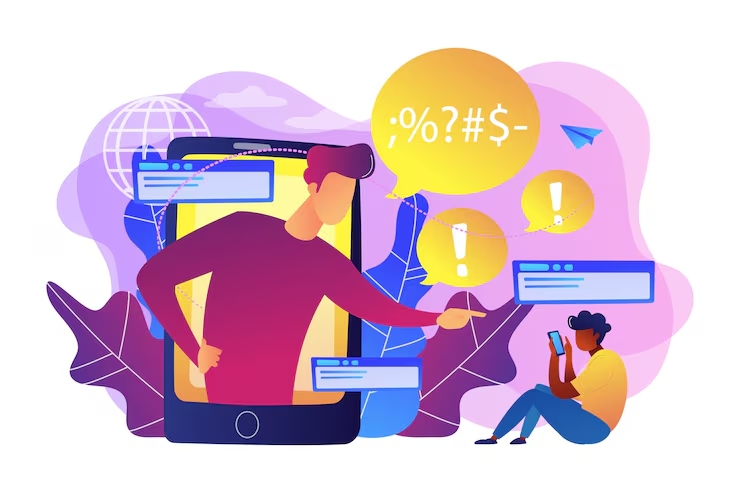
There are significant obstacles to the widespread adoption of digital schooling in 2025. When utilizing AI and online platforms, ethical, security, and data privacy issues come up. Sensitive student data can be misused or leaked, endangering people’s confidence. Globally, tech infrastructure is still unequal. Many students don’t have reliable internet, appropriate gadgets, or encouraging study spaces. Another problem is teacher preparedness; not all teachers are used to or have received training in digital pedagogy. Furthermore, relying too much on digital technologies might diminish peer learning, social connection, and practical experiences. Purely digital forms could be inadequate for certain topics, such as the arts, laboratories, and physical education. Lastly, there are still issues with equity: AI systems occasionally exhibit algorithmic or social prejudice, which might exacerbate already-existing disparities. It’s critical to acknowledge these difficulties. using hybrid approaches, inclusive design, strong protections, and careful policy.
Implementation & Scalability: Making Digital Education 2025 Work Globally
Scalable implementation solutions are essential to the success of digital education in 2025. Institutions and governments need to make investments in supportive policies, teacher preparation, and infrastructure. E-learning platform deployment, device provision, and connection in underprivileged areas can all be facilitated by public-private partnerships. Blended curriculum, which combine online courses, hybrid classrooms, and offline assistance, should be used in school systems. The curriculum must be designed with the local language, context, and learning goals in mind. Platforms ought to be accessible, low-bandwidth friendly, and mobile-first. Lessons have to be modular so that students with limited resources or those who are working may study at their own speed.
Frameworks for monitoring and evaluating student engagement, completion rates, and learning outcomes aid in method improvement and quality assurance. Feedback loops between communities, educators, and students promote flexibility and diversity. Digital education may expand from pilot initiatives to national systems with appropriate implementation, guaranteeing a wide audience and long-term success.
Conclusion
Global learning will undergo a significant shift in 2025 with the rise of digital education. We have a chance to close learning gaps and provide high-quality education to millions of people who didn’t have access to it before by combining AI-powered tools, hybrid classrooms, and e-learning platforms. This change promotes future-readiness, adaptable learning, and skill development. However, careful planning, equality, infrastructure investment, and human-centered design are necessary to fully realize this promise. Digital solutions should support teaching, social engagement, and inclusivity rather than replace them.
As we reach 2026, the demand is clear: implement digital education 2025 with responsibility, ambition, and empathy. When applied thoughtfully, it can change people’s lives, communities, and societies, making education genuinely inclusive, universal, and in line with the needs of a world that is changing quickly.