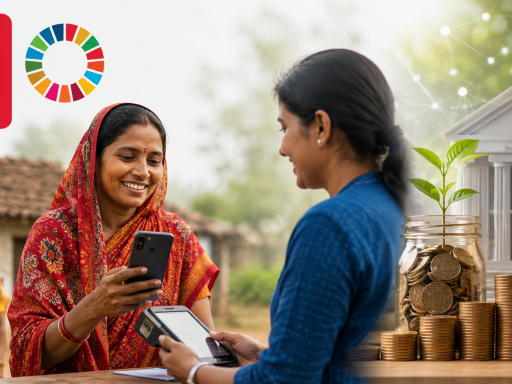



In 2015, world leaders came together and adopted 17 Sustainable Development Goals (SDGs) — a shared blueprint for building a better, more equitable world by 2030. These goals cover everything from ending poverty and hunger to ensuring quality education, clean energy, and climate action. But here is the hard truth: no single government, company, or organization can achieve these goals alone.
The scale of today’s global challenges — climate change, inequality, food insecurity — demands more than isolated effort. It demands SDG partnerships for sustainability: structured, meaningful collaboration across sectors and borders. Without working together, the 2030 deadline is not just ambitious — it is unrealistic.
This is why partnerships are not a footnote in the SDG framework. They are Goal 17 itself.
What Are SDG Partnerships?
Goal 17 of the United Nations’ SDG framework is dedicated entirely to “Partnerships for the Goals.” It recognizes that achieving the other 16 goals requires strengthening global partnerships and mobilizing shared resources. SDG partnerships for sustainability are formal or informal arrangements where two or more parties — from different sectors or countries — commit to working together toward a shared development outcome.
These partnerships typically fall into three categories:
- Public partnerships — cooperation between national governments, intergovernmental bodies, or multilateral institutions
- Private partnerships — involvement of corporations, investors, and businesses
- Civil society partnerships — NGOs, community organizations, academic institutions, and advocacy groups
At the global level, SDG collaboration happens through international agreements and UN-led initiatives. At the local level, it looks like a city government partnering with a local NGO to deliver clean water to underserved communities. Both are equally important.
Why Partnerships Are Essential for Sustainable Development
The case for global partnerships SDGs is not just ideological — it is practical. Shared resources and expertise allow organizations to do more with less. A government may have the policy reach but lack technical capacity; a private company may have the technology but lack community trust. Together, they fill each other’s gaps.
Faster progress is another major advantage. Sustainable development cooperation speeds up implementation because responsibilities are distributed. Instead of one actor slowly working through a problem, multiple partners tackle it simultaneously from different angles.
Risk reduction through collective action is also significant. When multiple stakeholders share ownership of a project, the risk of failure is spread. Failures become learning opportunities rather than dead ends.
Finally, innovation thrives in collaboration. When diverse minds — engineers, policymakers, community leaders, scientists — sit at the same table, creative solutions emerge that no single group would have conceived alone. Multi-stakeholder sustainability is, at its core, a better way to solve complex problems.
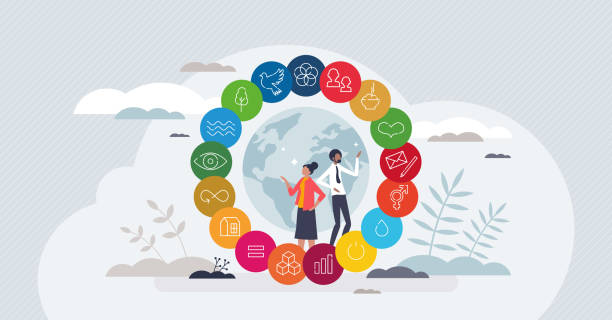
Role of Governments in SDG Partnerships
Governments remain the backbone of any serious SDG collaboration. Their most important contribution is policy and regulation — creating environments where partnerships can legally operate and scale.
At the international level, governments sign agreements, ratify treaties, and participate in climate summits like COP meetings. These commitments create accountability structures that drive national action.
Domestically, governments provide infrastructure and funding — roads, electricity grids, health systems — that make other partners’ work possible. Foreign aid, development finance, and official development assistance (ODA) also play a critical role in supporting lower-income countries to meet their SDG targets.
Without government leadership, multi-stakeholder sustainability efforts often lack the authority and scale to create lasting change.
Role of Businesses in Achieving SDGs
The private sector is no longer a passive bystander in sustainable development. Increasingly, businesses are core partners in the SDG ecosystem.
Corporate responsibility has evolved. Today, companies are expected to align with Environmental, Social, and Governance (ESG) standards — and investors are watching. ESG-linked capital is growing rapidly, and businesses that ignore sustainability are finding themselves left behind.
Private sector investment in clean energy, sustainable agriculture, and responsible supply chains is accelerating progress in ways that government budgets alone cannot match. Companies like Unilever, IKEA, and Microsoft have committed to ambitious SDG-aligned targets — from carbon neutrality to zero-waste manufacturing.
Beyond compliance, businesses are driving green innovation. New technologies in renewable energy, water purification, and precision agriculture are often born in corporate R&D labs and then scaled through public-private partnerships. SDG partnerships for sustainability only work when the private sector brings its full weight to the table.
Role of NGOs and Civil Society
If governments set policy and businesses provide capital, NGOs and civil society organizations are the ones who make it real on the ground.
Community-level implementation is where development goals either succeed or fail. Local NGOs understand the cultural context, speak the language, and have the trust of the people. They translate broad SDG targets into meaningful programs — a maternal health clinic, a girls’ education initiative, a farmer cooperative.
Civil society also plays a crucial role in awareness and education. Behavior change — whether around hygiene, climate action, or waste management — requires sustained community engagement that only grassroots organizations can deliver effectively.
Perhaps most importantly, NGOs bridge the gap between governments and people. They advocate for marginalized communities, hold institutions accountable, and ensure that development benefits reach those who need them most — not just those who are easiest to reach.
Challenges in Building Effective Partnerships
For all their promise, SDG partnerships for sustainability are not easy to build or maintain. Several persistent challenges get in the way.
Lack of trust between stakeholders is perhaps the most fundamental barrier. Governments may distrust corporations’ motives; NGOs may feel sidelined by powerful donors; communities may be skeptical of outside organizations. Building genuine trust takes time and consistent follow-through.
Unequal resource distribution is another real issue. Wealthier partners often dominate partnerships, shaping priorities in ways that don’t reflect local needs. True SDG collaboration requires power-sharing, not just resource-sharing.
Coordination and communication gaps are common in multi-stakeholder settings. Different organizational cultures, timelines, and reporting systems can create friction and slow progress.
Finally, measuring impact and accountability remains a significant challenge. Without shared metrics and transparent reporting, it is difficult to know whether a partnership is actually working — or just generating good press releases.

Real-World Examples of SDG Partnerships
Several real-world examples show what effective sustainable development cooperation looks like in practice.
The UN Global Compact is one of the world’s largest corporate sustainability initiatives, connecting over 15,000 companies in 160 countries to SDG-aligned principles on human rights, labor, environment, and anti-corruption.
The GAVI Alliance — a public-private partnership between the Bill & Melinda Gates Foundation, WHO, UNICEF, and pharmaceutical companies — has vaccinated nearly 1 billion children in low-income countries, directly advancing SDG 3 (Good Health and Well-Being).
In the environmental space, the Great Green Wall Initiative brings together African nations, the European Union, and international donors to restore 100 million hectares of degraded land across the Sahel — a cross-border effort that addresses SDGs 13, 15, and 2 simultaneously.
These examples share a common thread: they succeed because multiple stakeholders bring complementary strengths to a shared problem.
The Future of SDG Collaboration
The next chapter of global partnerships SDGs will be shaped significantly by technology.
Digital platforms are already enabling new forms of coordination. Organizations that once struggled to share data across borders can now collaborate in real time through cloud-based systems and shared dashboards.
Data sharing and transparency tools are making partnerships more accountable. Blockchain, satellite monitoring, and open data platforms are allowing all stakeholders — including citizens — to track progress against SDG commitments.
AI-driven cooperation is emerging as a powerful force for optimization. From predicting crop failures to modeling climate scenarios, AI helps partnerships make smarter decisions faster.
Perhaps most importantly, there is growing demand for stronger global accountability systems. As 2030 approaches, pressure is mounting on governments, businesses, and institutions to show measurable results — not just intentions.
The future of multi-stakeholder sustainability is more connected, more transparent, and more technology-enabled than ever before.
Conclusion
The Sustainable Development Goals are humanity’s most ambitious shared project. But ambition without collaboration is just a wish list.
SDG partnerships for sustainability are not optional — they are the mechanism through which real progress happens. Governments bring policy and legitimacy. Businesses bring capital and innovation. Civil society brings community trust and accountability. No single actor has everything it takes to succeed alone.
As 2030 draws closer, the call to action is clear. Governments must honor their international commitments and create enabling environments for partnerships to thrive. Businesses must move beyond ESG checkbox exercises toward genuine, measurable impact. And individuals — through the organizations they support, the products they choose, and the voices they raise — play a role too.
Sustainable development is not someone else’s responsibility. It is a collective one. And SDG partnerships for sustainability are how we meet it — together.
For more information on Goal 17 and the UN’s framework for global partnerships, visit the official UN SDGs page.