

The Rise of Sustainable Cities 2025
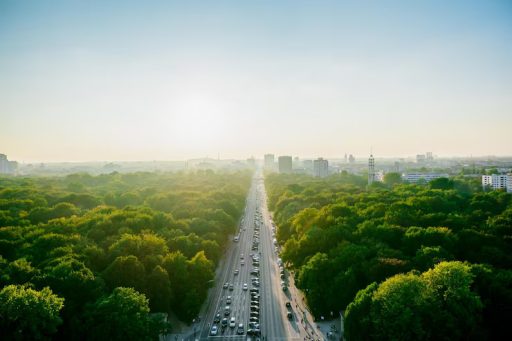
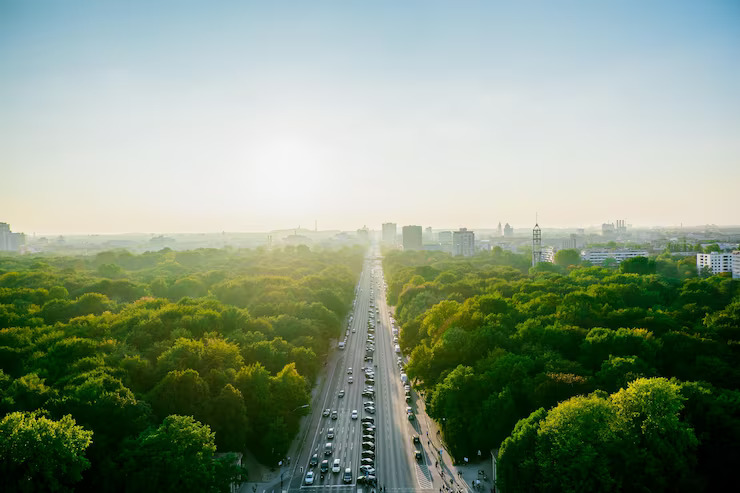
Urbanization is accelerating worldwide, prompting urgent calls for smarter, greener, and more inclusive city design. Sustainable cities are a concept and movement that encourages metropolitan areas to incorporate environmentally friendly infrastructure, clean transportation, affordable housing, and technology innovation. As populations grow and environmental demands increase, cities must adapt from concrete jungles to resilient, living communities. Sustainable cities prioritize expansion while also caring for the environment, promoting social fairness, and ensuring long-term sustainability. It is about creating areas where people can thrive, economies can expand, and the environment is safeguarded. This blog digs at how modern urban efforts are fulfilling that promise, ranging from smart grids and green buildings to transit-oriented housing and public-space redevelopment.
Smart Infrastructure & Green Buildings
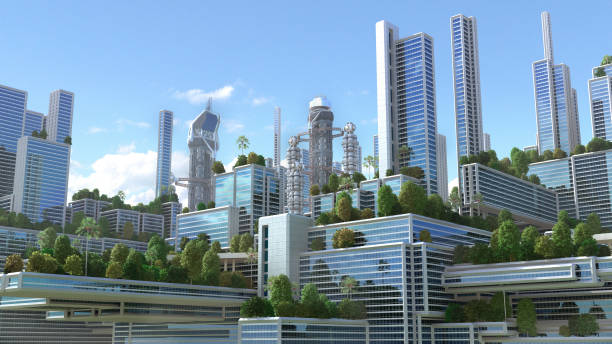
Smart infrastructure and green building design are key cornerstones of sustainable cities by 2025. Renewable energy sources, effective insulation, smart lighting, and resource-saving temperature control systems are becoming standard features in modern buildings. These constructions save energy and decrease emissions while providing a comfortable living environment. Smart infrastructure also incorporates digital technologies such as IoT sensors, smart grids, and predictive energy management, which optimize resource utilization across whole communities. To maintain a low environmental impact, several major cities require new constructions to adhere to green-certified building standards. For example, districts are increasingly using energy-efficient HVAC systems, rooftop solar panels, and computerized energy dashboards to monitor and modify use in real time. This method is consistent with the worldwide trend toward sustainable urban development and captures the core of sustainable cities 2025. Over time, green buildings and smart technologies reduce utility demand, lower carbon emissions, and create healthier, more climate-resilient urban settings.
Green Mobility & Smart Transport
Mobility is a substantial influence on urban pollution, congestion, and public health. S ustainable cities 2025 focuses on changing how people travel by promoting public transportation, micromobility, cycling, pedestrian zones, and electric automobiles. Many communities now promote bike lanes, efficient transit systems, self-driving shuttle services, and EV-friendly infrastructure to reduce reliance on private, fossil-fuel vehicles. Smart transportation systems combine AI and IoT to improve traffic flow, decrease congestion, and reduce pollution. Real-time traffic signals, adaptive transit scheduling, and integrated mobility-as-a-service platforms all help to make commuting quicker, cleaner, and more egalitarian.
Green mobility in sustainable cities does more than merely lower emissions; it enhances urban livability, reduces noise, promotes public health, and frees up area previously held by vehicles for parks or pedestrian usage. Residents gain from more efficient commutes, cheaper transportation expenses, and cleaner air. Finally, sustainable transportation is essential for future-ready communities.
Transit-Oriented & Inclusive Housing:
The sustainability of a city is dependent on people as well as infrastructure. Sustainable cities promote inclusive, transit-oriented housing patterns that combine low-cost housing with convenient access to public transportation, employment, community services, and green areas. Mixed-use projects decrease the need for long journeys while encouraging walking or cycling. Affordable housing near transportation hubs reduces social inequalities and guarantees that low-income households benefit from local advances. Many programs in the worldwide smart-city movement focus on accessible amenities, basic services, and integrated planning to prevent urban expansion and segregation.
Housing designs also adhere to environmentally friendly requirements, such as energy-efficient materials, solar energy, water-saving fixtures, and green design concepts. Cities may become inclusive spaces for all citizens, regardless of income, by integrating affordability, accessibility, and sustainability. Housing is more than just shelter in sustainable cities 2025; it is the foundation of egalitarian, resilient urban communities.
Green Public Spaces & Urban Ecology
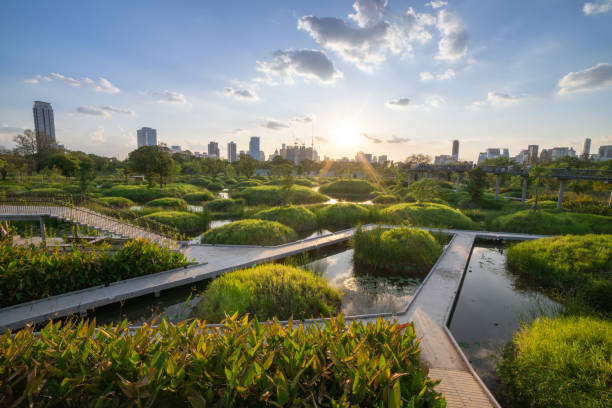
Urban sustainability is about more than just buildings and transportation; public spaces and urban environment are also important. Sustainable cities 2025 encourages green public spaces, vertical gardens, urban trees, bioswales, and permeable surfaces to decrease heat islands, enhance air quality, and control water runoff. Parks, community gardens, green roofs, and restored streams promote natural equilibrium and inhabitants’ well-being. Smart city planning integrates nature and living places to create healthier ecosystems. Green public infrastructure promotes biodiversity, urban agriculture, and local food security. Tree-lined pedestrian routes, community recreation zones, and accessible green corridors are among the public-space designs proposed by sustainable cities, which aim to make cities more livable, social, and climate resilient. As climate change worsens, these nature-based urban ecosystems serve as protective barriers against heat, floods, and pollution. They contribute to the preservation of environmental balance while also fostering community connectedness.
Waste Management, Circular Systems & Resource Efficiency in Urban Areas
Sustainability in modern cities necessitates more efficient resource usage, which requires rethinking waste, water, and material fluxes. Many metropolitan areas have adopted circular economy ideas under sustainable cities, including recycling initiatives, waste-to-energy plants, water recycling, composting, and efficient resource management. Smart sensor networks monitor garbage bins, control collection routes, detect water leaks, and optimize utilities. Circular systems decrease landfill trash, cut emissions, and recover value from waste streams. Water-reuse systems, the use of treated wastewater for landscaping, and rainfall collection are also becoming more widespread in environmentally aware communities. These strategies decrease environmental impact while increasing resilience to resource constraint. Cities that incorporate cyclical resource management into urban design may sustainably support expanding populations while without overburdening natural resources. Resource efficiency is not an option in sustainable cities 2025; it is the basis.
Governance, Technology & Citizen Participation: The Pillars of Sustainable Cities 2025
Sustainable cities 2025’s goal demands strong government, effective policies, and active public participation. To provide integrated solutions, governments must collaborate across ministries such as transportation, housing, the environment, and utilities. Regulatory frameworks should promote green construction rules, sustainable transportation incentives, trash recycling laws, and affordable housing policies. IoT sensors, smart grids, data dashboards, and digital platforms all contribute to municipal performance monitoring, resource allocation, and intervention planning. Citizen engagement guarantees justice, openness, and community acceptance. Engagement, whether through public consultations, feedback mechanisms, or local cooperatives, fosters trust and ensures that innovations address real-world requirements. Cities that mix technology, policy, and social inclusion develop greater resilience and adaptability.
Implementation Challenges & Solutions
While the concept for sustainable cities 2025 is inspirational, real implementation will present considerable hurdles. Budget limits, aging infrastructure, political opposition, regulatory loopholes, and social inequity can all impede growth. Green infrastructure and smart transit require funding, long-term planning, and technical expertise. Retrofitting historic communities into sustainable zones may encounter practical and societal challenges. Furthermore, providing inexpensive housing while improving urban systems necessitates a careful balance of social equality and financial feasibility.
Nonetheless, these problems are not insurmountable. Solutions include public-private partnerships to share expenses, phased implementation to spread investment over time, grants and subsidies for green housing or transportation, community-driven planning to get local support, and capacity-building initiatives to teach urban planners and people. Transparent governance and data-driven decision-making assist in prioritizing initiatives with the greatest benefit. Cities may overcome impediments and consistently progress toward the 2025 sustainable city targets by combining incentives, collaboration, and adaptive planning. Sustainable urban life may become a reality, not just an ambition, with commitment and concerted action.
The Future of Urban Living: Why Sustainable Cities 2025 Matters
Looking ahead, sustainable cities 2025 shows hope for a future in which cities may thrive without compromising the environment or equality. Climate change, growing urbanization, and resource scarcity are all global concerns that will make the ideas detailed here even more important. Smart infrastructure, green mobility, inclusive housing, ecological public spaces, waste and resource efficiency, and participatory governance all contribute to urban resilience. Cities that use these methods lower their carbon footprints, boost public health, save money over time, and promote social cohesion. They also attract investors, talent, and long-term growth. In summary, sustainable cities 2025 is more than just a fad; it’s a requirement. Governments, planners, entrepreneurs, and residents must embrace these advances immediately to create livable, egalitarian, and future-proof urban places.
Embracing Innovations for Sustainable Cities 2025
The transition to sustainable cities is not elective; it is necessary for urban survival, equity, and climate resilience. This article demonstrated how combining smart infrastructure, green mobility, inclusive housing, ecological public spaces, circular resource systems, and participatory governance can alter city life. Challenges persist, but with concerted efforts — government action, business investment, and community involvement — the ideal of eco-friendly, inclusive, and resilient cities may be realized. Planners, policymakers, and individuals alike must act immediately. Sustainable cities 2025 is not a faraway notion; it is a vision for the future. Let us construct it together.