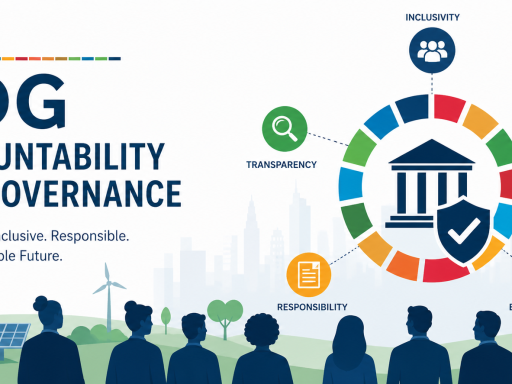

Corporate openness now characterizes Norway’s sustainable business ecosystem. The business world demands accountability, moral leadership, and ethical governance. Norwegian businesses understand that open operations boost their reputation with consumers, authorities, and investors. Corporate transparency in Norway guarantees that companies match profit plans with social and environmental responsibilities as global markets increasingly demand sustainability.
By encouraging businesses to freely disclose financial information, governance structures, and environmental performance, openness also improves Norwegian corporate transparency. Organizations and stakeholders gain trust as a result of these disclosures. Investors may assess long-term risks, and customers feel comfortable endorsing companies that uphold accountability. Organizations may effectively and consistently convey sustainability progress by using Norway’s established ESG reporting guidelines.
Emphasis on sustainable governance in Norway further strengthens transparency as a strategic advantage. Norway’s ethical business practices prioritize stakeholder participation, compliance, and justice. As a result, regulators urge businesses to uphold accountable investment practices, maintain transparent supplier chains, and set quantifiable sustainability objectives. In this context, corporate transparency in Norway becomes more than just a legal need. Long-term economic resilience, sustainable leadership, and creativity are all sparked by it.
How Corporate Transparency in Norway Strengthens Norwegian Business Transparency
The whole Norwegian business environment is strengthened by an open corporate culture. In Norway, corporate transparency promotes open communication about governance, environmental performance, and operational choices. Stakeholders are better able to assess risks and opportunities when businesses provide reliable information. This transparency encourages prudent investment and strengthens collaborations.
Norwegian business openness also encourages the adoption of digital reporting tools. Organizations can continually monitor financial and environmental data thanks to these technologies. Automated dashboards decrease human error and increase reporting accuracy. As a consequence, businesses may promptly provide investors and regulators with validated information. Thus, in Norway, corporate transparency promotes accountability and efficiency.
Ethical leadership is another significant benefit. Transparent governance arrangements keep corporate choices aligned with stakeholder interests. Based on trustworthy data, employees, investors, and board members may assess strategic plans. This transparency lowers the likelihood of corruption and encourages moral economic conduct in all sectors of Norway.
Strong transparency policies provide businesses a competitive edge. Investors prefer organizations that offer transparent sustainability reporting and accountable governance systems. Additionally, customers reward businesses that conduct themselves ethically and transparently. In this sense, corporate transparency in Norway fosters innovation, improves reputation, and establishes a long-term framework for economic expansion.
ESG Reporting Norway
Corporate transparency in Norway depends heavily on environmental, social, and governance reporting. Businesses share how they handle labor laws, corporate governance structures, and environmental effects through standardized ESG reporting standards in Norway. These reports offer quantifiable information on risk management and sustainability performance.
Several Norwegian organizations use digital reporting systems to monitor ESG indicators. These systems provide thorough sustainability reports by gathering data from several departments. Automated analytics facilitate regulatory compliance and increase data accuracy. This procedure guarantees that all sectors maintain corporate transparency in Norway.
By encouraging accountability, ESG reporting also supports Norway’s sustainable government. Businesses must record their energy usage, diversity programs, and carbon emissions. Stakeholders can track the advancement of sustainability objectives through transparent reporting. When assessing corporate responsibility, investors are depending more and more on these criteria.
Traditional Reporting vs ESG-Driven Transparency
| Feature | Traditional Reporting | ESG Reporting Norway |
|---|---|---|
| Focus | Financial performance only | Financial + environmental impact |
| Data Collection | Manual reports | Digital analytics systems |
| Transparency | Limited stakeholder access | Public sustainability disclosures |
| Governance | Compliance-focused | Ethical and sustainable governance |
| Decision Impact | Short-term focus | Long-term sustainability planning |
Sustainable Governance Norway: Building Accountability in Business
Robust governance frameworks guarantee that corporate decision-making incorporates transparency. Norway’s corporate transparency depends on legal frameworks that promote moral leadership and stakeholder responsibility. Businesses need to keep independent auditing processes and transparent reporting channels. These steps guarantee the accuracy and dependability of information disseminated to stakeholders.
Norway’s sustainable governance places a strong emphasis on accountable leadership. Boards of directors keep an eye on ethical compliance, financial transparency, and environmental performance. This supervision avoids conflicts of interest and encourages moral corporate conduct in Norway. Transparent governance also enhances employee confidence. Employees are more inclined to support businesses that are transparent and fair.
Digital governance systems further strengthen accountability. Organizations use advanced software to write regulations, track compliance, and monitor operational performance. Executives may gain insights into financial and environmental variables through real-time dashboards. These solutions strengthen corporate transparency in Norway while increasing the effectiveness of decision-making.
Sustainable governance has long-term effects that go beyond business success. Transparent leadership fosters collaboration between companies, authorities, and communities. This cooperation concept produces a balanced environment where social and environmental responsibility coexist with economic prosperity. Consequently, corporate transparency in Norway continues to build a reliable and robust business environment.

Real-World Examples of Corporate Transparency in Norway
Practical examples demonstrate how Corporate Transparency in Norway enhances sustainable company leadership. Two well-known Norwegian businesses show how accountability and creativity across industries are fueled by openness.
Yara International, a world leader in agricultural solutions, serves as the first illustration. Yara International places a strong emphasis on responsible fertilizer production, greenhouse gas reduction, and open reporting on environmental effect. Every year, the corporation releases comprehensive sustainability and ESG reports that show quantifiable goals for water conservation, carbon reduction, and energy efficiency. In order to ensure adherence to environmental regulations, Yara also tracks industrial emissions in real time using digital monitoring devices. By using these methods, Yara improves Norwegian corporate openness and shows how Norway’s sustainable governance can balance environmental responsibility with operational effectiveness.
Statkraft, the biggest producer of renewable energy in Europe, is another illustration. By disseminating in-depth information on hydropower operations, carbon footprints, and climate adaption initiatives, Statkraft incorporates ESG reporting Norway principles into its business strategy. The business places a strong emphasis on open engagement with nearby communities on ecosystem preservation and water management. Stakeholder trust and ethical business practices in Norway are fostered by Statkraft’s real-time monitoring of energy output and environmental effect thanks to digital tools. By upholding a high level of openness, Statkraft promotes sustainable innovation, increases accountability, and solidifies Norway’s position as a pioneer in renewable energy and climate-conscious government.
Impact of Corporate Transparency on Business Trust
Long-term growth and stakeholder trust are greatly enhanced by corporate openness. The impact of transparency on several facets of corporate success is depicted in the following figure.
Low Transparency |████░░░░░░| 40%
Moderate Transparency |██████░░░░| 65%
High Transparency (Norway) |██████████| 90%
This chart shows why corporate transparency in Norway remains a powerful driver of trust, investment, and sustainable governance.
Because stakeholders desire accountability, transparent firms frequently get greater interest from investors. Uncertainty is decreased by ethical leadership and transparent ESG reporting. Because of this, companies that operate transparently typically see steady development and enduring relationships.
Why Ethical Business Practices Norway Depend on Transparency
Transparent governance and moral leadership go hand in hand. In Norway, corporate transparency guarantees that businesses conduct themselves ethically and preserve solid stakeholder connections. Making decisions in a transparent manner enhances compliance, discourages corruption, and promotes responsible leadership.
Business ethics Norway mandates that businesses uphold ethical labor practices, environmental responsibilities, and transparent stakeholder communication. Organizations may check sourcing procedures and lessen their environmental effect via transparent supply chains. Companies that implement these measures frequently see an increase in public favor.
Transparency also impacts company culture. When workers are aware of the company’s objectives and sustainability pledges, they are more engaged. Trust between personnel and leadership is increased via clear communication. In turn, this culture boosts productivity and creativity. In the end, corporate transparency in Norway supports moral leadership and long-term development. Businesses that place a high priority on transparency and accountability enhance their reputation and foster a responsible business climate.
FAQs about About Corporate Transparency in Norway
1. What is Corporate Transparency in Norway?
It refers to the open disclosure of financial, environmental, and governance information by companies operating in Norway.
2. Why is ESG reporting Norway important?
ESG reporting allows stakeholders to evaluate sustainability performance and responsible governance practices.
3. How does transparency affect investor trust?
Transparent companies provide reliable information, reducing risk and increasing investor confidence.
4. What role does governance play in transparency?
Sustainable governance Norway ensures that organizations follow ethical policies and regulatory requirements.
5. How do ethical business practices Norway support sustainability?
They promote responsible decision-making, environmental protection, and long-term corporate accountability.
Conclusion
As sustainability becomes a key component of international company strategy, corporate transparency in Norway appears to have a growing impact. Corporate leadership is still being reshaped by digital accountability technologies, responsible governance structures, and transparent reporting systems. Companies that implement these strategies benefit from increased investor confidence and sustained market stability. International cooperation is also supported by Norwegian business transparency. Businesses that practice ethical governance and transparency are valued by international investors and partners. Organizations show quantifiable sustainability progress through robust ESG reporting systems in Norway.
Transparency will continue to be a fundamental component of sustainable governance in Norway as digital tools increase reporting accuracy and governance effectiveness. Norway’s corporate decisions will continue to be guided by ethical business standards, and stakeholder ties will be strengthened.
In the long term, Norway’s corporate transparency will encourage other economies to embrace comparable governance structures while still upholding accountability. Norway maintains its position as a world leader in ethical and transparent business practices by placing a high priority on sustainability, accountability, and transparency.