
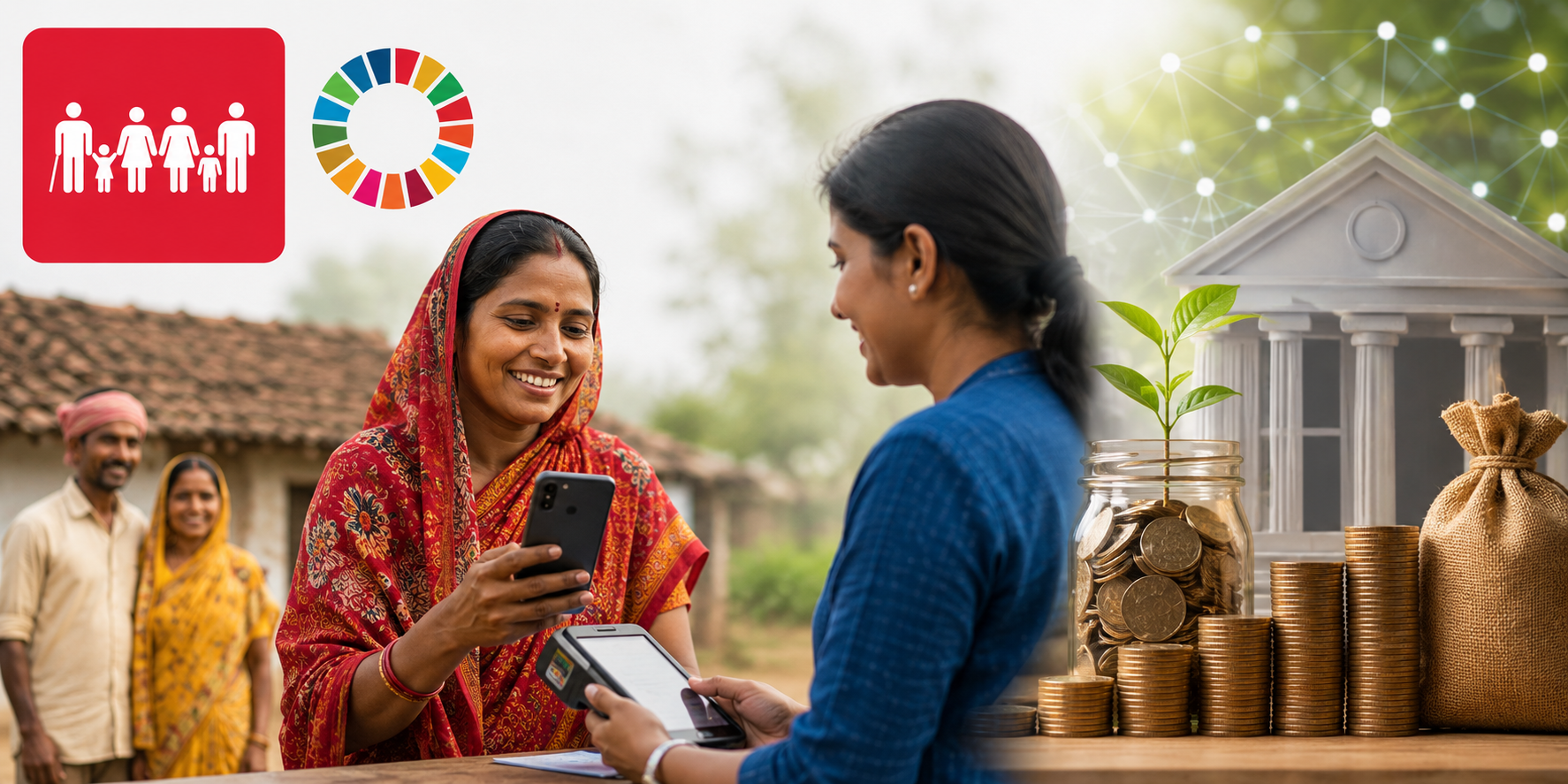
Over 700 million people still live on less than $2.15 a day. That number isn’t just a statistic — it represents generations trapped in a cycle that limited economic access perpetuates. SDG 1 and financial inclusion are two of the most powerful forces working in tandem to break that cycle. Together, they address not only the symptoms of poverty but its structural root causes.
The United Nations’ Sustainable Development Goal 1 calls for the complete eradication of extreme poverty by 2030. However, achieving that ambition requires more than policy declarations. It demands that the world’s most vulnerable populations gain access to the financial tools they need to build stability. When people can save, borrow, insure, and transact safely, they gain the power to invest in their futures. Financial inclusion is, therefore, not simply a complementary strategy — it is one of SDG 1’s most direct drivers of change.
This article explores how financial inclusion advances poverty reduction, what barriers remain, and what businesses, governments, and innovators are doing to create a more equitable global economy.
Understanding SDG 1: No Poverty
SDG 1 is the first of the 17 United Nations Sustainable Development Goals adopted in 2015. Its core objective is straightforward: end poverty in all its forms, everywhere, by 2030. However, the challenge it addresses is anything but simple.
Globally, poverty is multidimensional. It encompasses income deprivation, lack of access to healthcare, education, clean water, and basic infrastructure. Economic inequality compounds this further. Even in middle-income countries, large segments of the population remain excluded from formal economic participation, effectively locking them out of opportunities for advancement.
The social impact of this exclusion is severe. Poverty limits human capital development, reduces community resilience to economic shocks, and widens inequality gaps between urban and rural populations. SDG 1 therefore targets not only extreme poverty but also the structural systems that perpetuate it — including restricted access to financial services.
Understanding the goal fully means recognizing that income growth alone is insufficient. Sustainable poverty reduction requires resilient economic systems that include, not exclude, the most vulnerable.
For a broader understanding of how SDG alignment shapes business strategy, see Sustainable Business Models: 7 Key Strategies for Stable Success.
What Is Financial Inclusion?
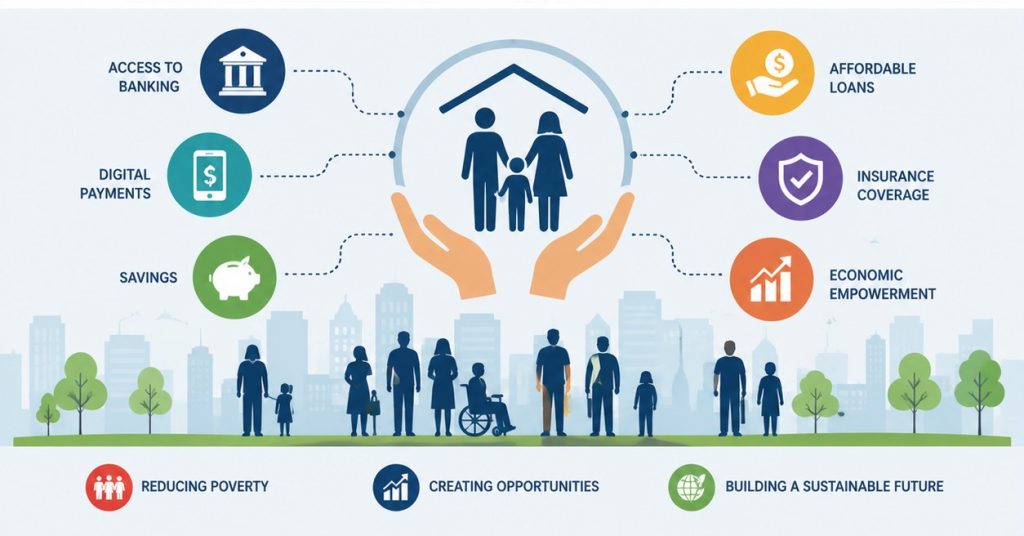
Financial inclusion refers to the process of ensuring that individuals and businesses — particularly those in underserved communities — have meaningful access to affordable financial products and services. These services include:
- Basic banking: Savings accounts, credit, and money transfers
- Digital payments: Mobile wallets, contactless transactions, and e-payment platforms
- Microfinance: Small loans designed for low-income entrepreneurs and informal workers
- Insurance products: Protection against health emergencies, crop failures, and natural disasters
- Financial literacy programs: Education that empowers individuals to make informed financial decisions
Critically, financial inclusion is about more than just having a bank account. It is about access that is usable, affordable, and appropriate for the needs of low-income populations. A person with an account they cannot practically use is still financially excluded. True inclusion bridges the gap between access and meaningful economic participation.
Microfinance institutions have long served this function in developing markets. However, with the rise of mobile technology, the definition of financial inclusion has expanded considerably. Today, digital finance tools are reaching populations that traditional banks never could, transforming the landscape of economic empowerment.
How Financial Inclusion Supports SDG 1
The link between financial inclusion and poverty reduction is well-documented and deeply practical. When people gain access to financial services, three key things happen.
First, economic opportunities expand. Access to credit enables small business owners to invest in their enterprises. Savings accounts help households build emergency buffers. Insurance products protect families from falling back into poverty after a single health crisis or natural disaster. Each of these outcomes directly advances SDG 1’s targets.
Second, underserved communities gain agency. Historically, rural and low-income populations have had to rely on informal money lenders who charge exploitative interest rates. Financial inclusion replaces that dependence with fair, regulated alternatives. Consequently, communities can redirect resources toward productive investments rather than debt servicing.
Third, income stability improves. Research consistently shows that households with access to formal financial services demonstrate greater resilience during economic downturns. Moreover, women in particular benefit significantly from financial inclusion. When women control financial resources, they are more likely to invest in children’s education and family health — creating lasting intergenerational impact.
Taken together, these effects make financial inclusion one of the most cost-effective and scalable tools available for achieving the goals set out in SDG 1.
Role of Technology in Financial Inclusion
Technology has fundamentally changed what financial inclusion looks like in the 21st century. Furthermore, it has dramatically reduced the cost of delivering financial services to remote and underserved populations.
Mobile banking has been the most transformative development. In sub-Saharan Africa, for example, M-Pesa launched in Kenya and grew to serve millions of users who had never held a traditional bank account. Through a basic mobile phone, users could send money, pay bills, save, and access small loans. By 2023, M-Pesa had processed billions of dollars in transactions annually — demonstrating that mobile finance is not a pilot project but a proven, scalable model.
Fintech innovations have further accelerated this progress. Platforms using artificial intelligence can now assess creditworthiness without traditional credit scores, opening lending to first-time borrowers. Blockchain technology enables secure, low-cost cross-border remittances — a lifeline for migrant workers sending money home to families in developing countries.
Digital payment ecosystems also reduce transaction costs for small businesses, enabling them to participate in e-commerce markets that were previously inaccessible. As a result, fintech is not just a financial tool — it is an economic equalizer.
Business and Government Initiatives
Achieving SDG 1 through financial inclusion requires coordinated action between the private sector and government institutions. Fortunately, a growing number of effective partnerships have emerged.
Public-private partnerships (PPPs) have proven especially effective. Governments provide regulatory frameworks and infrastructure, while private companies bring technology, capital, and distribution networks. In Bangladesh, BRAC — the world’s largest NGO — partnered with mobile operators and government agencies to deliver microfinance and digital savings to millions of rural women. The results were measurable reductions in household poverty levels.
Policy frameworks also play a critical enabling role. Countries like India, through its Jan Dhan Yojana initiative, opened over 500 million bank accounts for previously unbanked citizens within just a few years. The combination of government mandates, subsidized fees, and linked social benefit transfers made mass financial inclusion operationally viable.
Sustainable investment programs are increasingly directing capital toward financial inclusion as a social impact priority. ESG investors now recognize that inclusive finance delivers both returns and measurable development outcomes. Businesses that integrate financial inclusion into their sustainable business practices are therefore better positioned to attract impact capital.

Challenges in Achieving Financial Inclusion
Despite significant progress, substantial barriers remain. Addressing them honestly is essential for designing solutions that actually work.
- Limited infrastructure: In many low-income regions, banking infrastructure simply does not exist. Poor road networks, unreliable electricity, and limited internet connectivity make even digital solutions difficult to deploy and sustain.
- The digital divide: Not everyone owns a smartphone or has reliable data access. Elderly populations, rural women, and people with disabilities are disproportionately affected. Financial inclusion strategies must therefore account for varying levels of digital literacy and device access.
- Financial education gaps: Access to a bank account means little if a person does not understand how to use it effectively. Low financial literacy rates remain one of the most persistent obstacles to genuine inclusion. Without targeted education programs, tools go unused or are misused.
- Trust deficits: In communities historically exploited by financial institutions or government programs, rebuilding trust is a long-term process that requires transparent, community-led engagement.
These challenges are significant, but they are not insurmountable. Solving them requires not only technology but also cultural sensitivity, community engagement, and sustained political will.
Global Examples of Financial Inclusion Strategies
Several models around the world demonstrate what successful financial inclusion looks like in practice.
Kenya’s M-Pesa, as mentioned, remains one of the most cited examples globally. Its peer-to-peer mobile money platform eliminated the need for physical bank branches entirely. Today, it serves as an economic backbone for small traders, farmers, and urban workers across East Africa.
India’s Jan Dhan Yojana provides another compelling case. By linking bank accounts to biometric ID (Aadhaar) and mobile numbers, the Indian government enabled direct benefit transfers to reach citizens without intermediaries. This significantly reduced leakage from social programs and empowered millions of previously unbanked individuals.
Community Development Financial Institutions (CDFIs) in the United States offer a domestic example. These organizations provide credit, investment, and financial services in economically distressed communities where traditional banks have withdrawn. They demonstrate that financial inclusion is not solely a developing-world issue — it is a global challenge requiring localized solutions.
Bangladesh’s Grameen Bank pioneered the microcredit model, lending small amounts to groups of women who collectively guaranteed each other’s loans. Repayment rates exceeded 97%, disproving assumptions that poor populations are not creditworthy. This model has since been replicated in over 100 countries.
Future of SDG 1 and Financial Inclusion
The future of SDG 1 and financial inclusion is increasingly shaped by emerging technologies and evolving global priorities.
Artificial intelligence and machine learning are making financial services smarter and more accessible. AI-powered chatbots now provide basic financial advice in local languages. Predictive analytics help insurers offer affordable micro-insurance products tailored to the specific risk profiles of low-income farmers and urban workers.
Decentralized finance (DeFi) and blockchain-based platforms offer the potential for fully trustless, borderless financial services. While still maturing, these technologies could ultimately eliminate the intermediary costs that make traditional banking prohibitively expensive for the world’s poorest.
Central Bank Digital Currencies (CBDCs) represent another frontier. Several governments are piloting digital national currencies designed specifically to improve financial access for unbanked populations, reduce transaction costs, and improve the efficiency of social benefit distribution.
Alongside technological trends, the broader push for inclusive economic growth is gaining institutional momentum. The World Bank, International Monetary Fund, and regional development banks are increasingly aligning their lending programs with financial inclusion goals — directly linking capital allocation to SDG 1 outcomes.
Achieving long-term poverty reduction, however, will ultimately require more than innovation. It will require consistent political commitment, cross-sector collaboration, and a recognition that financial exclusion is not an accident — it is the result of systems that can be, and must be, redesigned.
For businesses looking to align their strategies with global sustainability goals, exploring sustainability reporting and SDG Goal 1: No Poverty provides a strong foundation for action.
Conclusion
The relationship between SDG 1 and financial inclusion is not incidental — it is structural. Poverty persists in part because billions of people lack the financial tools to build resilience, seize opportunities, and protect themselves against shocks. Financial inclusion, therefore, is not a peripheral development concern. It is one of the most direct levers available for reducing poverty at scale.
Achieving SDG 1 by 2030 will require unprecedented collaboration between governments, businesses, development organizations, and technology innovators. It will require investment in both digital infrastructure and human capacity. And it will require a genuine commitment to leaving no one behind — not just as a slogan, but as a measurable, accountable principle.
The path forward is neither simple nor guaranteed. However, the evidence is clear: when people gain meaningful access to financial services, they gain something far more important — the power to shape their own economic futures. That is precisely what SDG 1 demands, and precisely what inclusive finance can deliver.
This article is published as part of Fherist’s ongoing series on Sustainable Business Practices and global SDG alignment. Explore more at blog.fherist.com.