
Treating illness after it strikes has long dominated how the world thinks about healthcare. Yet Sustainable Development Goal 3 is not only about treating illness. It is equally about stopping illness before it ever takes hold. Preventive healthcare has emerged as one of the most powerful routes toward better population health, and the evidence behind it keeps growing stronger.
According to the World Health Organization, noncommunicable diseases such as heart disease, cancer, diabetes, and chronic respiratory illness cause 41 million deaths each year. That is roughly 74 percent of all deaths worldwide. Most of these deaths are preventable. Therefore, preventive healthcare is not a supplementary strategy within SDG 3. It is a foundational one. Treating disease after the fact can never fully replace the lives lost to conditions that earlier action could have avoided.
This article examines what prevention actually involves, why it makes economic as well as medical sense, and where real world evidence shows prevention working at scale.
Prevention vs Treatment
Public health experts divide prevention into three levels. Each targets disease at a different stage.
Primary prevention stops disease before it starts. Vaccination against measles is a clear example. It blocks infection entirely rather than managing it later.
Secondary prevention catches disease early, often before symptoms appear. Mammography screening for breast cancer fits here. It finds tumors while they remain small and treatable.
Tertiary prevention acts after diagnosis. It slows progression and limits complications. Cardiac rehabilitation after a heart attack is a good example. It lowers the risk of a second, more severe event.
Conventional treatment usually begins only once symptoms appear. By then, the disease has already advanced. Prevention intervenes earlier, which generally means better outcomes at lower cost. This distinction matters for SDG 3. A system weighted too heavily toward treatment will always struggle to keep pace with preventable disease.
The Economic Case for Prevention
Preventable disease affects more than hospital budgets. It also drags down productivity. Sick workers miss more days, recover more slowly, and often leave the workforce early. Consequently, the true cost of preventable illness shows up less in treatment bills and more in lost output across the wider economy.
In the Philippines, a joint WHO and United Nations Development Programme investment case found that noncommunicable diseases cost the national economy approximately 756.5 billion pesos annually. That is about 4.8 percent of GDP. Notably, indirect costs from premature death and lost productivity ran roughly nine times higher than direct treatment costs. This pattern repeats across many countries.
The return on investment tells an equally strong story. A WHO global investment case found that a core package of cost effective prevention measures, known as the NCD best buys, could generate an average return of 4 to 1 by 2030. That return rises to 7 to 1 by 2035. The same analysis found that an extra 3 US dollars per person each year could save over 12 million lives and prevent 28 million cases of heart attack and stroke by 2030. Prevention, therefore, is not just a humanitarian priority. It is one of the most cost effective investments a health system can make.
Vaccination and SDG 3
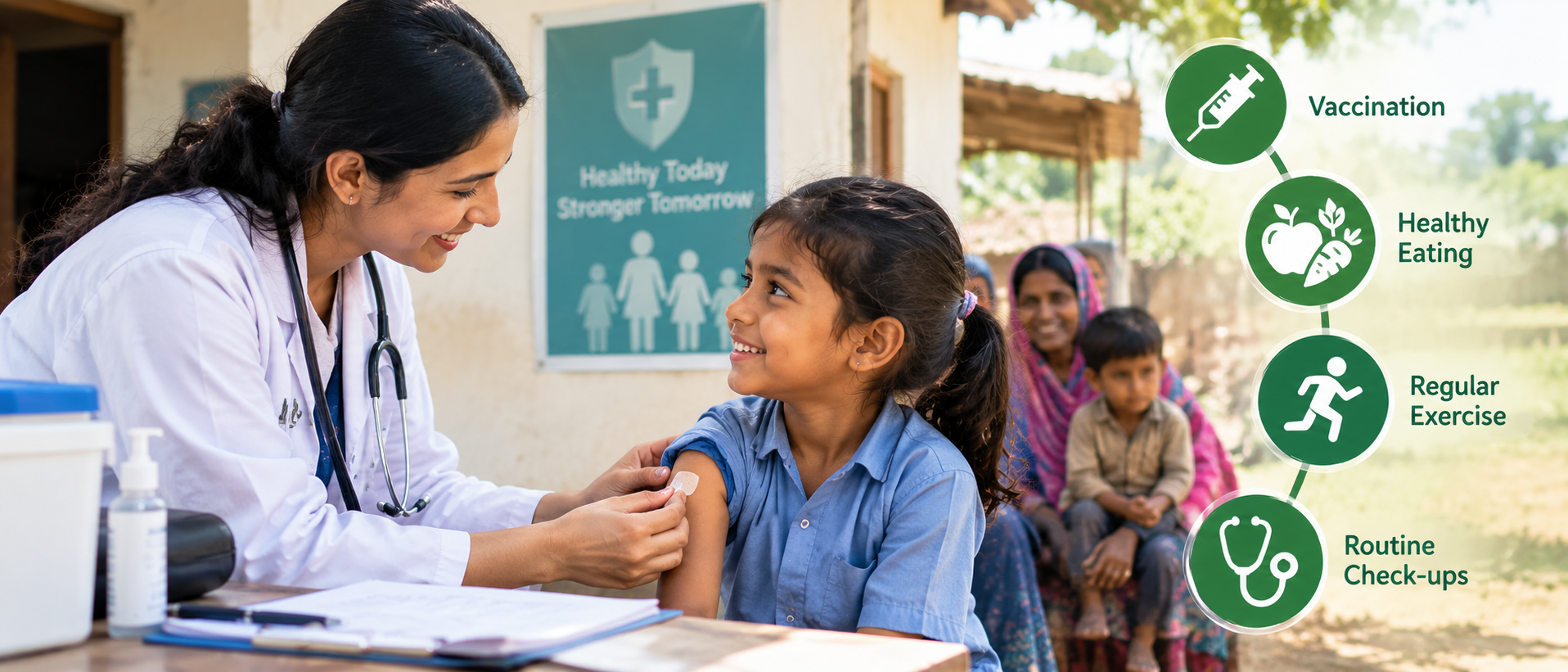
Immunization remains one of the most effective and well documented prevention tools available. According to UNICEF, vaccination currently averts an estimated 4.4 million deaths every year, making it one of the most cost effective public health interventions ever developed.
Recent global data shows both progress and persistent gaps. In 2024, roughly 85 percent of infants worldwide received three doses of the diphtheria, tetanus, and pertussis vaccine. That is about 109 million children. Health officials use this figure as a general marker for routine immunization. It marked an improvement of about one million more fully protected children over the previous year. However, nearly 20 million children still missed at least one dose that year. Of those, 14.3 million received no vaccine dose at all, often called zero dose children. These gaps concentrate heavily in conflict affected and fragile settings.
How vaccination contributes to healthier communities goes beyond individual protection. When enough people within a population receive a vaccine, disease transmission slows considerably, protecting even those who cannot be vaccinated due to age or medical conditions. This collective protection effect makes immunization one of the clearest examples of how individual prevention choices generate benefits across an entire community.
Screening and Early Detection
Beyond vaccination, structured screening programs catch disease at its earliest, most treatable stage.
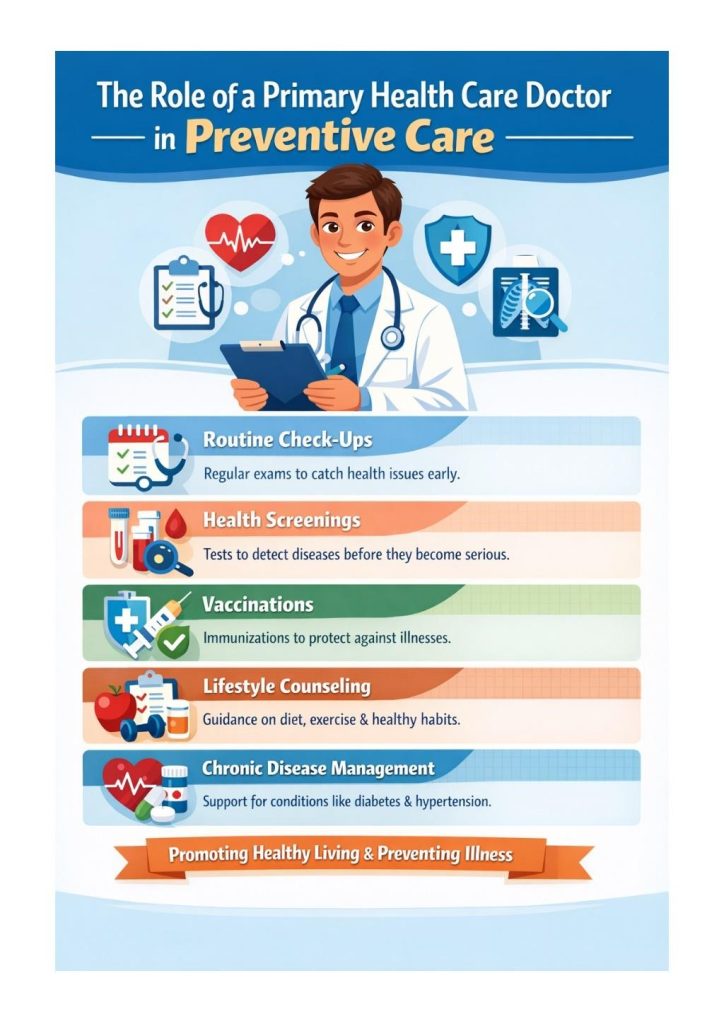
- Cancer screening, including cervical, breast, and colorectal programs, identifies abnormal cell changes or small tumors well before symptoms would otherwise prompt a doctor visit
- Cardiovascular risk detection through routine blood pressure and cholesterol checks allows physicians to intervene with lifestyle changes or medication before a heart attack or stroke occurs
- Diabetes screening through blood glucose testing identifies prediabetes early, often allowing patients to delay or avoid progression to full type 2 diabetes through dietary and lifestyle adjustments
Why early intervention improves outcomes comes down to simple biology. Most diseases become harder and more expensive to treat as they progress, while early stage intervention often requires less invasive treatment and produces significantly better survival rates.
Norway offers a well documented example of a successful national screening programme. Since the Norwegian Cervical Cancer Screening Programme launched in 1995, cervical cancer incidence in the country has declined by roughly 25 percent, and mortality has remained close to the broader Nordic average. Research into screening attendance found that women with a recent negative screening result faced an 84 percent lower risk of dying from cervical cancer compared to non attenders. However, the programme also reveals real limitations. National coverage has stagnated at around 70 percent in recent years, and studies have found that immigrant women participate at consistently lower rates than Norwegian born women, pointing to persistent access and outreach gaps even within a well resourced, universal healthcare system. This case shows that even strong, long running prevention programmes require ongoing attention to equity, not just initial implementation.
Lifestyle and Population Health
Daily habits around activity, food, tobacco, and alcohol shape long term health outcomes significantly. However, framing these habits as purely personal choices misses how strongly public policy shapes them in the first place.
Physical activity responds to environment more than willpower alone. Walkable neighborhoods and accessible public transit measurably raise activity levels across entire populations, not just among motivated individuals.
Nutrition outcomes shift when policy changes the food environment itself. Regulating food marketing aimed at children and requiring clearer nutrition labels both move population diets more than individual label reading ever could.
Tobacco and alcohol prevention responds especially well to policy tools. Health taxes on these products reduce consumption more effectively than awareness campaigns alone. They also generate revenue governments can reinvest into health services.
How individual behavior connects with public health policy matters because it reframes prevention as shared responsibility. Health systems that treat lifestyle disease as personal choice alone tend to progress more slowly than those pairing individual support with structural policy change.
Digital Tools for Preventive Healthcare
Technology is reshaping how early warning signs get identified and acted upon.
Wearables and remote monitoring devices track heart rhythm, blood oxygen, and sleep patterns continuously. This generates data that occasional clinic visits could never capture on their own.
Digital health platforms extend this reach further. They connect patients to virtual consultations and automated symptom checkers. This proves especially valuable for people with limited access to in person care.
AI assisted risk identification analyzes this continuous stream of data. It flags patterns a human observer might easily miss, often well before symptoms appear.
Health data and early warning systems tie these tools together. They shift healthcare from episodic and reactive toward continuous and proactive.
A widely documented real world example comes from consumer smartwatches. These devices use AI to analyze heart rhythm data and flag signs of atrial fibrillation, an irregular heartbeat that raises stroke risk but often produces no symptoms. Many users have sought medical evaluation after receiving an alert. Some received diagnoses that might otherwise have gone unnoticed until a serious cardiac event occurred.
A Case Study
Norway’s broader approach to preventive healthcare extends well beyond cervical cancer screening alone, offering a useful deeper case study on how a well resourced, universal system applies prevention.
What measures were introduced: Norway runs coordinated national screening programmes for cervical, breast, and colorectal cancer. A strong primary care system, built around general practitioners, coordinates preventive services for every resident.
What problem they addressed: Norway sought to reduce preventable cancer mortality. It also aimed to catch chronic disease risk factors early, within a universal system funded mainly through public sources.
What results were reported: Cervical cancer incidence fell by roughly 25 percent after the national programme launched. Women with regular negative screening results showed dramatically lower mortality risk than non attenders.
What limitations exist: Despite universal coverage and low direct costs, screening participation has stagnated at around 70 percent nationally. Immigrant populations attend at measurably lower rates than Norwegian born residents. Researchers point to health system and provider level factors, not just individual preference. Universal access alone does not guarantee equitable uptake without deliberate outreach.
Measuring Progress Toward SDG 3
Tracking progress toward SDG 3 relies on several key indicators that reveal both encouraging gains and areas of concern.
Preventable mortality from noncommunicable diseases remains stubbornly high, with the WHO reporting that most of the 41 million annual NCD deaths could be avoided through existing, proven interventions. Vaccination coverage, as previously noted, reached 85 percent globally for the core DTP3 indicator in 2024, still short of the 90 percent target set under the global Immunization Agenda 2030.
Access to essential healthcare is tracked through the UHC Service Coverage Index, part of SDG indicator 3.8.1. Between 2000 and 2019, global life expectancy at birth rose from 66.8 years to 73.3 years. The UHC Service Coverage Index improved by 22 points over roughly the same period. These parallel gains point to a genuine link between service coverage and longer, healthier lives. However, more recent WHO monitoring shows progress has slowed since 2015. Current trends fall short of what 2030 targets require. Healthy life expectancy adds further nuance here, since it measures years lived in good health rather than years lived overall.
Together, these indicators show that while global prevention efforts have produced real, measurable gains over two decades, the current pace remains insufficient to fully achieve the ambitions set out in SDG 3 by 2030.
What Businesses Can Do
Businesses hold meaningful influence over population level prevention, extending well beyond their role as healthcare providers.
Workplace health programmes that offer regular screenings, mental health support, and fitness incentives extend preventive care to employees who might otherwise skip routine checkups. Time and cost barriers often stand in the way, and these programmes remove them.
Occupational health and safety measures prevent workplace injuries and long term conditions tied to repetitive strain or hazardous exposure. This addresses prevention at its most immediate, practical level.
Employee vaccination and screening initiatives, such as on site flu shot clinics or subsidized cancer screening, remove logistical barriers that often block preventive care, even when it is technically available.
Health conscious workplace policies, including smoke free environments and healthier cafeteria options, shift the default environment toward healthier choices. This works without requiring constant individual willpower.
Responsible health related technology extends the reach of early detection beyond traditional clinical settings. This happens when companies build or deploy health monitoring tools with genuine accuracy and real privacy safeguards.
Conclusion
Prevention reduces avoidable health risks at a scale that treatment alone can never match, since stopping disease before it begins consistently outperforms managing it after the fact, both in human and economic terms. The evidence, from vaccination coverage data to Norway’s decades long screening programme, points consistently in the same direction.
Strong preventive systems can support healthier and more resilient societies, but only when access remains genuinely equitable rather than theoretically available. The connection back to SDG 3 is direct and measurable. Rising life expectancy, improving service coverage indices, and documented reductions in preventable disease all trace back to deliberate investment in prevention. Closing the remaining gaps, particularly for underserved and zero dose populations, will determine how close the world ultimately comes to achieving good health and wellbeing for all.