

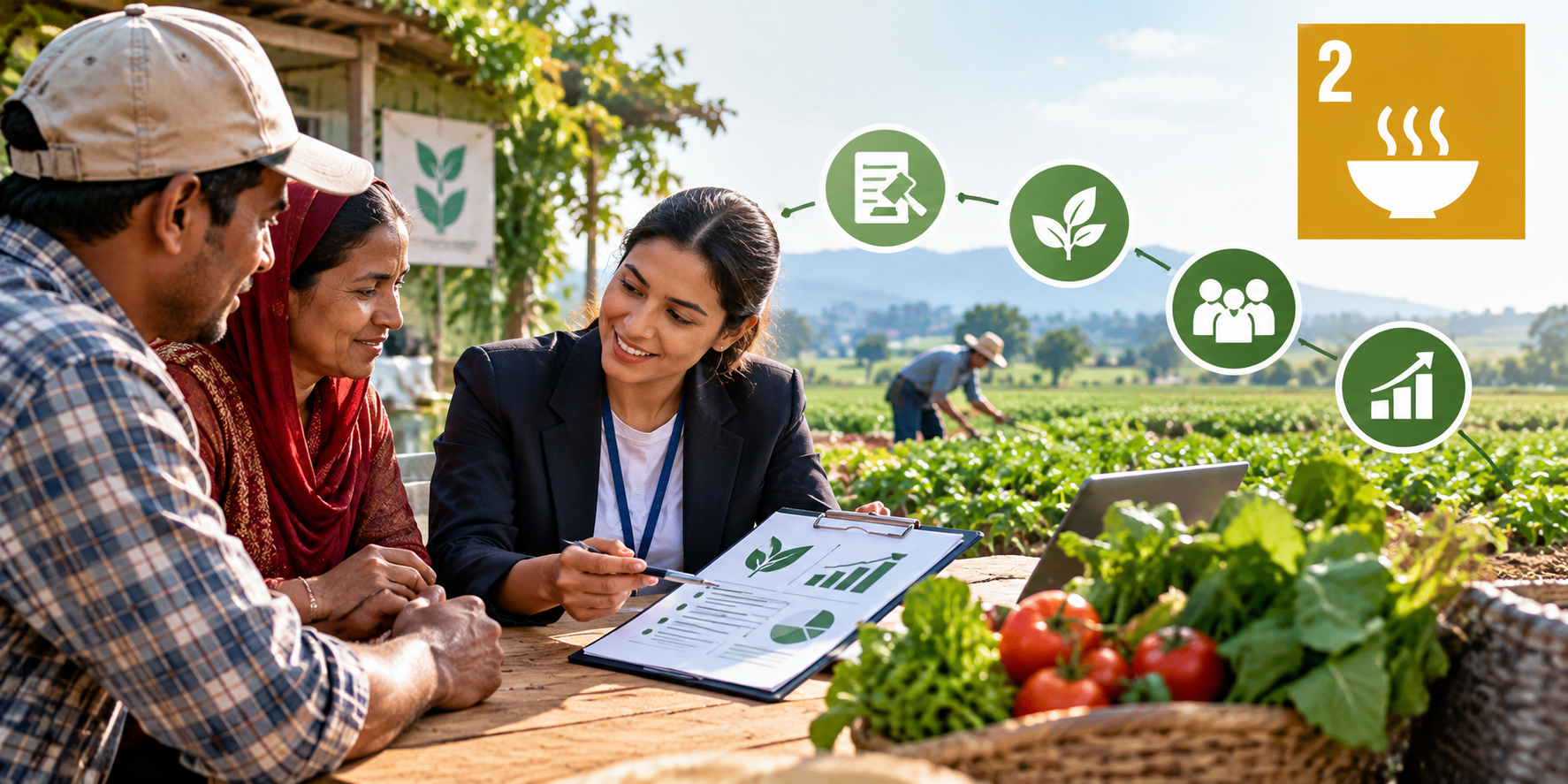
Behind every meal on a table sits a web of decisions made far from any kitchen. Food policies shape what gets grown, how it reaches markets, and who can actually afford it. This connection between food policies and SDG 2 runs deep, since Sustainable Development Goal 2 depends heavily on the regulatory frameworks that govern entire food systems.
Effective policies are important for ending hunger because production alone cannot guarantee food security. Even abundant harvests fail to reach vulnerable populations without policies that address affordability, distribution, and market fairness. Therefore, strong food policy has become one of the most powerful tools available for advancing SDG 2 at scale.
What Are Food Policies
Food policies refer to the rules, regulations, and programs governments create to influence how food gets produced, distributed, priced, and consumed. Their purpose extends across multiple objectives, including ensuring adequate food supply, protecting farmer livelihoods, maintaining food safety, and making nutritious options accessible to the broader population.
How policies influence food production and access happens through several mechanisms. Subsidies can lower input costs for farmers, encouraging increased production of specific crops. Trade regulations determine what food can be imported or exported, directly affecting domestic availability and prices. Meanwhile, safety standards and labeling requirements shape what actually reaches store shelves. Consequently, food policies function as a powerful lever that governments use to steer entire food systems toward specific outcomes, whether that means increasing production, improving nutrition, or protecting vulnerable consumers.
How Food Policies Support SDG 2
Food policies advance the goals outlined in SDG 2 through several interconnected pathways.
First, policies improve food availability by incentivizing production through subsidies, infrastructure investment, and research funding directed toward agriculture. When governments support farmers with resources and stable market conditions, production tends to increase and stabilize over time.
Additionally, effective policies support affordable and nutritious food by regulating prices, funding food assistance programs, or encouraging fortification of staple products with essential nutrients. Since affordability often determines actual dietary choices more than availability alone, these policy interventions directly shape population health outcomes.
Furthermore, food policies strengthen food security by building buffer systems, such as strategic grain reserves, that protect communities during shortages or emergencies. Consequently, well designed policy frameworks help food systems remain stable even when facing unexpected disruptions like poor harvests or supply chain breakdowns.
Agricultural Policies and Farmers
Agricultural policies directly shape the conditions farmers operate within every single season.
Farmer support programs, including subsidies for seeds, fertilizer, and equipment, help reduce the financial burden that often prevents farmers from investing in better production methods. Access to resources and markets further strengthens farmer outcomes, as policies that fund rural infrastructure or establish fair trading standards give farmers reliable pathways to sell their harvests at reasonable prices.
Encouraging sustainable production has also become an increasingly important policy priority. Many governments now design subsidy programs that reward farmers specifically for adopting practices like crop rotation or reduced pesticide use, rather than simply rewarding maximum output regardless of environmental cost. This shift reflects growing recognition that long term food security depends on protecting the very resources agriculture relies upon.
Policies for Sustainable Food Systems
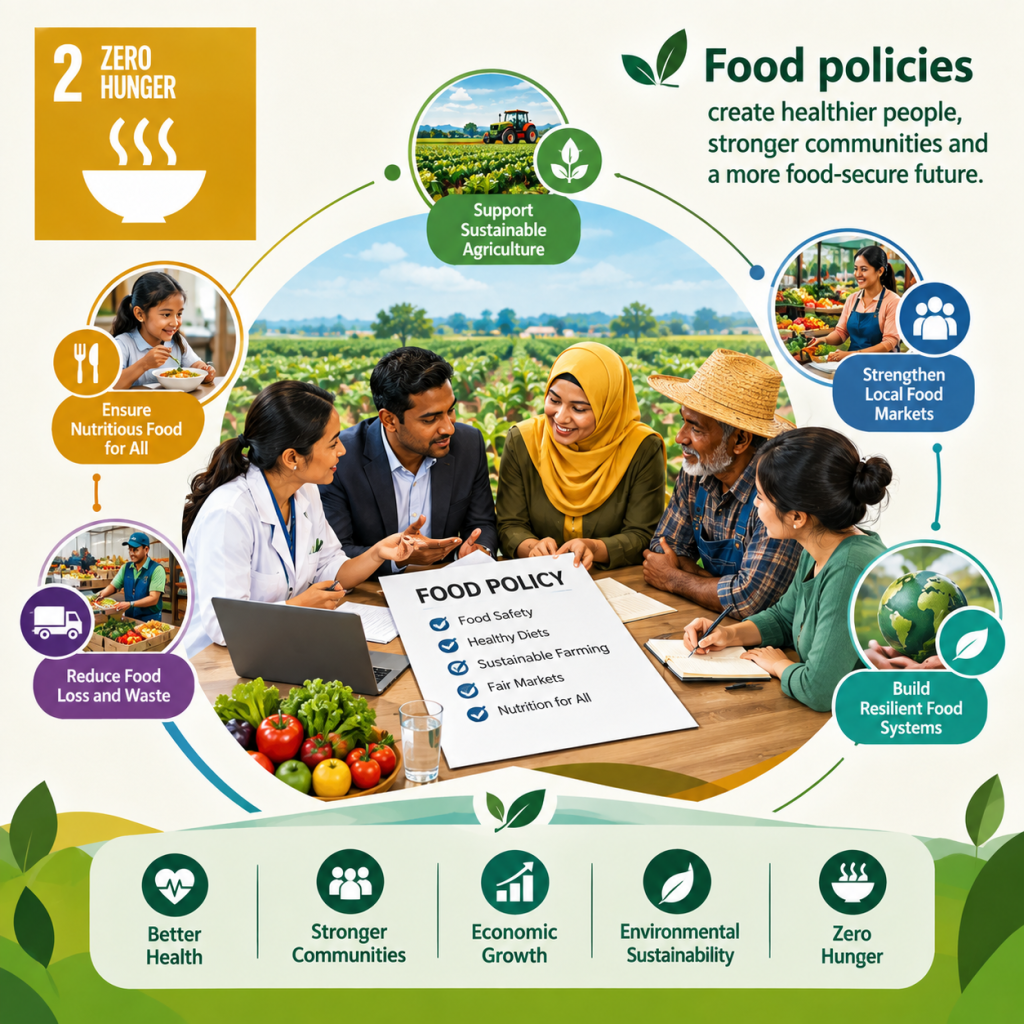
Beyond supporting individual farmers, food policies increasingly target the sustainability of entire food systems.
Resource conservation policies regulate water usage, protect soil quality, and limit deforestation associated with agricultural expansion. Sustainable production standards establish specific requirements around pesticide use, animal welfare, and environmental impact that producers must meet to access certain markets or certifications.
Reducing food loss and waste has also become a growing policy focus, since significant amounts of food disappear before ever reaching consumers. For instance, several countries have introduced policies requiring large retailers to donate unsold edible food rather than discard it, redirecting substantial quantities toward food insecure populations. This kind of targeted regulation demonstrates how policy can address waste directly rather than relying solely on voluntary business action.
Food Access and Affordability
Ensuring food reaches households at prices they can actually afford requires deliberate policy attention.
Food prices and household access remain closely linked, since even nutritious, available food fails to improve outcomes if households cannot afford it. Social protection measures, including food assistance programs and cash transfers, help bridge this gap by directly supporting purchasing power for vulnerable households.
Supporting vulnerable communities requires targeted approaches rather than one size fits all solutions. Policies that specifically address the needs of low income families, rural populations, or communities affected by conflict tend to produce stronger outcomes than broad measures that assume uniform circumstances across an entire population.
Role of Businesses in Food Policy
Businesses play a meaningful role in shaping and implementing effective food policy.
- Responsible participation means companies engage constructively with policy development rather than solely lobbying for outcomes that benefit short term profit at the expense of broader food security goals
- Industry standards, often developed collaboratively between businesses and regulators, help establish practical benchmarks for food safety and sustainability that individual companies might struggle to achieve alone
- Collaboration with policymakers allows businesses to share operational insights that help shape realistic, implementable regulations rather than policies disconnected from actual supply chain conditions
When businesses and governments work together thoughtfully, resulting policies tend to balance practical feasibility with meaningful progress toward food security objectives.
Transparency and Accountability
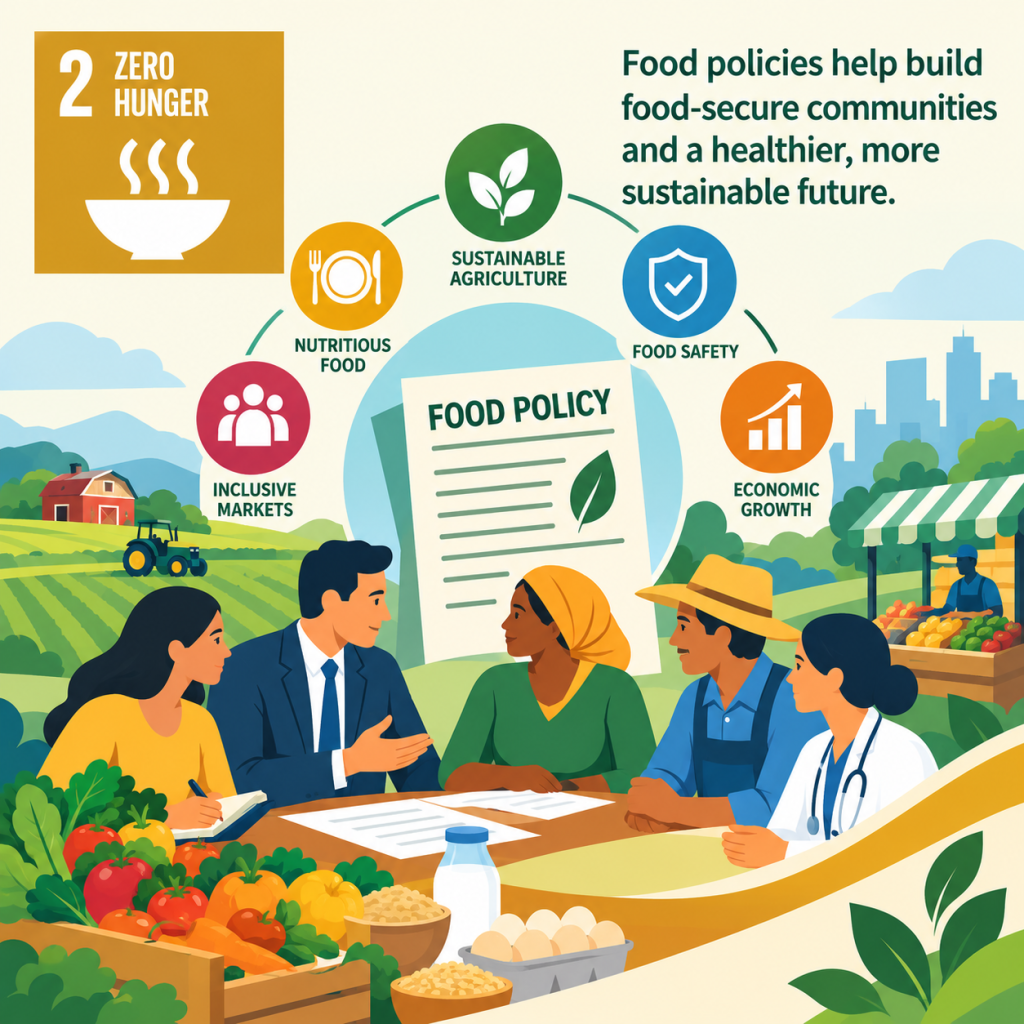
Strong food policy requires mechanisms to track whether intended outcomes actually materialize.
Monitoring food policies involves tracking implementation across regions to identify where programs succeed or fall short of their goals. Public data and reporting further strengthen this process by making policy outcomes visible to researchers, journalists, and citizens who can hold governments accountable for results.
Measuring policy outcomes matters enormously, since well intentioned policies sometimes fail to achieve their goals due to poor implementation or unforeseen circumstances. Without consistent measurement, governments risk continuing ineffective programs simply because early intentions seemed sound, rather than adjusting course based on actual evidence.
Challenges in Food Policy
Despite clear importance, food policy development faces persistent obstacles that slow meaningful progress.
Conflicting economic and environmental priorities often create tension, since policies that maximize short term agricultural output can sometimes undermine long term environmental sustainability. Implementation gaps present another significant challenge, as policies that look effective on paper frequently struggle during actual rollout due to limited administrative capacity or insufficient funding.
Differences between countries and regions further complicate global progress, since food systems vary dramatically based on climate, infrastructure, and economic conditions. Consequently, policies that succeed in one context often require substantial adaptation before working effectively elsewhere.
Conclusion
Effective food policies remain essential for achieving SDG 2, since production improvements alone cannot guarantee that food reaches the people who need it most. Policy shapes availability, affordability, and resilience simultaneously, making it one of the most powerful tools governments possess for addressing hunger.
Evidence based, transparent, and inclusive policymaking will determine how effectively future food systems address ongoing challenges. As governments continue refining their approaches based on measurable outcomes rather than assumptions, food policy will play an increasingly central, long term role in building resilient food systems capable of supporting a genuinely food secure world.