
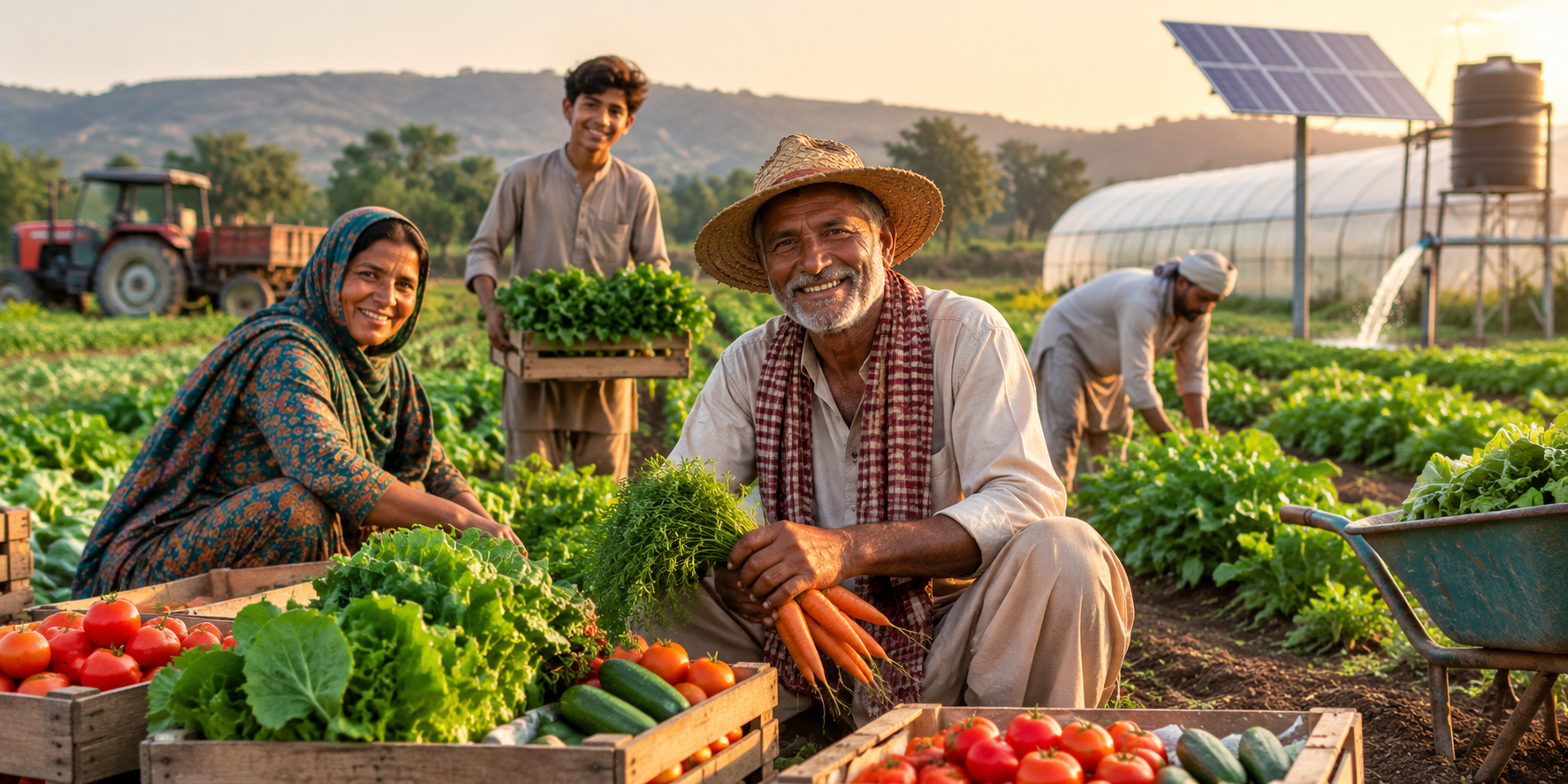
Behind every harvest stands a farmer whose income determines whether that farm survives another season. Farmer livelihoods sit at the center of Sustainable Development Goal 2, which aims to end hunger and build lasting food security. When farmers struggle financially, entire food systems become fragile.
Economically secure farmers contribute to stronger food systems in ways that ripple far beyond their own fields. They invest in better seeds, maintain healthier soil, and stay in farming rather than abandoning the profession for more stable work. Therefore, protecting farmer livelihoods is not a side issue within SDG 2. It is one of the foundations the entire goal rests upon.
This article examines why farmer livelihoods matter so much, what threatens them, and how sustainable practices, fair markets, and technology can help build a more secure future for the people who feed the world.
Why Farmer Livelihoods Matter
Farmer livelihoods matter because income stability determines whether farming remains a viable path for millions of households. When farmers earn consistent, fair income, they can plan ahead, invest in better tools, and avoid falling into debt during difficult seasons.
Rural economic development also depends heavily on farmer prosperity, since agriculture often serves as the primary economic engine in rural regions. When farmers earn more, they spend more within their local communities, supporting shops, schools, and local services that depend on agricultural income circulating nearby.
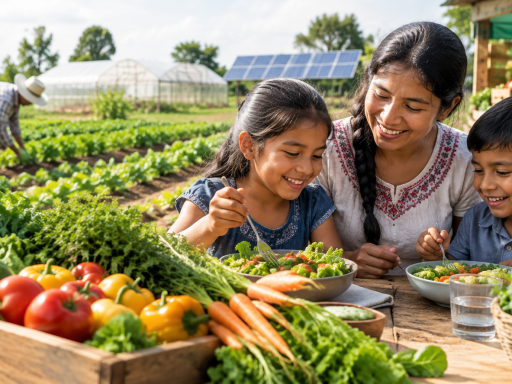
Additionally, there is a direct connection between farmer welfare and food security. Farmers who struggle financially often cannot afford quality inputs, which reduces yields and threatens food supply. Consequently, supporting farmer livelihoods directly strengthens the broader food systems that communities depend on daily.
Challenges Affecting Farmer Livelihoods
Several persistent challenges continue to threaten farmer incomes worldwide.
Unstable agricultural prices create constant uncertainty for farmers who cannot predict what their harvest will actually earn. Prices often fluctuate based on global markets, weather elsewhere, or sudden shifts in demand. As a result, farmers frequently plant crops without knowing whether the eventual sale price will even cover their costs.
Rising input costs compound this uncertainty further, since seeds, fertilizer, and fuel prices have increased significantly in many regions. Meanwhile, farmer income does not always rise at the same pace. Consequently, profit margins shrink even when yields remain steady, squeezing farmers from both directions at once.
Climate related risks also threaten livelihoods directly, as droughts, floods, and unpredictable weather can destroy an entire season’s income in a matter of days. Since many smallholder farmers lack insurance, a single bad harvest can push a household into serious financial hardship.
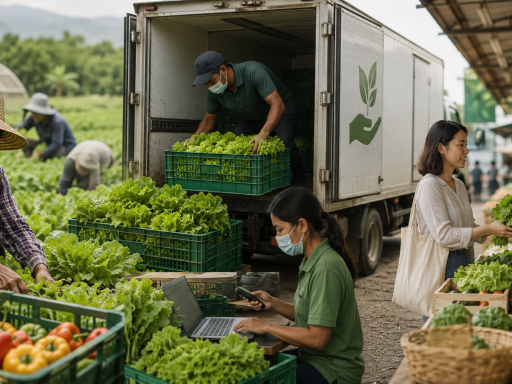
Limited market access further restricts earning potential, particularly for farmers in remote areas. Without reliable transportation or nearby buyers, farmers often sell to middlemen at reduced prices simply because no better option exists nearby.
How Sustainable Farming Can Improve Incomes
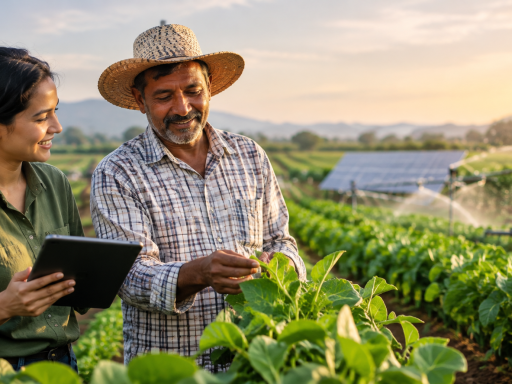
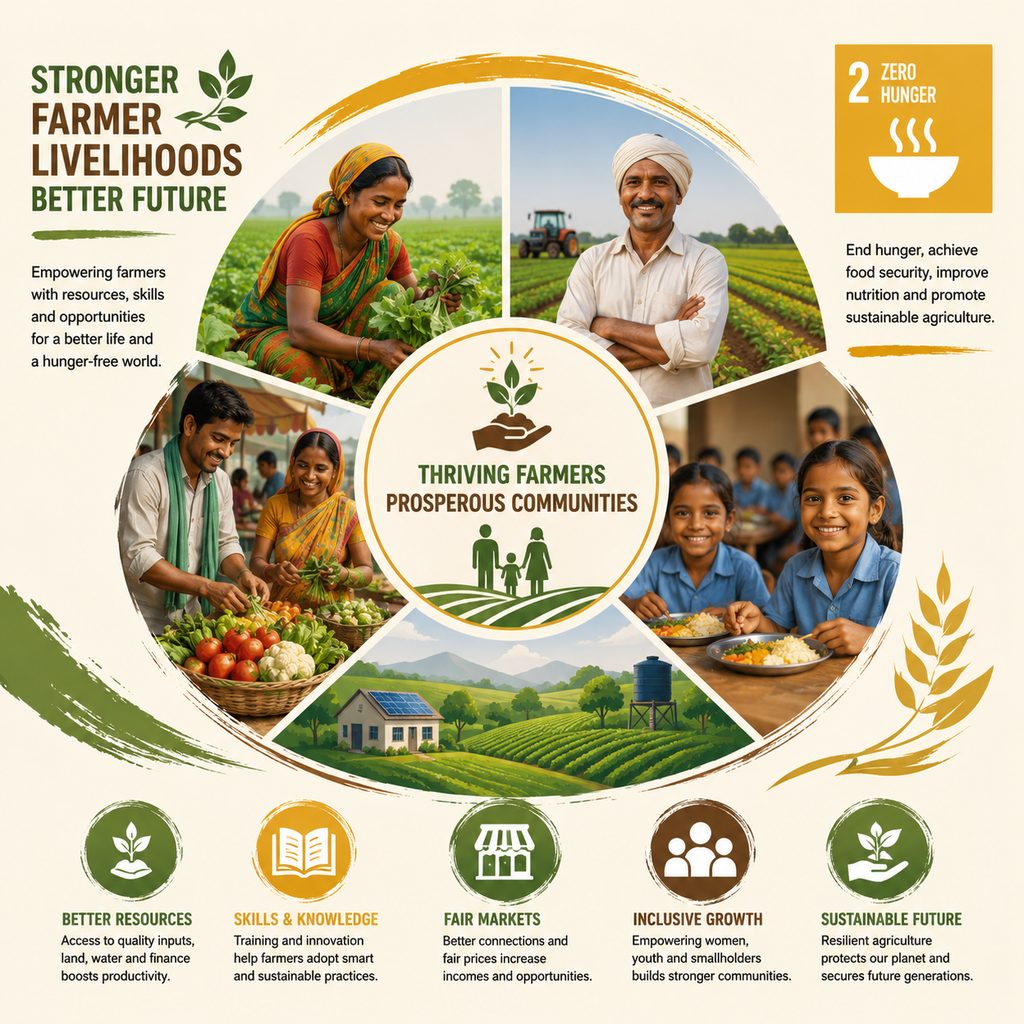
Sustainable farming practices offer a practical path toward more stable and improved farmer incomes over time. Efficient use of resources plays a central role in this improvement, since farmers who manage water, soil, and inputs carefully reduce waste and lower their overall production costs. For example, drip irrigation systems use significantly less water than traditional flooding methods while still delivering strong yields. This efficiency translates directly into savings that farmers can reinvest into their operations or keep as profit, strengthening financial stability season after season.
Diversification of crops and income also helps farmers build more resilient household finances. Rather than depending entirely on a single crop, many successful farmers now grow multiple crops with different harvest times, or combine farming with small livestock operations. This approach spreads financial risk across several income sources. Consequently, if one crop underperforms due to weather or market conditions, other income streams help cushion the impact, preventing a single bad season from becoming a financial crisis for the entire household.
Sustainable production methods, including crop rotation and organic soil enrichment, further support long term income growth by maintaining healthier land over time. Farms that preserve soil quality avoid the steep decline in productivity that often affects overworked land. As a result, these farms sustain stronger yields across many growing seasons, creating a more predictable and reliable income foundation that supports long term financial planning rather than constant crisis management.
The Importance of Fair Agricultural Markets
Fair pricing ensures farmers receive compensation that genuinely reflects their labor and production costs, rather than prices dictated entirely by buyers with more market power.
Market access determines whether farmers can even reach buyers willing to pay fair prices in the first place. Without accessible markets, even high quality produce struggles to reach its full value.
Responsible sourcing from businesses further strengthens this system, since companies that commit to fair purchasing practices help set higher standards across entire supply chains.
Stronger farmer buyer relationships build trust over time, allowing both sides to negotiate more transparently and plan future harvests with greater confidence and stability.
Role of Businesses in Supporting Farmers
Businesses across the agricultural supply chain hold real power to strengthen farmer livelihoods through the choices they make every day. Sustainable procurement practices, where companies deliberately source from farmers using environmentally responsible methods, create financial incentives for farmers to adopt better practices. When a business commits to paying fair prices for sustainably grown produce, farmers gain both an economic and environmental reason to improve their operations rather than facing that transition alone.
Long term supplier relationships also matter significantly more than many businesses initially realize. Farmers who know a buyer will purchase their harvest year after year can plan investments with far greater confidence than those facing constant market uncertainty. For instance, a coffee company that commits to multi year purchasing agreements with a farming cooperative allows those farmers to invest in better processing equipment, knowing their market is secure regardless of short term price swings elsewhere.
Investment in agricultural communities extends this support even further, as businesses that fund local infrastructure, training programs, or shared equipment help entire farming regions improve simultaneously. This kind of investment often generates returns for businesses too, since healthier, more productive farming communities create more reliable, higher quality supply chains over the long run.
Technology and Farmer Income
Technology is reshaping how farmers earn and manage income in meaningful ways. Digital marketplaces now connect farmers directly with buyers, cutting out layers of middlemen that traditionally captured much of the profit margin. Instead of relying solely on local traders who often offer lower prices, farmers can list their produce on regional or even national platforms, reaching buyers willing to pay closer to fair market value. This shift has proven particularly powerful for smallholder farmers who previously had almost no negotiating power within their local supply chains, since digital access effectively expands their pool of potential buyers far beyond their immediate geographic area.
Agricultural data and forecasting tools give farmers a significant planning advantage that was simply unavailable a decade ago. Mobile applications now provide real time weather forecasts, market price trends, and crop specific guidance, helping farmers decide what to plant and when to sell for maximum benefit. Rather than relying purely on tradition or guesswork, farmers can make decisions grounded in current data, which often leads directly to better financial outcomes and reduced risk of planting crops that will not sell well that season.
Digital financial services complete this technological shift by giving farmers access to banking, savings, and credit options that were previously out of reach. Mobile banking platforms allow farmers without traditional bank accounts to save income securely, access small loans for equipment or seeds, and even purchase insurance against crop failure. This financial inclusion matters enormously, since access to credit allows farmers to invest in improvements upfront rather than waiting years to save enough capital through slow, incremental income alone.
Building Resilient Rural Economies
Local employment tied to agriculture creates a foundation for rural economic resilience that extends beyond individual farms. When farming operations expand or diversify, they often create jobs in processing, transport, and local retail, spreading agricultural income across entire communities rather than concentrating it within a single household, which strengthens overall regional stability.
Cooperatives and community enterprises further reinforce this resilience by allowing farmers to pool resources, share expensive equipment, and negotiate collectively with buyers. This collective structure gives smallholder farmers leverage they could rarely achieve individually, while also distributing financial risk more evenly across the group during difficult seasons.
Infrastructure and skills development complete this picture, since reliable roads, storage facilities, and ongoing agricultural training determine how effectively farmers can actually capture the value of their work, turning improved production into genuine, lasting income growth for the wider community.
Benefits of Stronger Farmer Livelihoods
Improved food security follows naturally when farmers earn enough to invest consistently in their land and operations each season.
Reduced rural poverty results directly from stronger farm incomes, since agriculture remains the primary livelihood across many rural regions worldwide.
More resilient food supply chains emerge when farmers can withstand occasional bad seasons without collapsing financially or abandoning production entirely.
Sustainable economic development follows as farming income circulates locally, strengthening entire rural economies well beyond the farm gate itself.
Conclusion
Farmer livelihoods are essential to SDG 2 because food security ultimately depends on farmers who can afford to keep farming. Without stable income, even the most productive farms eventually fail, taking food supply stability down with them. Creating sustainable and inclusive agricultural economies requires sustained collaboration between farmers, businesses, governments, and communities. As fair markets, smart technology, and supportive policies continue expanding, the world moves closer to a future where the people who grow our food can also thrive from doing so.