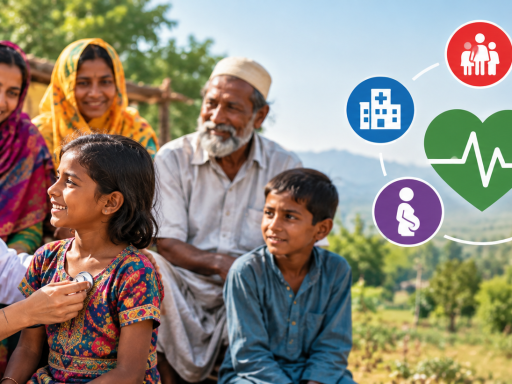

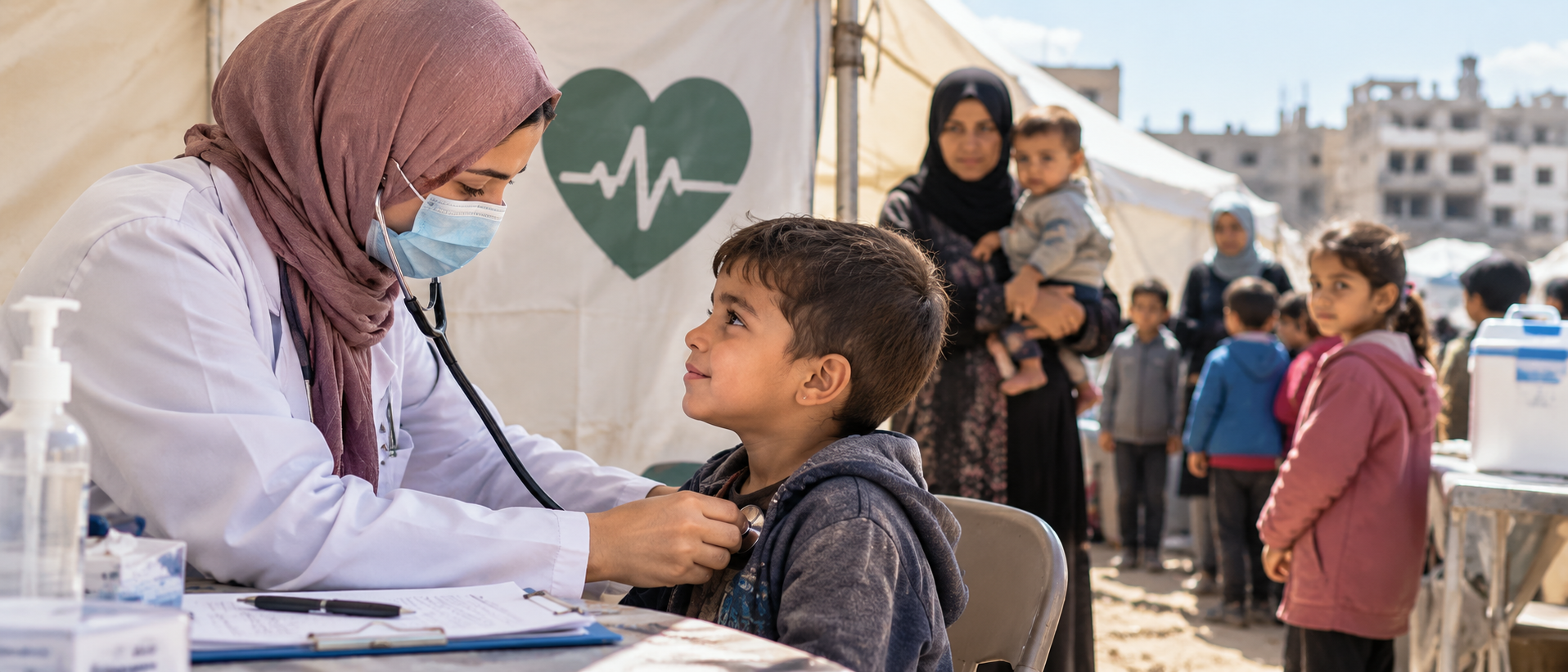
No one should face bankruptcy because they got sick. Yet for millions of people worldwide, a single medical emergency can wipe out savings or push a family into poverty. Universal Health Coverage sits at the heart of Sustainable Development Goal 3, which aims to ensure healthy lives and promote wellbeing for everyone, at every stage of life.
Access to healthcare matters for sustainable development because health directly shapes economic productivity, education outcomes, and overall community stability. When people cannot afford treatment or simply cannot reach a clinic, illness spreads further, workforce productivity declines, and entire communities suffer consequences that extend well beyond individual patients. Therefore, Universal Health Coverage has become a central pillar in the broader effort to achieve SDG 3.
This article explores what Universal Health Coverage actually means, how it supports global health goals, and what stands between current healthcare systems and truly universal access.
What Is Universal Health Coverage
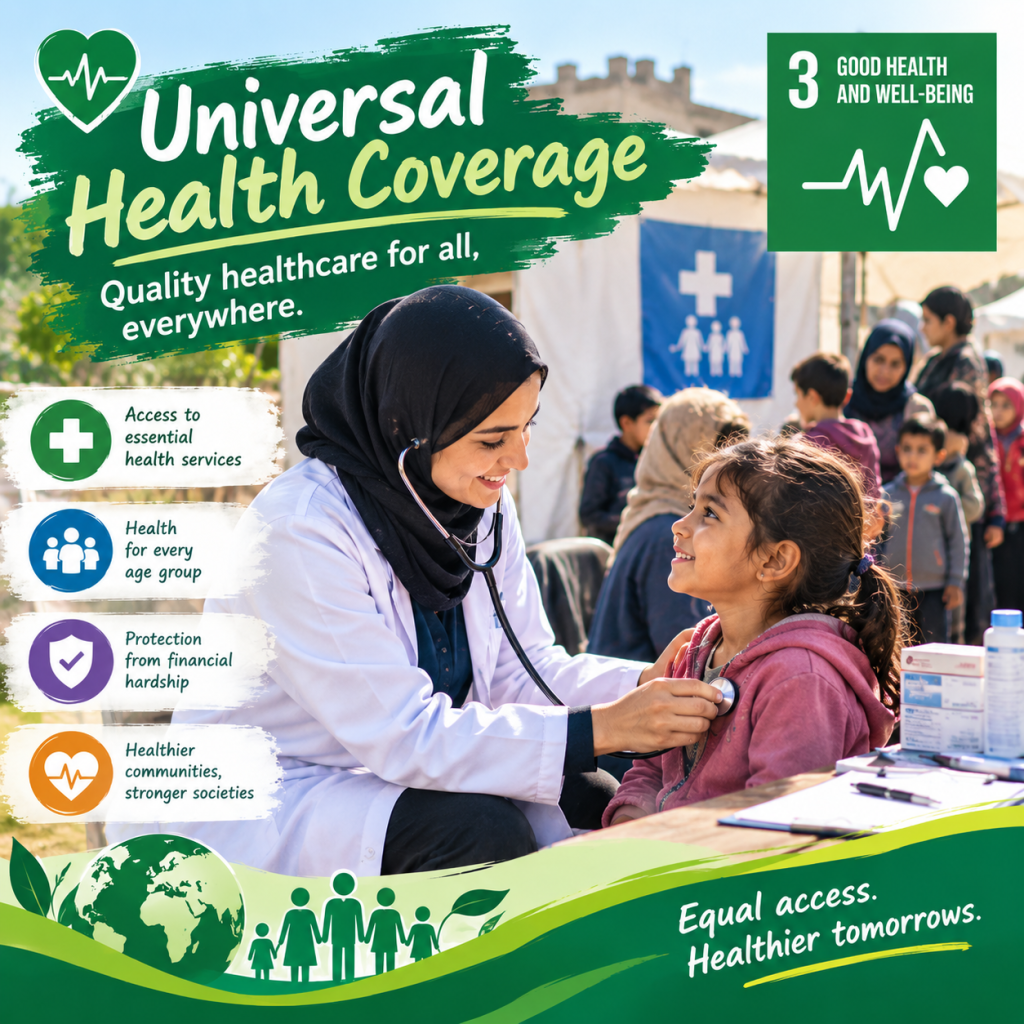
Universal Health Coverage means that every individual can access the health services they need without suffering financial hardship as a result. This concept rests on several key principles, including equitable access regardless of income, comprehensive coverage of essential services, and protection against the kind of catastrophic healthcare costs that push families into poverty.
Healthcare access, affordability, and quality form the three pillars that determine whether coverage genuinely qualifies as universal. Access refers to whether services physically and practically reach the population, including those in remote areas. Affordability ensures that cost does not prevent people from seeking necessary care when they need it. Quality guarantees that the care people receive actually improves their health outcomes, rather than simply existing on paper without delivering real medical value. When all three pillars work together, healthcare systems move closer to genuinely universal coverage rather than partial or theoretical access that fails many people in practice.
How Universal Health Coverage Supports SDG 3
Universal Health Coverage directly advances the goals outlined in SDG 3 through several interconnected pathways.
First, it improves access to essential health services by ensuring that basic care, from vaccinations to maternal health support, reaches populations that previously went without. Since preventable illness and complications often stem from delayed or absent care, expanding access directly reduces avoidable suffering and death.
Additionally, Universal Health Coverage plays a critical role in reducing financial hardship from healthcare costs. Many households worldwide fall into poverty specifically due to medical expenses, even when the underlying illness itself was treatable. By removing or reducing these financial barriers, coverage systems protect household stability alongside individual health.
Furthermore, Universal Health Coverage supports healthier populations overall, since consistent access to care allows conditions to be caught and treated earlier. As a result, populations with strong coverage systems generally experience longer life expectancy and fewer preventable deaths compared to populations facing significant access gaps.
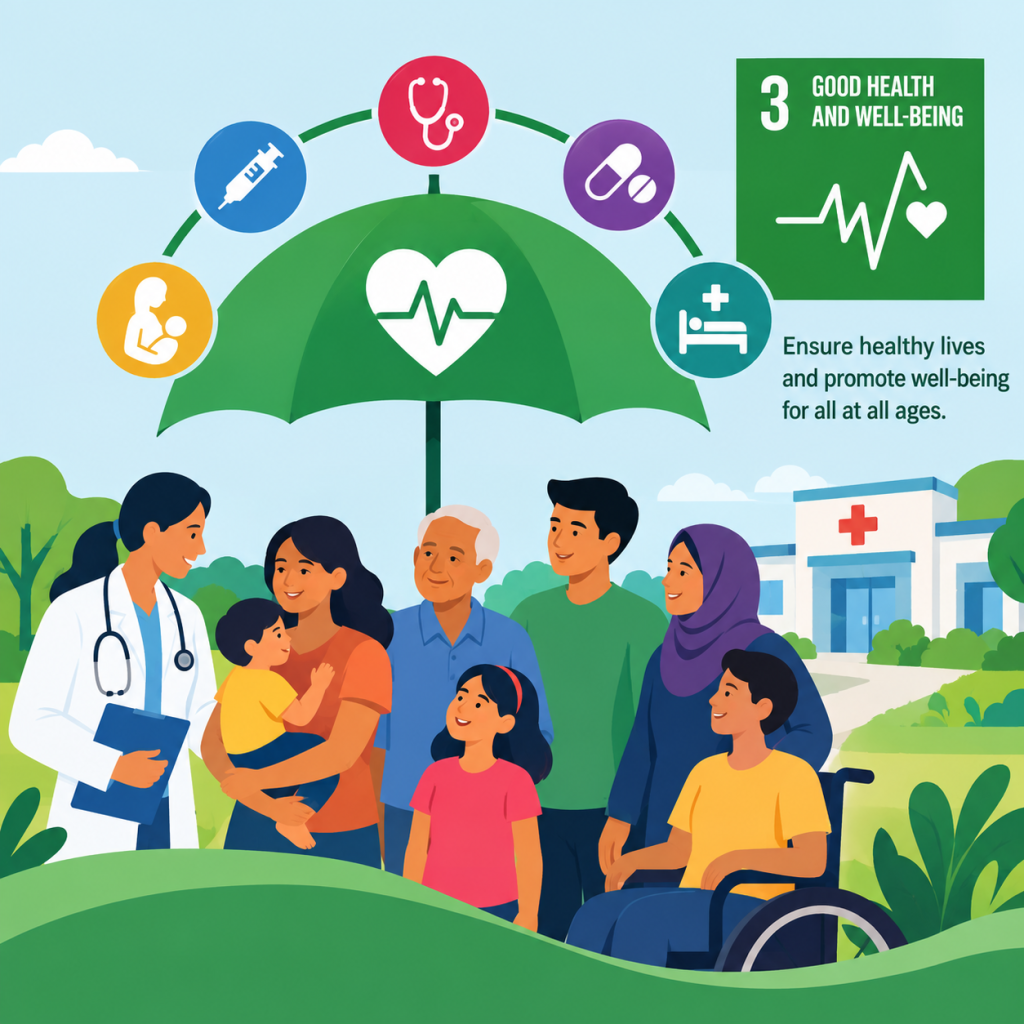
Essential Healthcare Services
A truly comprehensive Universal Health Coverage system must include several categories of essential care.
Preventive care, including regular screenings, vaccinations, and health education, helps catch problems before they become severe, reducing both suffering and long term treatment costs. Treatment and rehabilitation services address conditions once they arise, ensuring patients receive proper medical intervention along with the support needed to recover fully rather than facing lasting complications.
Essential medicines and vaccines complete this foundation, since even the best medical advice becomes meaningless without access to the treatments it recommends. Consequently, health systems that guarantee reliable access to a core list of essential medicines tend to achieve significantly better population health outcomes than those where medication availability remains inconsistent or prohibitively expensive.
Healthcare Affordability and Financial Protection
Affordability remains one of the most significant barriers standing between current healthcare systems and true universal coverage.
Out of pocket healthcare costs continue to burden households heavily in many regions, particularly where public funding for healthcare remains limited. When patients must pay directly for consultations, tests, and medications, many simply delay or avoid care entirely, allowing treatable conditions to worsen significantly before eventually seeking help.
Protecting vulnerable households requires targeted financial mechanisms, such as subsidized insurance programs or income based fee structures, that reduce the burden specifically for those least able to absorb unexpected medical costs. Importance of accessible health financing extends beyond individual protection as well, since pooled financing systems, where healthy populations effectively help cover costs for those who need care, create more sustainable and equitable coverage than systems relying purely on individual payment at the point of service.
Role of Healthcare Infrastructure
Strong infrastructure determines whether coverage policies translate into actual care that people can reach and use.
Hospitals and primary care facilities form the backbone of any healthcare system, and their distribution matters enormously. Concentrating facilities only in major cities leaves entire regions without practical access, regardless of what national policy promises on paper. Healthcare workforce availability presents an equally important consideration, since even well built facilities cannot function without sufficient doctors, nurses, and support staff to deliver care.
Access in rural and underserved areas often depends on creative infrastructure solutions, since traditional hospital models prove difficult to sustain in sparsely populated regions. For instance, Rwanda has built an extensive network of community health workers who deliver basic care and health education directly within villages, supplementing a smaller number of centralized hospitals. This model has helped the country achieve health outcomes that significantly outperform many neighboring nations with similar income levels, demonstrating how thoughtful infrastructure design can extend meaningful coverage even in resource constrained settings.
Technology and Universal Health Coverage
Technology is increasingly helping bridge coverage gaps that traditional healthcare infrastructure alone cannot close.
Telemedicine allows patients in remote areas to consult with doctors without traveling long distances, expanding practical access significantly for populations far from major medical centers. Digital health records improve continuity of care by ensuring that patient history follows them across different providers and facilities, reducing duplicated tests and dangerous treatment gaps.
Remote healthcare services, including mobile diagnostic tools and health monitoring applications, extend the reach of limited healthcare workforce further than physical presence alone could achieve. Together, these technologies help stretch existing healthcare resources across larger populations without requiring proportional increases in physical infrastructure.
Role of Governments and Businesses
Universal Health Coverage cannot be achieved through healthcare providers alone. Governments and businesses both play essential supporting roles.
Public healthcare investment remains the foundation, since sustainable, equitable coverage typically requires significant public funding rather than relying solely on private markets that often exclude those least able to pay. Healthcare innovation from private companies complements this public investment by developing more affordable diagnostics, treatments, and delivery models that stretch limited healthcare budgets further.
Partnerships that expand access, combining public funding with private sector expertise and efficiency, often achieve results that neither sector could accomplish independently. When governments and businesses align around shared coverage goals, these collaborations tend to accelerate progress meaningfully.
Challenges to Universal Health Coverage
Despite clear benefits, several persistent challenges continue slowing progress toward genuinely universal coverage.
- Healthcare inequality remains widespread, as wealthier populations consistently access better care than lower income groups within the same country
- Funding limitations restrict how much governments can invest in expanding coverage, particularly in lower income nations facing competing budget priorities
- Workforce shortages leave many regions without sufficient doctors and nurses, even when facilities and funding exist
- Geographic barriers continue isolating rural and remote populations from adequate healthcare access, regardless of national policy commitments
These challenges often compound one another, meaning that addressing just one factor rarely produces the comprehensive improvement that genuine universal coverage requires.
Benefits of Universal Health Coverage
The advantages of Universal Health Coverage extend well beyond individual patient outcomes.
Improved population health results directly from consistent access to preventive and treatment services across entire communities. Greater economic resilience follows, since healthier populations experience less workforce disruption and lower overall healthcare related financial strain.
Reduced health inequalities emerge as coverage systems specifically target the gaps that leave certain populations underserved. Ultimately, these combined benefits represent meaningful progress toward SDG 3, since healthy, economically stable populations form the foundation that broader sustainable development depends upon.
Conclusion
Universal Health Coverage remains essential for achieving SDG 3, since good health and wellbeing cannot become a genuine global reality while access, affordability, and quality remain unevenly distributed across populations. Closing these gaps requires sustained investment rather than incremental adjustments alone.
Accessible, affordable, and quality healthcare will determine how effectively the world progresses toward the vision SDG 3 sets out. As governments, businesses, and communities continue building more inclusive health systems, the long term importance of Universal Health Coverage will only grow, shaping healthier, more resilient societies for generations to come.