
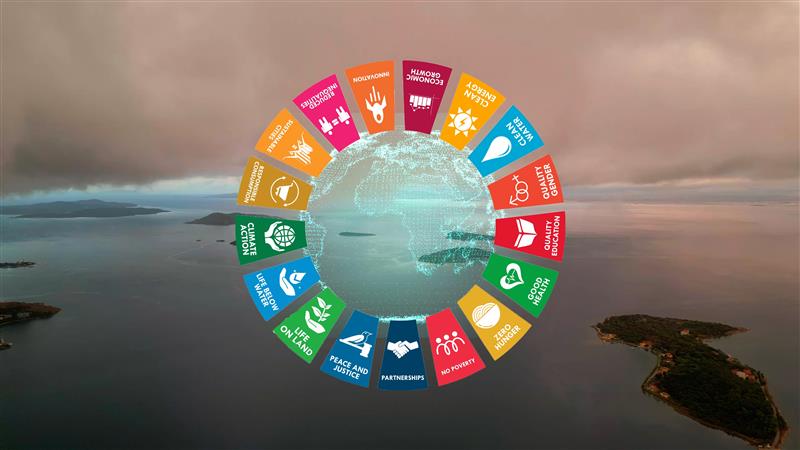
Sustainability goals 2026 global development will undergo a sea change. 2026 calls for concentrated action following years of resource hardship, societal unrest, and climatic concerns. These days, governments must deal with growing emissions, economic disparity, and environmental degradation. Companies have to adapt to new rules and customer demands. Communities want stability, justice, and resilience.
Lessons from 2025 reveal both gaps and improvement. Fossil fuels continue to dominate, while renewable energy has grown. Waste volumes continued to rise despite the growth of circular economy models. Boardrooms have embraced social fairness, but access disparities still exist. The 2026 sustainability goals seek to swiftly and responsibly close these disparities. The tone for the rest of the SDG timetable is set this year. Costs increase with each delay. Opportunities arise with every invention. The globe may recover momentum by emphasizing social fairness, sustainable energy, climate action, and responsible consumerism. The 2026 sustainability goals call for strong leadership, collaboration, and measurement in every industry.
Climate Action as a Core Sustainability Goal in 2026
The core of the 2026 Sustainability Goals is climate action. Heatwaves, floods, and rising temperatures increasingly have an impact on economies, health, and food systems. Governments need to go from promises to implementation. 2026 policies are defined by carbon price, emission limitations, and climate transparency regulations. Cities make investments in infrastructure that is climate resilient. Defenses are strengthened in coastal areas. Climate-smart methods are implemented in agriculture. These steps safeguard livelihoods while lowering danger. The 2026 Sustainability Goals place a strong emphasis on both adaptation and mitigation. Now, both are equally important.
Companies are also very important. Emissions are measured by supply chains. Roadmaps for net-zero progress from conception to implementation. Financial metrics are derived from climate data. Priority changes from 2025 to 2026 are displayed in the table below.
| Focus Area | 2025 Approach | 2026 Priority |
|---|---|---|
| Emissions | Voluntary targets | Regulated limits |
| Reporting | Annual reports | Real-time data |
| Adaptation | Limited funding | National budgets |

Clean Energy Transition and Decarbonization Targets
According to the sustainability goals 2026, clean energy promotes both environmental and economic stability. Fossil fuels are currently under cost competition from solar, wind, and green hydrogen. Grids and storage systems are expanded by governments. This year, sustainability and energy security are closely related. Decentralization is favored by energy policy in 2026. Microgrids facilitate access in remote areas. Efficiency is increased via smart grids. Jobs in clean energy are growing as reliance on fossil fuels is decreasing. The Sustainability Goals 2026 encourage a fair transition that safeguards communities and workers. Companies start using renewable resources. Data centers switch to renewable energy. The electrification of transportation is accelerating. These adjustments cut long-term expenses while reducing pollution. Key clean energy priorities include:
- Scaling renewables
- Expanding battery storage
- Electrifying transport
- Supporting energy access
Social Equity and Inclusive Development in 2026
Credibility for sustainability goals 2026 is defined by social equality. Instability results from growth without inclusion. In 2026, access, opportunity, and human rights are intimately related to sustainability. The top priorities continue to be adequate job, healthcare, and education. Social protection programs are expanded by governments. Digital inclusion reduces gender and rural disparities. Affordable housing is included into urban planning. By taking these steps, everyone will benefit from sustainability. The 2026 sustainability goals deny universal solutions. It concerns what is local. Companies bolster their diversity policies. Ethical supply chains safeguard employees. Pay equity increases trust and productivity. Customers who support ethical products have an impact on equity as well.
Responsible Consumption and Circular Economy Expansion
The core of the sustainability goals 2026 is responsible consumption. Reuse, waste minimization, and more intelligent design all lessen the strain on the environment. “Take-make-waste” linear models are no longer effective. In 2026, circular economy methods become more widespread. Businesses create durable products. Material recovery is enhanced by recycling technology. Customers prioritize quality over quantity. Efficiency and openness are rewarded by the 2026 sustainability goals. Comparison of models shows the shift clearly:
| Model | Environmental Impact | Economic Value |
|---|---|---|
| Linear economy | High waste | Short-term |
| Circular economy | Low waste | Long-term |
Sustainable Cities and Infrastructure Development
Sustainability goals 2026 progress is driven by urban areas. The majority of emissions and resource use occur in cities. Sustainable life is today defined by wise planning. Investments in public transportation ease traffic. Energy consumption is reduced in green buildings. Air quality is improved by natural remedies. Additionally, cities encourage shared transportation and walkability. The 2026 sustainability goals balance urban expansion with environmental constraints. Resilience is given priority in infrastructure financing. Digital connection, energy-efficient homes, and flood-resistant roadways all promote equitable growth. Urban sustainability priorities include:
- Smart transport
- Green construction
- Affordable housing
Corporate Accountability and ESG Integration
2026 sustainability objectives are strengthened by corporate responsibility. ESG reporting is standardized. Verified data is demanded by investors. Greenwashing is punishable. Sustainability and financial performance are closely related in 2026. Businesses oversee labor policies, governance frameworks, and climate risk. Transparent reporting fosters confidence. Goals for sustainability in 2026 need for quantifiable results, not just assurances. The responsibility of the supply chain grows. Businesses monitor emissions outside of their immediate activities. Communities and ecosystems are safeguarded by ethical sourcing. Long-term value generation is supported by sound governance. Companies who support the sustainable aims win over customers and investors.
Technology and Innovation Supporting Sustainability Goals 2026
Under the sustainability goals 2026, technology speeds up development. AI increases energy efficiency. Resource use is monitored using data analytics. Transparency is improved via digital platforms. While using less inputs, smart agriculture increases yields. Solutions are scaled more quickly by clean tech firms. Funding for innovation helps achieve social and climate goals. The sustainability target promote ethical technology usage. Additionally, citizens are empowered by digital instruments. Accountability is made possible by information access. Platforms for education raise awareness of sustainability. Priorities for innovation include accessibility, ethics, and effect. Sustainability progress more quickly when technology benefits people and the environment.

Global Cooperation and Policy Alignment
The 2026 sustainability targets still depend on international cooperation. Inequality, biodiversity, and climate are global issues. No nation can prosper on its own. National policies are in line with international accords. Developing nations benefit from climate funding. Sharing knowledge speeds up solutions. Green objectives require cooperation and trust. Sustainability norms are also included into trade policy. Accountability is enhanced by shared measurements. Resilience to global shocks is strengthened by multilateral action. Despite political and economic obstacles, strong collaborations guarantee that environmentally friendly goals remain attainable.
Individual Action and Community Responsibility
People influence the results of sustainability objectives. Policies and markets are influenced by daily decisions. Waste minimization, eating habits, and energy utilization are important. Local solutions are led by communities. Change is fueled by awareness campaigns, recycling initiatives, and urban gardening. Action is empowered by education. Green initiatives are successful when people get involved. Simple actions include:
- Reducing waste
- Supporting ethical brands
- Conserving energy
Top 5 Google Questions About Sustainability Goals
- What are the sustainability goals 2026?
In 2026, they establish critical global priorities for fairness, climate change, and responsible growth. - What makes 2026 crucial for sustainability?
It creates impetus for achieving the SDGs prior to 2030. - How can companies help achieve the 2026 sustainability goals?
through ethical supplier chains, sustainable energy, and ESG integration. - How do people contribute to the sustainability targets for 2026?
Demand for sustainable policies and goods is driven by individual decisions. - 5. Are Sustainability Goals 2026 measurable?
Yes, through emissions data, social indicators, and ESG reporting.
The 2026 Sustainability Goals outline a year of accountability and advancement. Execution is now required for social justice, renewable energy, climate action, and ethical consumerism. 2025 lessons lead to more informed choices. Policies must be upheld by governments. Companies need to produce outcomes. People have to behave with awareness. When coordinated, these initiatives have a long-lasting effect. Eco-friendly goals are required. They influence social well-being, environmental security, and economic resilience. This year is an opportunity to reestablish trust and readjust priorities. Sustainability Goals 2026 may bring the world closer to a sustainable future with creativity, responsibility, and teamwork.