

Good health begins with the ability to reach care. Healthcare access is the foundation of good health and wellbeing, because the best treatment cannot help people it never reaches. That is why it matters so much for SDG 3. Target 3.8 calls for universal health coverage, including financial protection and access to quality essential services. The gap is still wide. WHO and the World Bank report that 4.6 billion people lacked coverage for essential health services in 2023. In 2022, 2.1 billion people faced financial hardship from out of pocket health spending [1].
What Does Healthcare Access Mean?
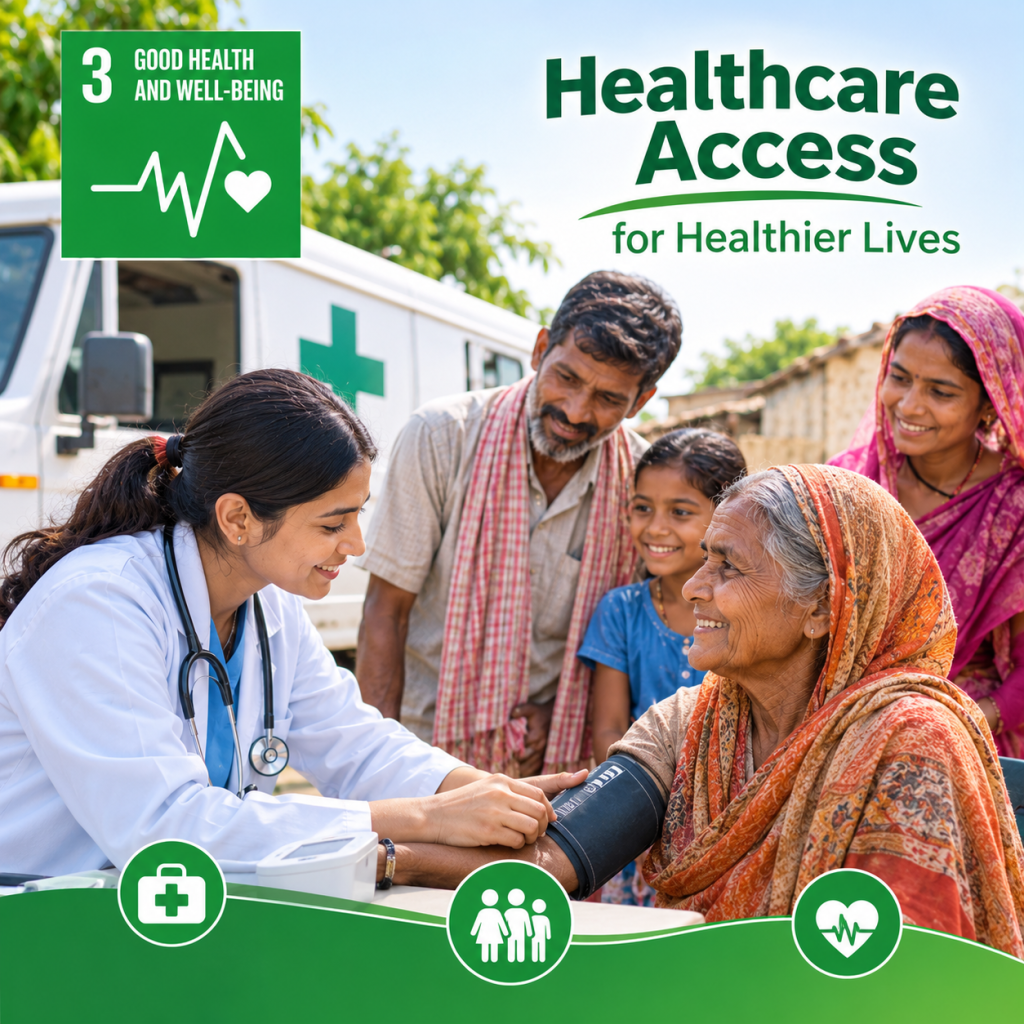
Healthcare access means that people can get the care they need, when they need it, without hardship. Three qualities define it:
- Affordable: Cost never stops a person from seeking care.
- Quality: Services are safe, effective, and respectful.
- Timely: Care arrives early enough to make a difference.
Essential services
Access should cover the services that protect health at every stage:
- Primary care: The first point of contact, handling common illnesses and long term conditions close to home.
- Emergency treatment: Fast response to injury, childbirth complications, and sudden illness.
- Preventive services: Vaccination, screening, and antenatal care that stop disease early. See our post on preventive healthcare and SDG 3.
Barriers to Healthcare Access
Four barriers appear again and again:
- Healthcare costs: Fees, medicines, and transport can push families into hardship or keep them away.
- Geographical distance: Long journeys delay care, especially in emergencies.
- Staff shortages: WHO projects a shortfall of 11.1 million health workers by 2030, mostly in low and lower middle income countries [4].
- Limited facilities: Clinics may lack medicines, equipment, electricity, or clean water.
Who is hit hardest
These barriers do not fall evenly. WHO and World Bank data show that women, people living in poverty, rural residents, and people with less education report greater difficulty accessing essential services [3].
Poverty also compounds the problem. Of the 2.1 billion people facing financial hardship, 1.6 billion live in poverty or are pushed deeper into it by health costs [3].
Healthcare Inequality Between Communities
Urban and rural gaps
Health facilities and specialists cluster in cities. Rural residents often travel far for basic care.
WHO notes that deploying health workers to rural, remote, and underserved areas is a persistent difficulty. International migration of health workers can worsen shortfalls in poorer countries [4].
Low income and underserved communities
Informal workers, migrants, displaced people, and remote communities often fall outside formal health schemes. They may also lack documents, transport, or the language skills to navigate services.
The result is uneven progress. Fewer than one third of countries have improved both service coverage and financial protection over the past two decades [2].
The Role of Universal Health Services
Universal health coverage (UHC) aims to ensure that everyone can use essential services without financial hardship. It improves access in three ways:
- Pooling funds: Taxes or insurance contributions spread the cost of illness across the whole population.
- Prioritising primary care: Services close to home reach more people at lower cost.
- Protecting households: Low or zero fees at the point of care keep treatment affordable.
Financial protection in practice
Financial protection means that paying for care does not push families into poverty. It is tracked through its own SDG indicator, 3.8.2.
Affordable treatment matters most for people with chronic conditions, who need care again and again. For more on coverage, read our article on universal health coverage and SDG 3.
Technology and Digital Healthcare
Digital tools can extend care where facilities are scarce:
- Telemedicine: Remote video or phone consultations connect patients to doctors and specialists.
- Digital health platforms: Appointment systems, electronic records, and decision support tools help health workers deliver consistent care.
- Online consultations: Follow up visits and advice for minor conditions save travel time and cost.
These tools can help community health workers refer patients faster and let rural clinics consult distant specialists.
Technology has limits, however. It needs reliable connectivity, devices, and digital skills. It cannot replace physical examinations or emergency care. Without careful design, it may widen gaps instead of closing them.
A Real World Case Study
Thailand’s Universal Coverage Scheme
The approach
In 2002, Thailand introduced its Universal Coverage Scheme. It was funded through taxes, offered a comprehensive benefit package, and charged no copayment at the point of service [6].
The scheme paid providers strategically and relied on strong district level primary care [6].
The results
The evidence shows large gains in financial protection [5]:
- Catastrophic health spending (over 10% of household consumption) fell from 5.4% of households in 2000 to 3.3% in 2002, 2.8% in 2004, and 2.0% in 2006.
- Impoverishment from inpatient payments dropped from 11.9% in 2000 to 4.3% in 2002 and 2.6% in 2004.
By 2010, catastrophic spending in Thailand was about 3%, roughly four times lower than the global incidence of 12% [6].
The limitations
Differences between Thailand’s three insurance schemes persisted. New costly needs, such as kidney dialysis, later required the benefit package to expand [5].
Thailand is also an upper middle income country, so other countries must adapt its lessons to their own budgets [6].
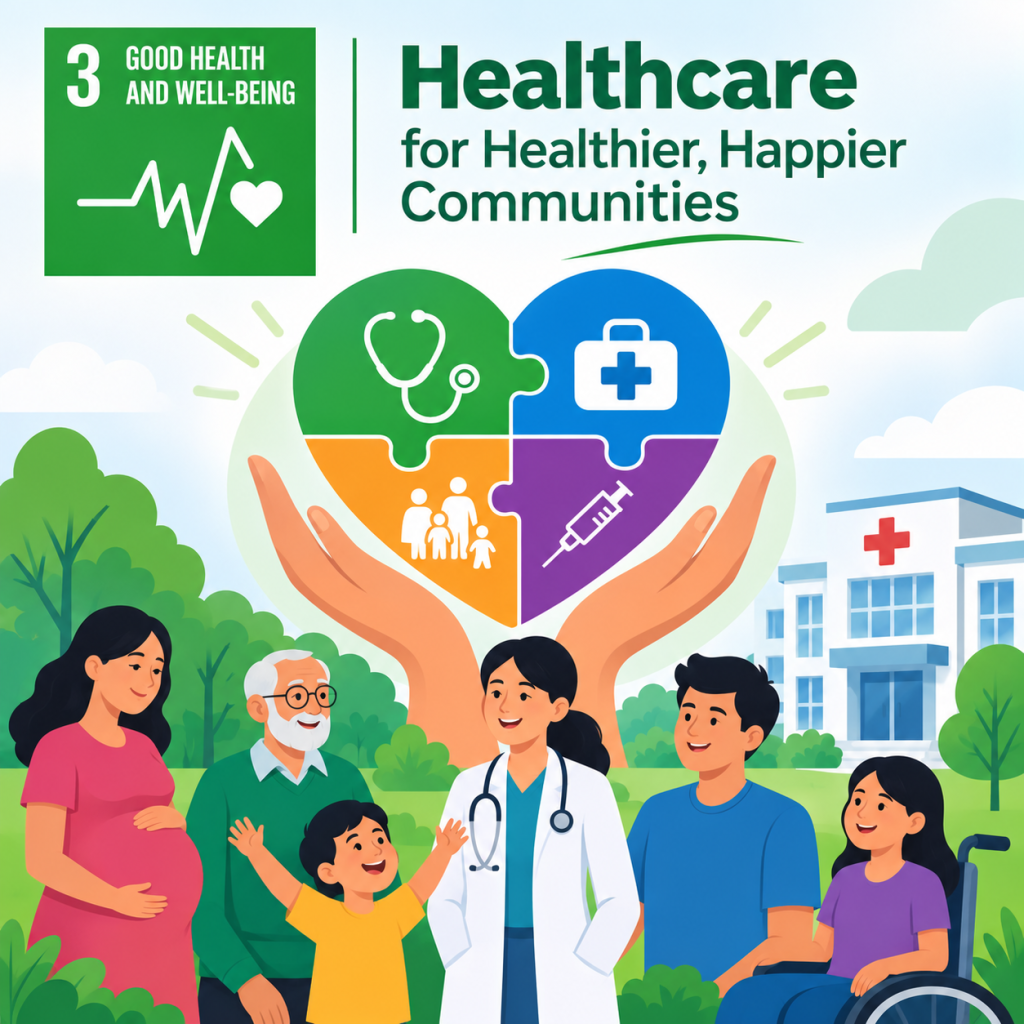
Measuring Progress Toward SDG 3
Target 3.8 is tracked through two indicators:
- SDG 3.8.1: The Service Coverage Index, which measures coverage of essential health services.
- SDG 3.8.2: Financial hardship from out of pocket health spending.
The latest WHO and World Bank report was the first to use revised versions of both indicators [3].
The numbers show progress with limits. The Service Coverage Index rose from 54 in 2000 to 71 in 2023 [3]. Yet 4.6 billion people still lacked coverage, and 2.1 billion faced financial hardship [1].
The World Bank also notes that coverage has stagnated since 2015 [2]. At the current pace, the 2030 goal will be missed.
What Governments and Businesses Can Do
Governments
- Invest in infrastructure and people: Build clinics, equip them, and train and retain health workers, especially in rural areas.
- Make essential services affordable: Remove fees for people in poverty and reduce out of pocket costs for medicines.
- Strengthen primary care: It delivers the widest reach for the lowest cost.
Businesses
- Public private partnerships: Companies can help with logistics, diagnostics, mobile clinics, and digital tools, within clear public standards.
- Employee healthcare support: Health insurance that covers employees and their dependants, paid sick leave, and telehealth benefits reduce access barriers for workers.
This article makes no claims about financial returns. Results depend on context. For related ideas, see our post on employee wellbeing and corporate sustainability.
Conclusion
Equal healthcare access is essential to SDG 3. Without it, medical progress reaches only those who can afford it or live near it. The evidence is clear. Thailand showed that tax funded, primary care based coverage can sharply reduce financial hardship. Yet billions still lack essential services.
Affordable, inclusive, and reliable healthcare systems are the way forward. They need sustained public investment, supportive technology, and committed partners. Every community that gains healthcare access moves the world closer to good health for all.
References
- World Health Organization. Tracking Universal Health Coverage: 2025 Global Monitoring Report. https://www.who.int/teams/health-financing-and-economics/global-monitoring-report/2025
- World Bank. Universal Health Coverage. https://www.worldbank.org/ext/en/topic/health/universal-health-coverage
- WHO and World Bank (December 2025). Most countries make progress towards universal health coverage, but major challenges remain. https://allafrica.com/stories/202512080073.html
- World Health Organization. Health workforce. https://www.who.int/health-topics/health-workforce
- World Health Organization. Universal Coverage Scheme in Thailand: Equity Outcomes and Future Agendas, background paper for the World Health Report 2010. https://cdn.who.int/media/docs/default-source/health-financing/technical-briefs-background-papers/whr-2010-background-paper-43.pdf?sfvrsn=8f53065a_3&download=true
- Financial risk protection of Thailand’s universal health coverage: results from national household surveys between 1996 and 2015. International Journal for Equity in Health. https://www.ncbi.nlm.nih.gov/pmc/articles/PMC7507254/