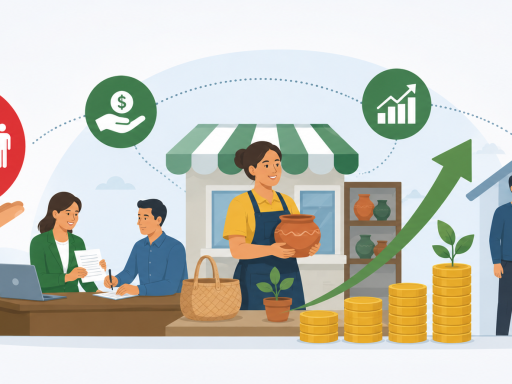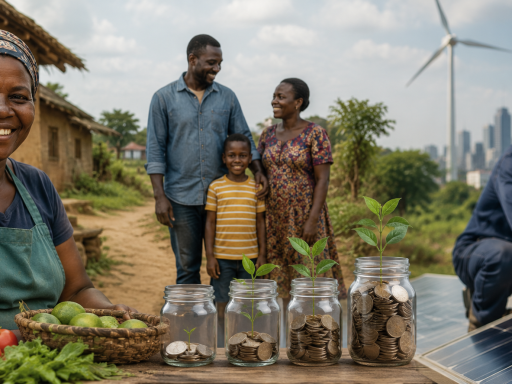

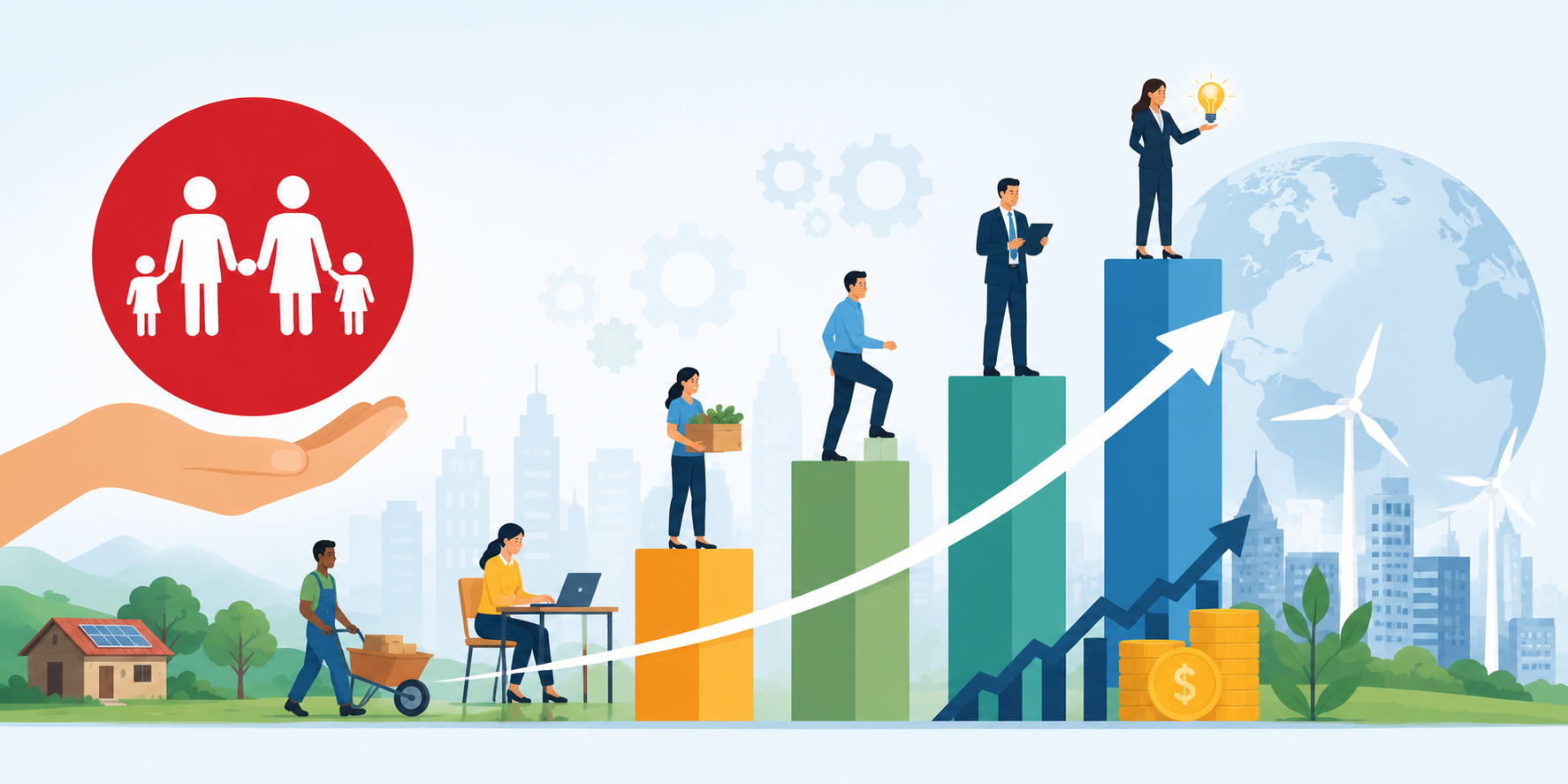
Poverty is not just a humanitarian crisis, it is an economic one. When large segments of the population lack income, education, and basic services, entire economies stagnate. Understanding how SDG 1 supports sustainable economic growth shifts the conversation from charity to strategy. Ending poverty is not simply the right thing to do; it is one of the most powerful levers available for building productive, resilient, and inclusive economies.
This post examines exactly how SDG 1 No Poverty creates the conditions for long-term economic expansion, stronger businesses, and more equitable development outcomes.
SDG 1 Creates Stronger Local Economies
One of the most direct economic effects of poverty reduction is the expansion of purchasing power. When households move out of extreme poverty, they spend more on food, goods, education, healthcare, and housing. That increased spending circulates through local economies, stimulating demand and creating jobs in the process.
Consider Sub-Saharan Africa. In countries where cash transfer programs have lifted household incomes, local markets have grown substantially. Families that previously survived on subsistence agriculture begin buying processed foods, school supplies, and small household appliances. As a result, local traders, manufacturers, and service providers all benefit from that expanded demand.
Beyond individual purchasing power, poverty reduction also drives greater participation in formal economic activities. People who gain access to legal identity documents, bank accounts, and property rights can engage in commerce more fully. They can take out loans, sign contracts, and build savings all of which are fundamental building blocks of a functioning market economy. As explored in our post on SDG 1 and financial inclusion, economic access is a critical gateway out of persistent poverty.
Poverty Reduction Encourages Business Growth
Businesses thrive where customers exist. Therefore, reducing poverty directly expands the commercial opportunity landscape. The so-called “bottom of the pyramid” the roughly four billion people living on less than $8 a day represents an enormous, largely untapped consumer market. As incomes rise in this segment, new industries emerge to serve them.
Mobile banking in Kenya provides a compelling example. M-Pesa, launched in 2007, reached millions of unbanked Kenyans who previously had no access to formal financial services. By bringing low-income users into the digital economy, M-Pesa enabled everything from microloans to utility payments, creating business value while simultaneously reducing financial exclusion.
Stable business environments also depend on poverty reduction. High poverty rates correlate with political instability, crime, and weak institutional capacity, all factors that raise the cost of doing business. Conversely, countries that invest in social protection and basic services create more predictable operating environments. Businesses can plan long-term, attract investment, and expand operations when they operate within stable, well-governed societies. This is a core argument behind sustainable business practices that align with SDG targets.
The Link Between SDG 1 and Workforce Development
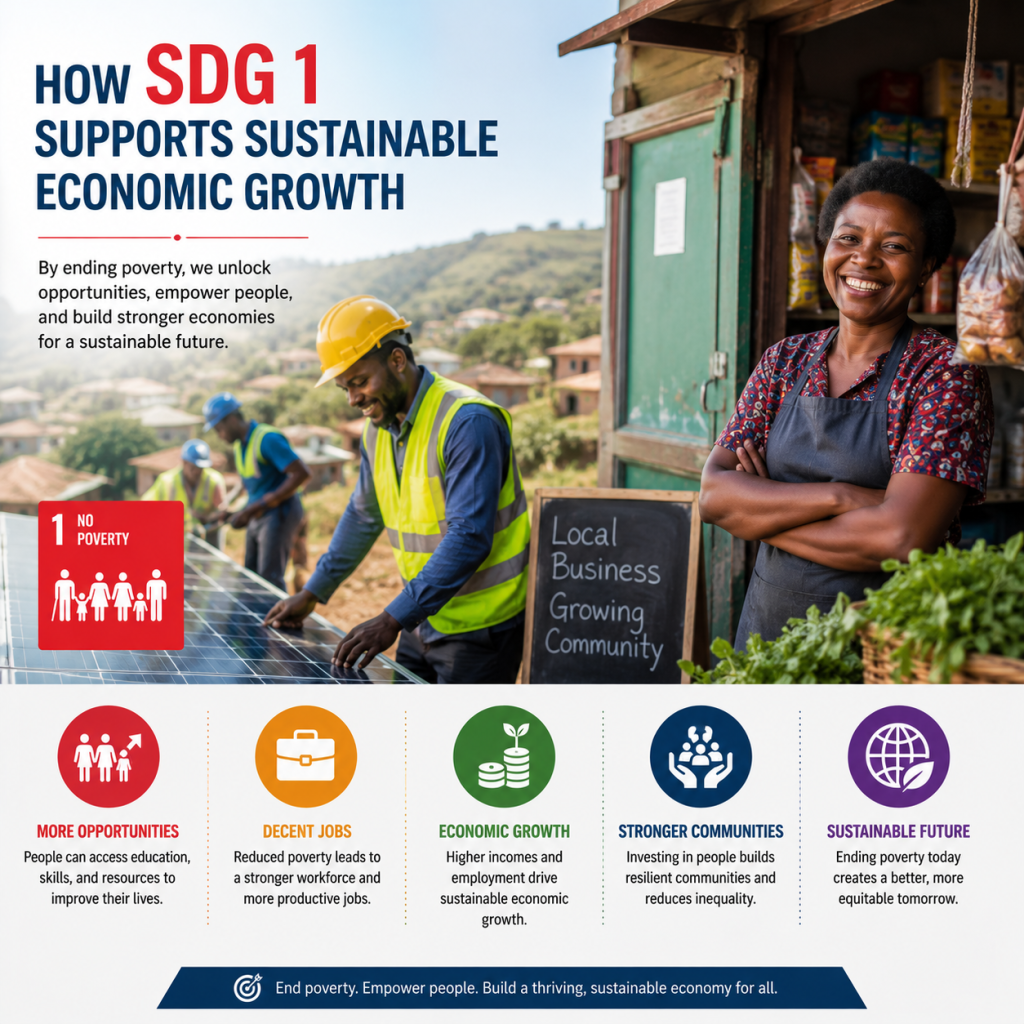
Poverty and workforce quality are deeply intertwined. Children from low-income households are more likely to drop out of school, suffer from malnutrition, and lack access to healthcare and all of which limit their future productivity. Consequently, high poverty rates translate directly into less skilled, less healthy, and less productive workforces.
SDG 1 interventions that address income poverty therefore produce significant long-term workforce benefits:
- Improved school attendance and completion rates lead to higher literacy and technical skills
- Better nutrition outcomes support cognitive development in children, improving learning capacity
- Reduced child labor keeps young people in education rather than informal, low-productivity work
- Access to healthcare reduces absenteeism and improves worker output across industries
When people have economic security, they invest in themselves and their children. Over a generation, that creates a workforce that is more educated, healthier, and better positioned to drive innovation and productivity. This labor quality improvement is exactly what businesses need to grow sustainably, particularly in emerging markets where talent shortages constrain expansion. The connection between workforce development and broader sustainable development goals is also central to SDG 8 — Decent Work and Economic Growth.
How Businesses Benefit from SDG 1 Initiatives
Forward-looking businesses increasingly recognize that poverty reduction is good for the bottom line. The benefits extend well beyond expanded consumer markets.
Stronger Communities Companies operating in communities with lower poverty rates face fewer security risks, experience better infrastructure, and encounter more reliable local supply chains. Strong communities also produce more engaged employees who are less distracted by personal financial hardship.
Reduced Economic Risks Poverty concentrations create systemic fragility. Businesses exposed to regions with high inequality face greater risk from social unrest, policy volatility, and supply chain disruption. Investing in poverty reduction — directly or through advocacy — therefore functions as a form of risk management.
Enhanced Corporate Reputation Consumers, investors, and regulators increasingly scrutinize companies on their social impact. Businesses that actively contribute to SDG 1 goals build stronger reputations, attract ESG-oriented investment, and strengthen their social license to operate. As our analysis of the business value of ESG demonstrates, social performance is now a measurable business asset.
The Role of Inclusive Economic Policies
Government policy plays a central role in translating SDG 1 ambitions into economic outcomes. Three policy areas stand out as particularly impactful.
Financial Inclusion Expanding access to banking, credit, and insurance for low-income populations unlocks enormous economic potential. When smallholder farmers can access crop insurance, they invest more in seeds and fertilizer. When entrepreneurs can borrow at fair rates, they scale their businesses. Financial inclusion is therefore both a poverty reduction tool and an economic growth driver.
Support for Small Enterprises In most developing economies, micro, small, and medium enterprises (MSMEs) account for the majority of employment. Policies that reduce bureaucratic barriers, provide training, and offer affordable credit to small businesses generate jobs and income at the community level. Furthermore, supply chain integration between large corporations and local MSMEs creates shared value and a model at the heart of inclusive sustainable business practices.
Social Protection Measures Cash transfers, unemployment insurance, and public healthcare reduce the economic vulnerability that keeps households trapped in poverty cycles. Crucially, these measures also act as automatic stabilizers during economic downturns, maintaining consumer spending even when private sector activity slows.
Challenges to Achieving Sustainable Economic Growth
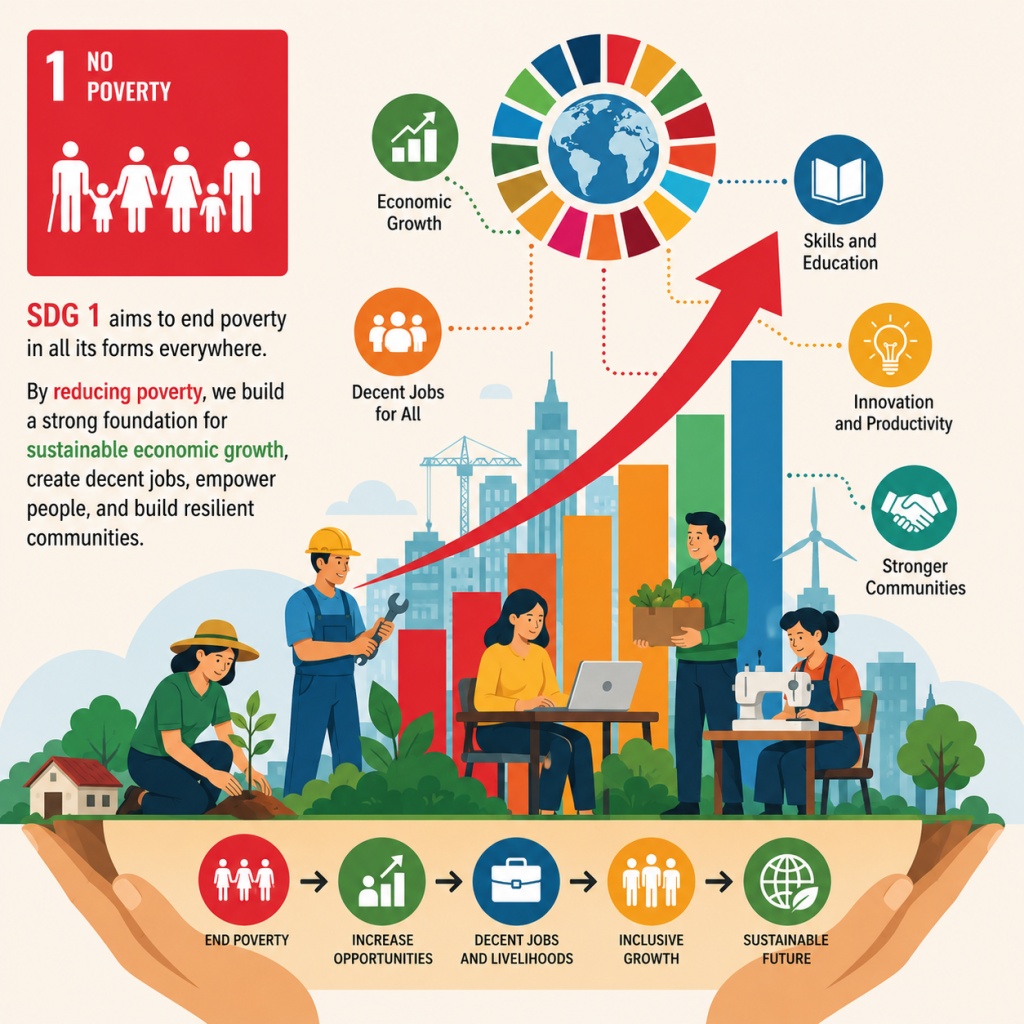
Despite clear benefits, several structural barriers slow progress.
Persistent Inequality Economic growth does not automatically reduce poverty. In many countries, growth has been concentrated among higher-income groups while the bottom quintile sees minimal gains. Without deliberate redistribution mechanisms, inequality can deepen even as GDP rises.
Limited Access to Opportunities Geographic isolation, discrimination, and inadequate infrastructure continue to exclude millions from economic participation. Rural communities, women, and marginalized ethnic groups face compounding disadvantages that no single policy can quickly address.
Economic Disruptions Climate shocks, global pandemics, and financial crises disproportionately affect the poorest households. These disruptions can erase years of progress in months, underscoring the need for resilient social protection systems as described in SDG 1 and social protection systems.
Examples of SDG 1 Driving Positive Change
Real-world evidence confirms that SDG 1-aligned approaches produce measurable economic gains.
Community Development Programs Brazil’s Bolsa Família program, one of the world’s largest conditional cash transfer schemes — lifted tens of millions out of extreme poverty while simultaneously boosting local consumption and school enrollment rates. The program demonstrated that social investment generates both human and economic returns.
Inclusive Business Models Companies like Grameen Bank in Bangladesh built entire business models around serving the poor. By providing microfinance to low-income women, Grameen enabled millions to start small businesses, repay loans reliably, and build assets over time, proving that the poor are creditworthy customers, not just aid recipients.
Public-Private Partnerships Collaborations between governments and businesses have produced scaled solutions in areas from rural electrification to digital financial services. When aligned with SDG 1 objectives, these partnerships combine public reach with private efficiency to deliver broader impact, a model detailed in the role of partnerships in achieving sustainable development goals.
Conclusion
How SDG 1 supports sustainable economic growth is no longer a theoretical question, the evidence is clear and compelling. Poverty reduction expands markets, develops workforces, stabilizes societies, and reduces the systemic risks that undermine business performance. Moreover, it creates the foundation of human capability on which all durable economic progress ultimately rests.
The path to 2030 requires continued investment in social protection, financial inclusion, inclusive business models, and transparent accountability systems. Governments, businesses, and civil society all have a role to play. Those who act now, aligning strategy with SDG 1 will not only contribute to a more just world but will also position themselves at the center of the most significant economic opportunity of the coming decade.