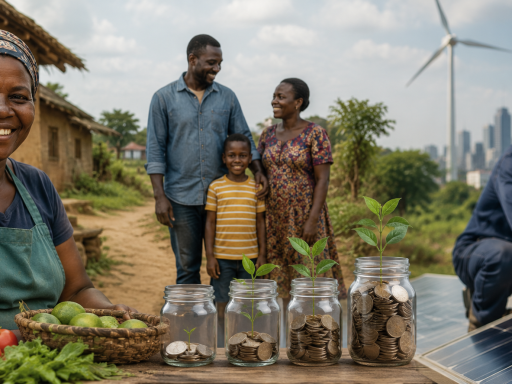

What stops a talented entrepreneur in rural Bangladesh or sub-Saharan Africa from building a business? Often, it is not ambition or skill, it is the absence of a single small loan. SDG 1 and microfinance are directly connected through this reality. The United Nations’ first Sustainable Development Goal calls for an end to extreme poverty in all its forms. Yet without access to financial tools, billions of people remain locked out of the economic participation that makes poverty escape possible. Microfinance addresses that gap directly through turning financial access into a pathway out of deprivation.
What is SDG 1 and Microfinance
Microfinance refers to the provision of small-scale financial services, including loans, savings accounts, insurance, and payment systems to individuals and small businesses that lack access to conventional banking. Its core purpose is to bring low-income people into the formal financial system so they can build income, manage risk, and grow economic stability over time.
Traditional banks typically require collateral, credit history, and minimum account balances that poor households simply cannot meet. Microfinance institutions (MFIs) design their products differently. They offer small loan amounts, flexible repayment schedules, and group lending models that substitute social trust for collateral. As a result, market vendors, smallholder farmers, artisans, and informal sector workers gain access to capital they would otherwise never receive.
The concept is not new; Muhammad Yunus pioneered it through Grameen Bank in Bangladesh during the 1970s but its relevance has only grown. Today, microfinance operates across more than 100 countries and serves an estimated 140 million borrowers globally.
How Microfinance Supports SDG 1
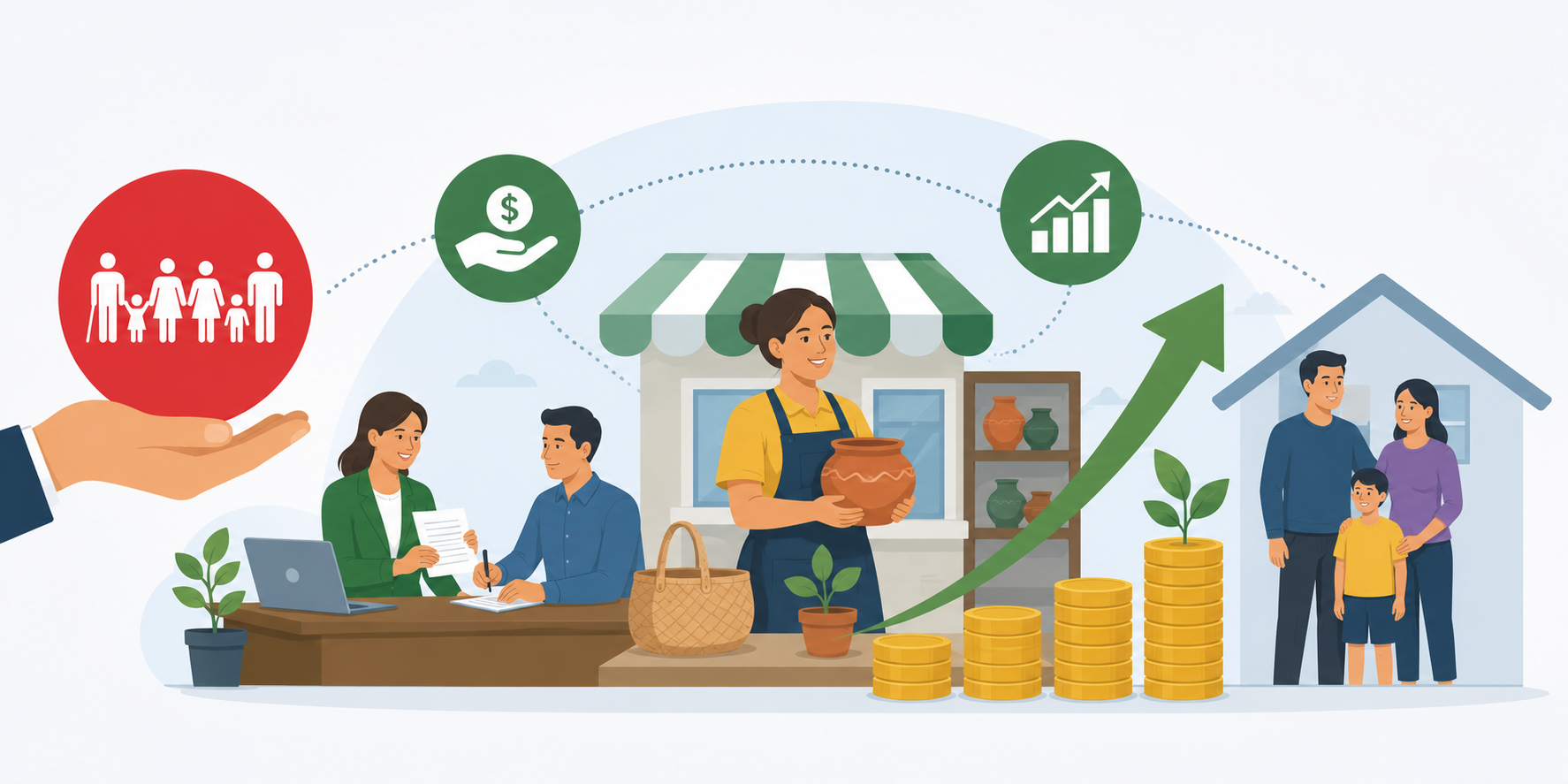
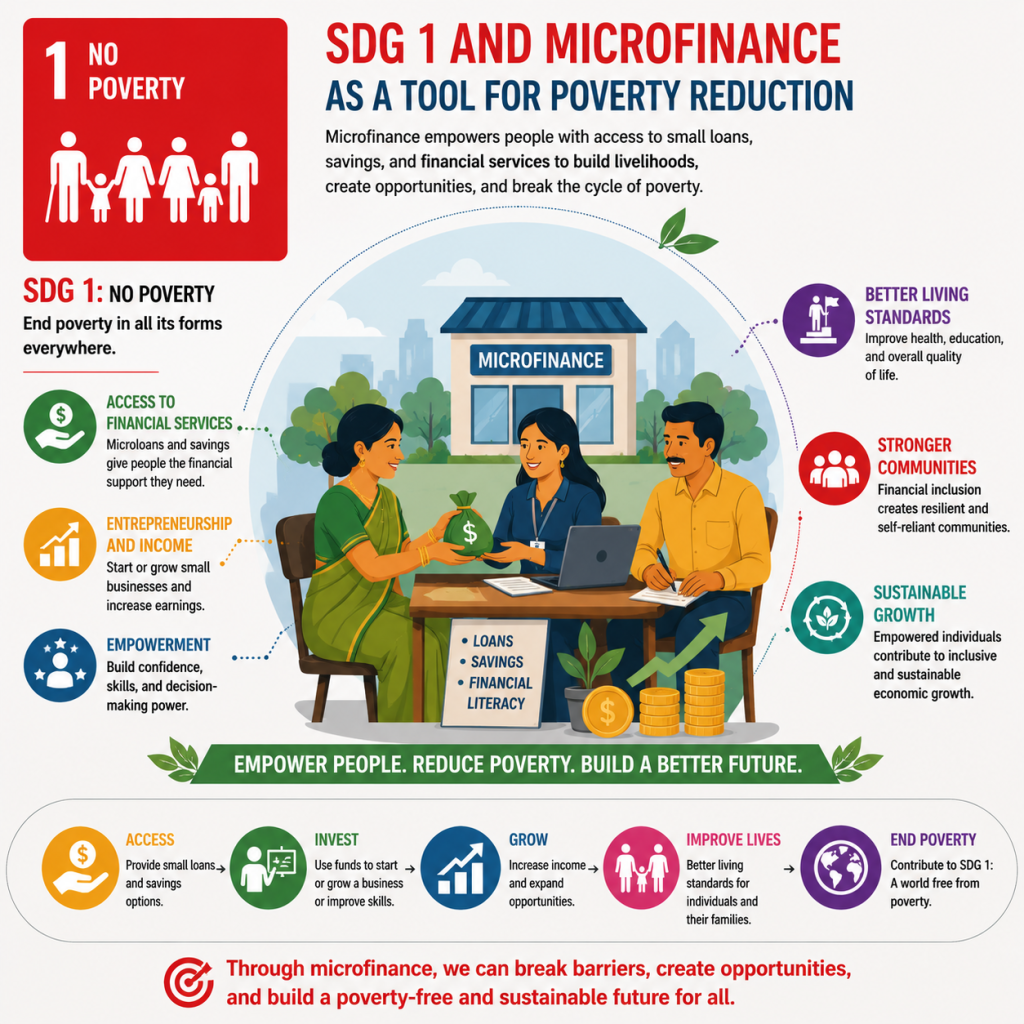
Microfinance supports SDG 1 through three interconnected pathways.
Creating Income Opportunities
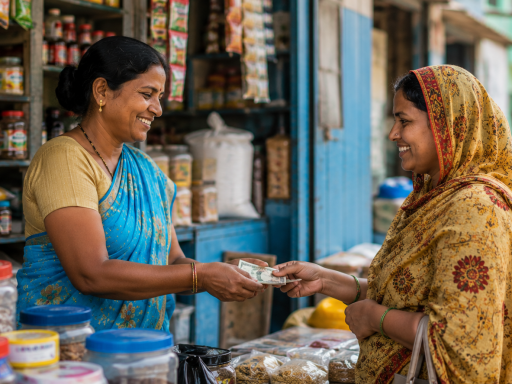
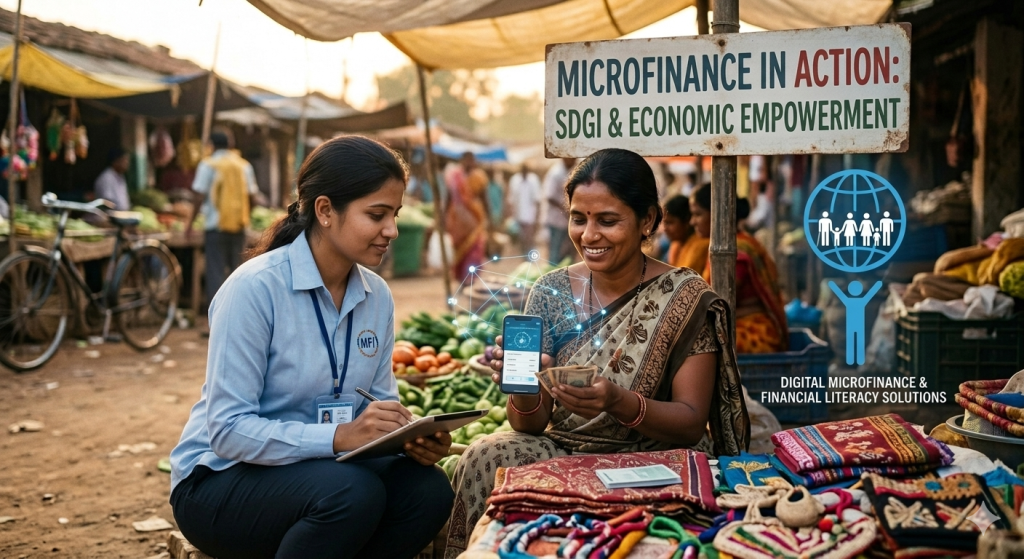
Access to capital allows low-income individuals to start or expand income-generating activities. A market trader can stock more inventory. A seamstress can purchase a better sewing machine. A farmer can afford quality seeds before the planting season. Each of these investments, however small, generates returns that lift household income above the poverty line over time.
Supporting Self-Employment and Small Businesses
In many developing economies, the informal sector accounts for the majority of employment. Microfinance provides the working capital that keeps micro-enterprises viable and growing. Moreover, when small businesses succeed, they often create jobs for others in their communities and multiplying the poverty reduction effect beyond the individual borrower.
Reducing Financial Exclusion
Financial exclusion is both a symptom and a cause of poverty. When people cannot save securely, insure against risks, or borrow affordably, they remain vulnerable to every economic shock. Microfinance addresses this directly by pulling excluded populations into formal financial ecosystems. This connects closely to the broader argument made in SDG 1 and financial inclusion , that economic access is a prerequisite for lasting poverty reduction.
Role of Microfinance Institutions
Microfinance institutions occupy a unique position in the development finance landscape. They bridge the gap between commercial banking and the populations that conventional finance ignores.
Providing Small Loans and Financial Services
MFIs offer a range of products beyond credit alone. Microsavings accounts help households build emergency buffers. Microinsurance protects against crop failure, illness, or natural disaster. Payment services enable safe money transfers for workers far from their families. Together, these tools create a financial safety net that reduces vulnerability significantly.
Supporting Rural and Underserved Communities
Rural populations often sit furthest from formal banking infrastructure. MFIs address this through branch networks in remote areas, agent banking models, and mobile outreach. In many regions, MFIs are the only financial service providers within reach of farming communities and making their role in poverty reduction irreplaceable.
Building Financial Stability
Beyond individual loans, MFIs build long-term client relationships that support financial habit formation. Regular repayment builds credit history. Savings programs instill financial discipline. Over time, these behaviors compound and turn one-time borrowers into financially capable households with growing economic resilience. This stability is precisely what social protection systems aligned with SDG 1 aim to establish at scale.
Impact of SDG 1 and Microfinance on Communities
The community-level impact of microfinance extends well beyond individual borrowers.
Poverty Reduction at Grassroots Level
When local entrepreneurs succeed, they spend money locally. That spending supports neighboring businesses, creates employment, and circulates wealth within the community rather than extracting it. Microfinance therefore acts as a community development tool, not just an individual one.
Women’s Empowerment and Inclusion
Women represent approximately 80% of microfinance borrowers globally. This is no accident. MFIs deliberately target women because evidence shows they invest loan proceeds more reliably in household welfare, particularly in children’s education, nutrition, and health. Furthermore, access to independent credit increases women’s economic agency and decision-making power within households, contributing directly to gender equality goals alongside SDG 1.
Local Economic Development
Communities with active microfinance ecosystems tend to develop more diversified local economies. Multiple small businesses serving different needs reduce dependence on a single employer or crop. Consequently, these communities demonstrate greater economic resilience when external shocks, price volatility, drought, or global recessions arrive.
Challenges in SDG 1 and Microfinance Systems
Despite its proven impact, microfinance faces real structural limitations.
High-Risk Lending Environments
Lending to low-income borrowers without collateral carries inherent risk. When borrowers face crop failure, illness, or sudden income loss, repayment becomes impossible. MFIs must price that risk into their interest rates which sometimes makes loans more expensive than ideal, particularly for the most vulnerable borrowers.
Limited Financial Literacy
Many potential microfinance clients lack the financial knowledge to use credit effectively. Without understanding interest rates, cash flow management, or business planning, borrowers can take on debt that worsens rather than improves their situation. Financial education must therefore accompany credit provision a resource-intensive requirement that many MFIs struggle to fund adequately.
Access and Scalability Issues
Reaching the most remote and marginalized communities remains difficult and expensive. Physical branch networks require infrastructure investment that many MFIs cannot sustain. As a result, the people in greatest need are often the hardest to serve at scale.
Technology and Digital Microfinance
Technology is fundamentally reshaping what microfinance can achieve.
Mobile Banking and Fintech Solutions
Mobile money platforms have dramatically reduced the cost of reaching unbanked populations. In East Africa, platforms such as M-Pesa and Tigo Pesa allow users to save, borrow, and transfer money entirely through their phones and no branch required. As a result, financial services have reached communities that previously had no access at any price.
Digital Lending Platforms
Algorithm-driven lending platforms use alternative data, mobile usage patterns, utility payment history, and even social network behavior to assess creditworthiness without traditional credit scores. This innovation extends loan access to first-time borrowers who have no formal financial history, removing one of the most significant barriers to microfinance entry.
Improving Access Through Technology
The broader integration of technology into microfinance delivery also reduces operational costs, speeds loan approval, and improves fraud detection. These efficiency gains allow MFIs to serve more clients at lower cost directly addressing the scalability challenge. The role of technology in sustainable development is explored in greater depth in how AI is revolutionizing sustainable business practices.
Future of Microfinance in SDG 1 Progress
Looking ahead, three developments will define microfinance’s contribution to SDG 1 in the years remaining before 2030.
Expansion of Digital Financial Ecosystems
As smartphone penetration deepens and mobile internet becomes more affordable across the Global South, digital microfinance will reach hundreds of millions of previously excluded people. This expansion will not only increase credit access but also integrate borrowers into broader digital economies opening doors to e-commerce, digital employment, and online savings tools.
Stronger Inclusion Policies
Governments are increasingly recognizing that financial inclusion requires active policy support not just market forces. Regulatory frameworks that enable fintech innovation, protect consumers from predatory lending, and incentivize MFIs to serve underserved regions will be critical. Countries that align national financial inclusion strategies with SDG 1 targets will make faster, more durable progress. This policy dimension connects to the SDG accountability and governance frameworks that underpin the entire 2030 Agenda.
Sustainable Credit Systems
The future of microfinance lies in building credit systems that are not just accessible but genuinely sustainable for borrowers and institutions alike. That means interest rates that reflect real costs without being exploitative, loan products designed around borrowers’ actual income cycles, and institutional models that blend social mission with financial viability. As the microfinance sector matures, these design principles will determine whether it delivers lasting impact or short-term relief.
Conclusion
SDG 1 and microfinance share a common purpose: ensuring that poverty is not a permanent condition determined by the accident of birth. Microfinance has already demonstrated through millions of individual stories and decades of data that access to small amounts of capital can change the trajectory of a life, a household, and a community.
The long-term impact on sustainable development depends on scaling what works, correcting what does not, and embedding financial inclusion permanently into both national policy and global development strategy. As the 2030 deadline approaches, microfinance remains one of the most practical, evidence-backed tools available for turning SDG 1 from an aspiration into a measurable reality.