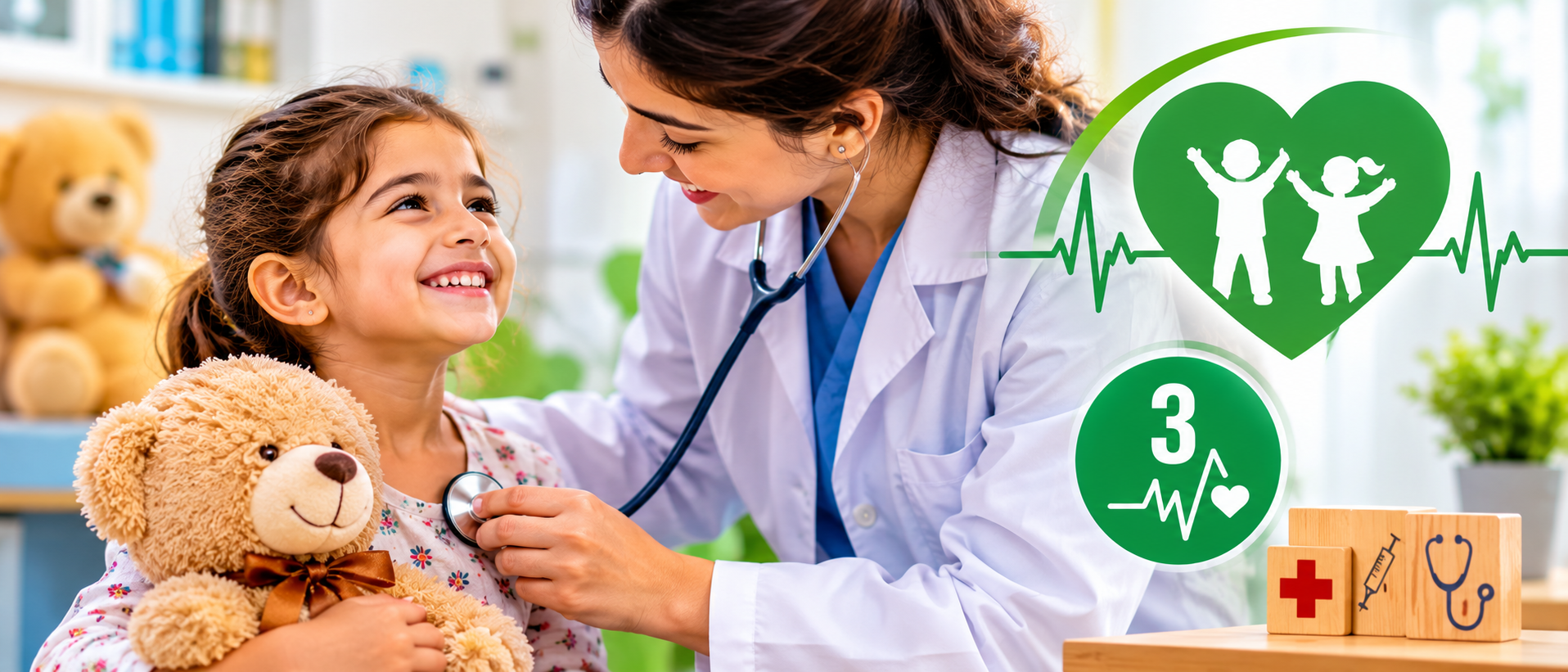
A child’s first years set the course for a whole life. Child health shapes how children grow, learn, and later contribute to their communities. That makes it a cornerstone of sustainable development.
Child health sits at the heart of SDG 3, the goal to ensure healthy lives and wellbeing for all. Target 3.2 calls for an end to preventable deaths of newborns and children under five [1].
The challenge remains large. In 2024, an estimated 4.9 million children under five died, down from 6.1 million in 2015 [1]. Most of these deaths were preventable.
This article explains what child health means, what threatens it, and what works. For wider context, see our overview of SDG 3: Good Health and Wellbeing.
Understanding Child Health
Three dimensions
Child health is more than the absence of disease. It covers three connected dimensions:
- Physical health: Healthy growth, strong immunity, and protection from illness.
- Mental health: Emotional security, stable relationships, and the ability to cope with stress.
- Developmental health: Language, learning, movement, and social skills that develop at the right pace.
Care from birth through childhood
Each stage of childhood needs its own care. Newborns need skilled birth attendance and postnatal checks. Infants need immunisation and growth monitoring. School age children need treatment for illness, vision and hearing checks, and support for learning.
Each stage builds on the last. Care missed early is hard to make up later.
Major Challenges Affecting Child Health
Four threats cause the most harm:
- Preventable diseases: Neonatal conditions and infectious diseases cause most deaths among children under five [2]. Pneumonia, diarrhoea, and malaria remain major killers.
- Malnutrition: Undernutrition weakens immunity and stunts growth. Our post on nutrition and SDG 2 explores this link.
- Unsafe water and sanitation: Contaminated water spreads diarrhoeal disease, especially among young children.
- Limited healthcare access: Distance, cost, and shortages of trained staff keep families from timely care.
How poverty and living conditions shape health
These threats rarely arrive alone. Poor households often face crowded housing, smoky indoor air, unsafe water, and food insecurity at the same time.
Conflict and fragility add further risk. Children in fragile and conflict affected settings face an under five mortality risk almost triple that of children elsewhere [2].
Child Vaccination and Disease Prevention
Routine immunisation is one of the most effective ways to protect children. It prevents illness, reduces hospital visits, and saves lives.
Vaccination also protects communities. When enough children are immunised, diseases spread less easily. This shields infants too young to be vaccinated.
The latest WHO and UNICEF data show progress and gaps [3][4]:
- Full protection: 85% of infants, or 110 million, completed three doses of the DTP vaccine in 2025.
- Zero dose children: 13.5 million infants received no vaccine at all.
- Measles: 84% received a first dose, but only 77% received a second dose.
- Drop out: 7.3 million infants started vaccination but missed their first measles dose.
These gaps matter. Measles spreads quickly where coverage slips, and zero dose children often live in the hardest to reach communities.
Access to Healthcare for Children
Why affordable, early care matters
Affordable care lets families seek help before an illness becomes severe. Three elements matter most:
- Affordable healthcare: Fees should never keep a sick child from treatment.
- Regular checkups: They track growth, update vaccines, and spot problems early.
- Early diagnosis: Catching pneumonia, anaemia, or developmental delay early makes treatment simpler and more effective.
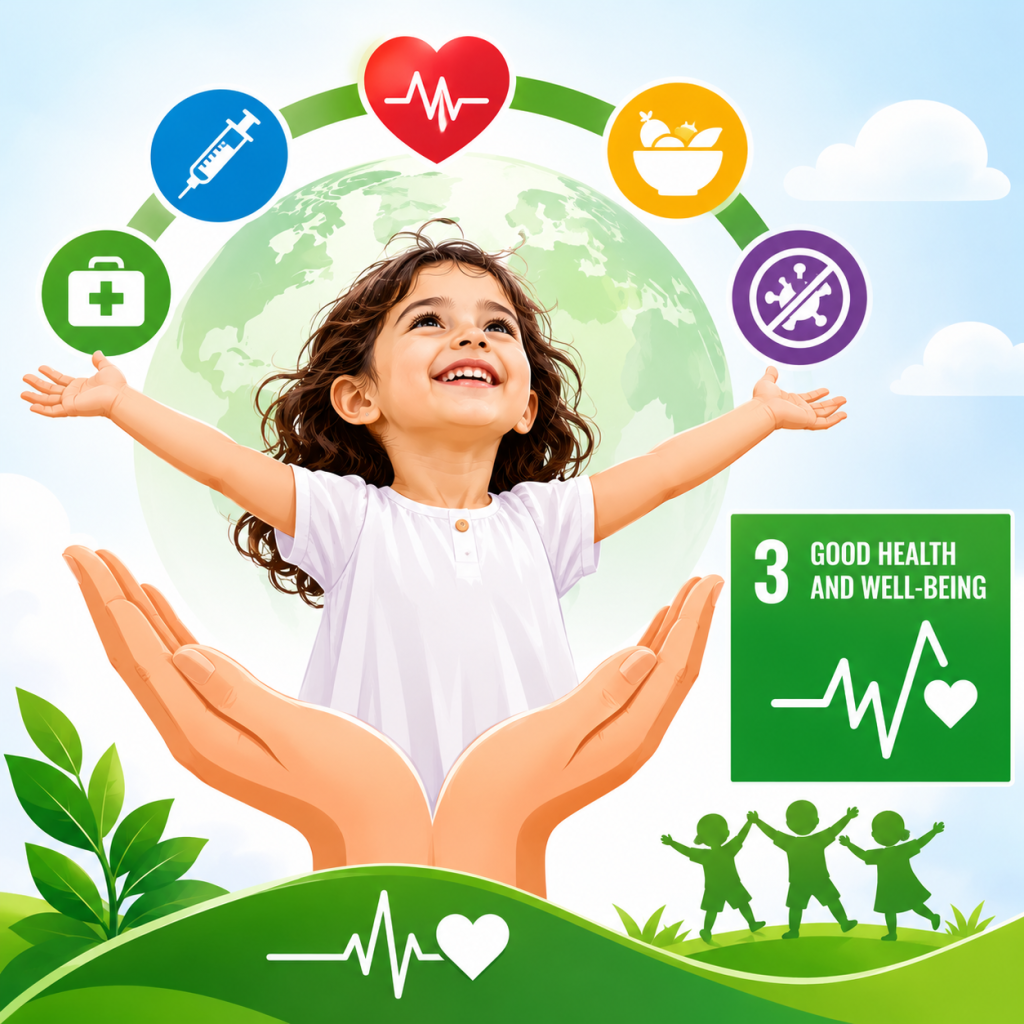
This links directly to SDG target 3.8 on universal health coverage. Our article on universal health coverage and SDG 3 covers the topic in depth.
Barriers in underserved communities
Children in underserved communities face added obstacles:
- Long travel distances to clinics
- Out of pocket costs for medicines and transport
- Too few trained health workers
- Conflict, displacement, and unreliable supplies
The Role of Education and Awareness
Healthy habits start at home and grow through schools and communities. Parents, teachers, and local leaders all shape a child’s daily choices.
- Hygiene: Handwashing with soap and safe water storage reduce infections.
- Nutrition: Breastfeeding, diverse diets, and healthy school meals support growth.
- Physical activity: Safe spaces for active play build strength and coordination.
- Mental wellbeing: Predictable routines, open conversations, and teachers trained to spot distress help children feel secure.
Awareness also builds trust in services. Parents who understand why vaccines and checkups matter are more likely to use them.
A Real World Case Study
Rwanda’s Community Based Child Health Programme
The problem
In 2005, Rwanda’s under five mortality rate was 152 deaths per 1,000 live births [6].
The approach
Rwanda built a nationwide network of community health workers. They are integrated into the health system and deliver care, education, and referrals close to home [6]. Strong immunisation programmes ran alongside them.
Measurable impact
- Under five mortality fell from 152 per 1,000 live births in 2005 to 45 in 2019 to 2020 [5][6].
- The latest survey, in 2025, shows a further fall to 36 per 1,000 [5].
- Among children aged 12 to 23 months, 97% have received three doses of DTP containing vaccine, and measles coverage is also 97% [5].
Limitations
Progress on newborns and infants has been slower. Three quarters of under five deaths in Rwanda still occur before a child’s first birthday [5]. Sustaining high coverage in remote areas also remains a challenge.
Measuring Progress Toward SDG 3
Target 3.2 is tracked through two indicators:
- SDG 3.2.1: Under five mortality rate, with a target of 25 or fewer deaths per 1,000 live births.
- SDG 3.2.2: Neonatal mortality rate, with a target of 12 or fewer deaths per 1,000 live births.
The 2024 data show real but incomplete progress [1][2]:
- The under five mortality rate was 37.4 per 1,000, a 13% decline since 2015.
- The neonatal mortality rate was 17.2 per 1,000, an 11% decline.
- 134 countries have already met the under five target, but 60 are not on track.
Newborn deaths are falling more slowly than deaths among older children. Meeting the 2030 targets will need faster action in the first month of life.
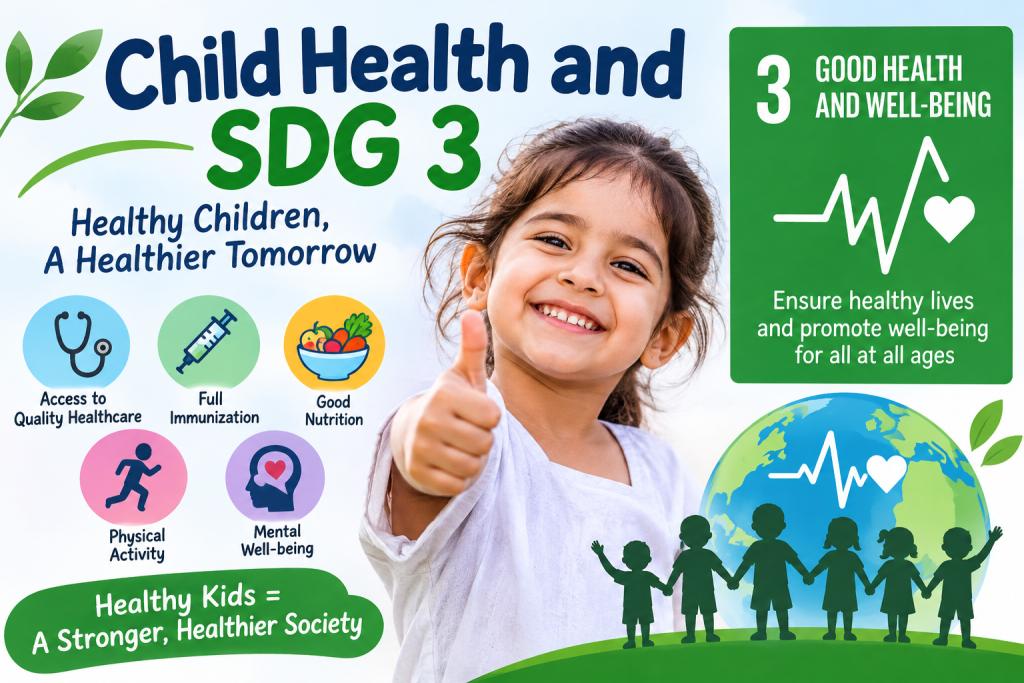
Target 3.8 adds another lens. Its indicator measures coverage of essential health services, including child immunisation and care for childhood illness. Strong coverage turns policy into survival.
What Governments and Businesses Can Do
Governments
- Invest in primary care and community health workers who reach families at home.
- Fund routine immunisation, cold chains, and catch up campaigns for zero dose children.
- Remove cost barriers so that no child is denied care.
- Track data by region and income group to find who is being missed.
Businesses
- Partnerships: Logistics, technology, and manufacturing firms can support vaccine delivery, cold chain systems, and data tools.
- Workplace support for parents: Paid parental leave, breastfeeding space, flexible hours, and health cover for dependants help families keep children healthy.
- Community health initiatives: Employers can support clinics, safe water, and health education near their operations.
This article makes no claims about financial returns. Benefits depend on the sector and context. For related ideas, see our post on employee wellbeing and corporate sustainability.
Conclusion
Child health is essential to SDG 3. Healthy children grow into capable adults, stronger workforces, and more resilient communities.
The evidence shows what works. Vaccination, skilled community health workers, and affordable early care save lives. Rwanda cut child deaths sharply by bringing care close to families.
Yet 4.9 million children still died in 2024, and 13.5 million received no vaccine in 2025 [1][3]. Every child deserves accessible, quality healthcare. Governments, businesses, and communities share the responsibility to deliver it.
References
- United Nations. Goal 3: Ensure healthy lives and promote well being for all at all ages, Target 3.2. https://sdgs.un.org/goals/goal3
- UN Inter agency Group for Child Mortality Estimation (2026). Levels and Trends in Child Mortality, Report 2025. https://data.unicef.org/wp-content/uploads/2026/05/UNIGME-Child-Mortality-Report-2025.pdf
- World Health Organization. Immunization coverage, fact sheet. https://www.who.int/news-room/fact-sheets/detail/immunization-coverage
- UNICEF and WHO (15 July 2026). Global childhood immunization coverage inches forward despite conflict and hesitancy. https://www.unicef.org/press-releases/global-childhood-immunization-coverage-inches-forward-despite-conflict-and-hesitancy
- National Institute of Statistics of Rwanda (December 2025). Rwanda Demographic and Health Survey 2025, Key Indicators Report. https://dhsprogram.com/pubs/pdf/PR164/PR164.pdf
- UNICEF Rwanda (2021). Community Health Program Investment Case in Rwanda. https://www.unicef.org/rwanda/media/3786/file/2021-CHP-Investment-Case.pdf