
Introduction
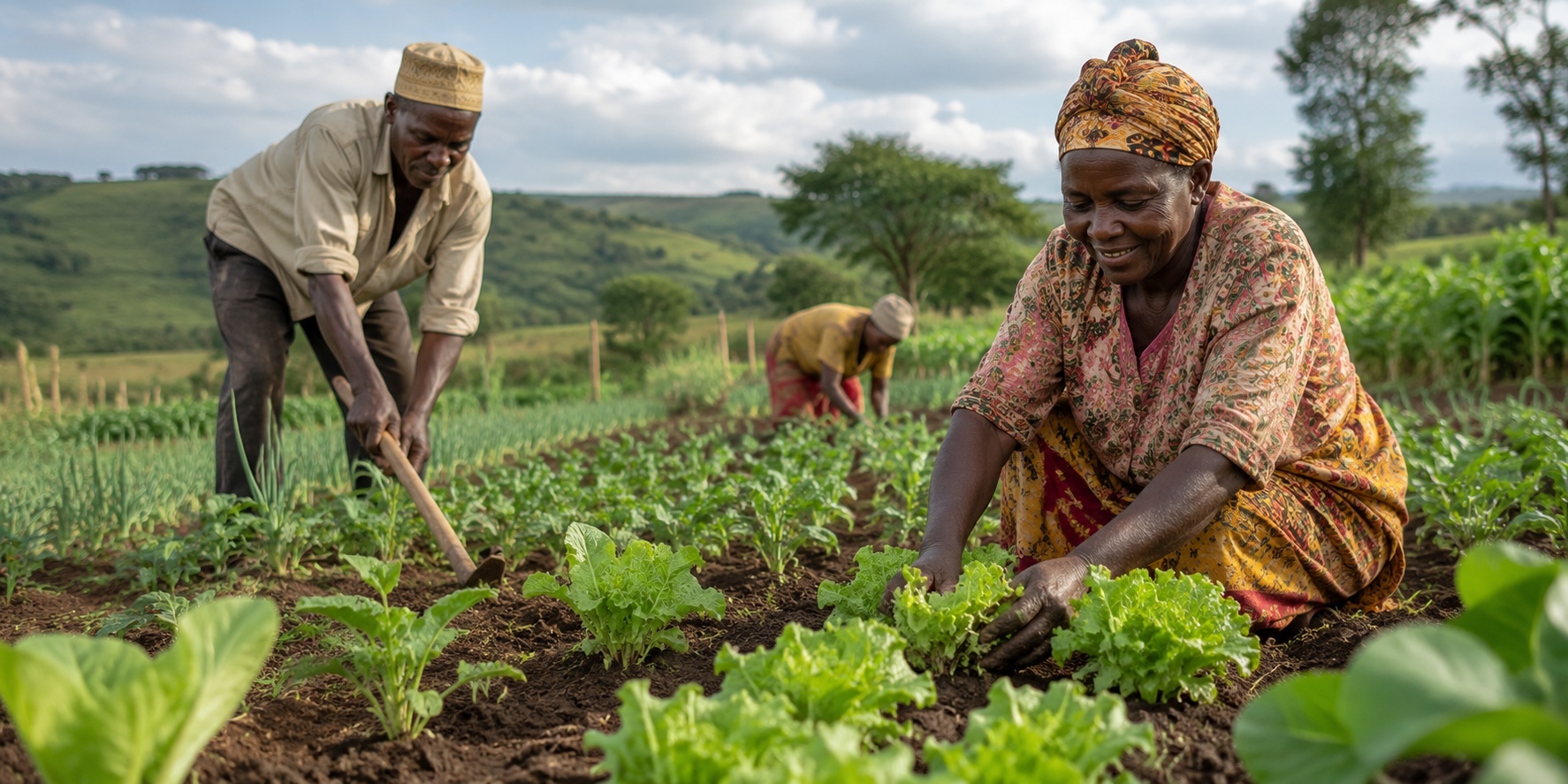
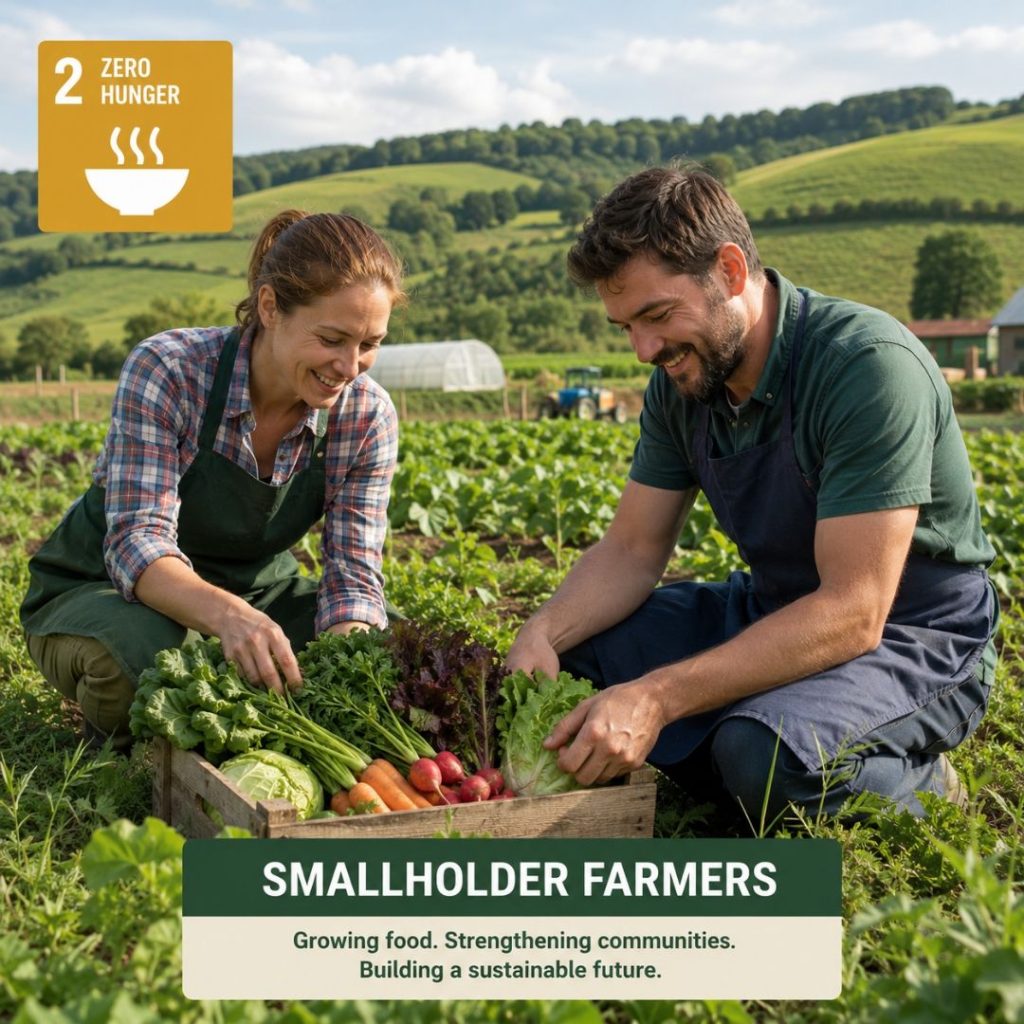
Behind much of the world’s food supply stand millions of small farms rather than massive industrial operations. Smallholder farmers grow a significant share of the food consumed globally, often on just a few acres of land. Their work sits at the center of Sustainable Development Goal 2, which seeks to end hunger and achieve food security for all.
Without smallholder farmers, global food production would look very different. They cultivate staple crops, raise livestock, and supply local markets in communities where large scale agriculture simply does not reach. Therefore, understanding their role is essential to understanding how the world can realistically achieve Zero Hunger by 2030.
This article examines who smallholder farmers are, the obstacles they face, and how targeted support can strengthen food systems everywhere.
Who Are Smallholder Farmers
Smallholder farmers typically operate on small plots of land, often less than two hectares. Despite their limited acreage, they collectively produce a substantial portion of the food consumed in developing regions.
These farmers share several common characteristics:
- They often rely primarily on family labor rather than hired workers
- They frequently grow diverse crops for both subsistence and local sale
- They have limited access to large scale equipment or industrial infrastructure
- They tend to be deeply connected to local ecosystems and traditional farming knowledge
Consequently, smallholder farmers form the backbone of food systems in many parts of Africa, Asia, and Latin America. Their contribution extends beyond feeding their own households. Instead, they supply local markets, support regional food chains, and preserve agricultural biodiversity that larger monoculture farms often overlook
.
How Smallholder Farmers Support SDG 2
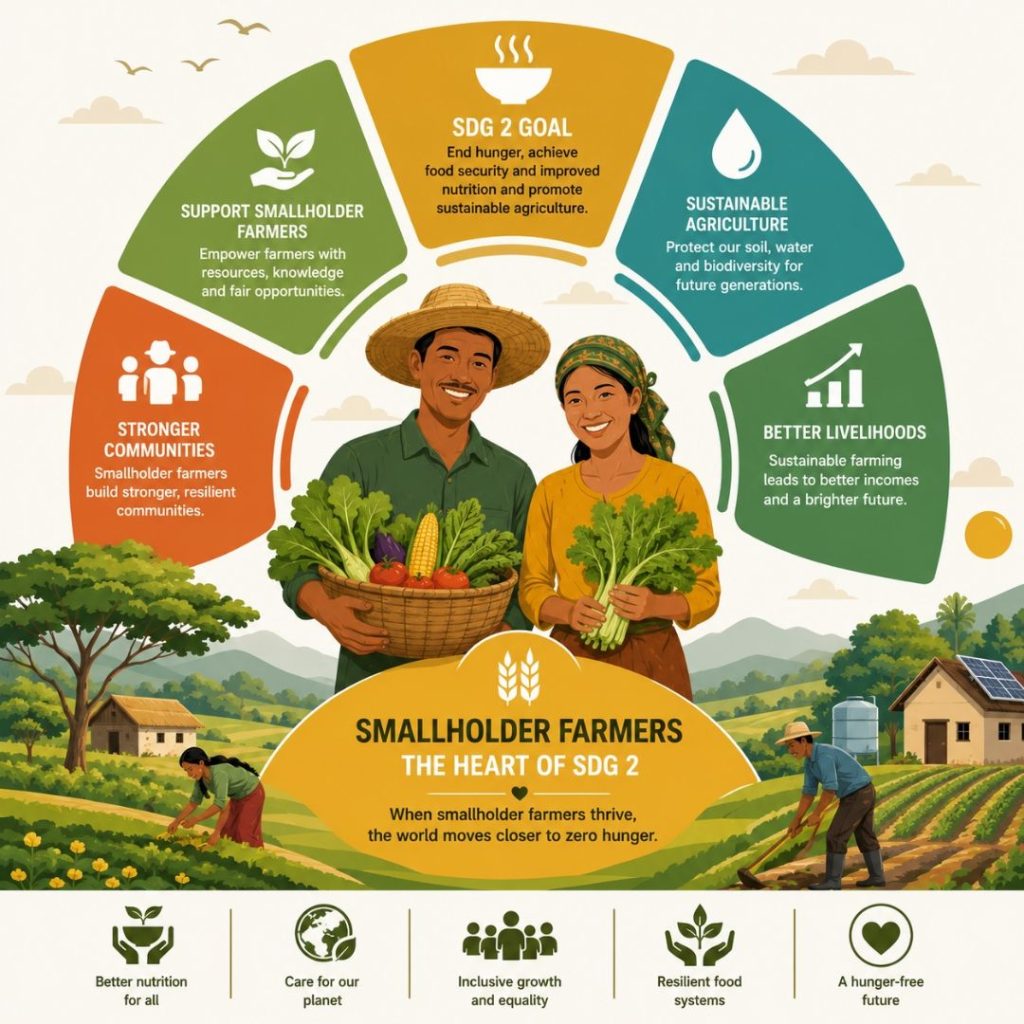
Smallholder farmers directly advance the goals outlined in SDG 2 in several important ways.
First, they increase food availability by cultivating land that might otherwise remain unused. Since they often farm in remote or rural areas, their production fills gaps that larger commercial farms do not address. As a result, communities gain more consistent access to fresh, locally grown food.
Additionally, smallholder farming supports rural livelihoods. Agriculture remains one of the largest sources of employment in developing economies. Consequently, when smallholder farms succeed, entire rural communities benefit through increased income and economic stability.
Furthermore, many smallholder farmers naturally promote sustainable agricultural practices. Because they cannot always afford expensive chemical inputs, they often rely on traditional methods like crop rotation and organic composting. While this happens partly out of necessity, it also means their farms tend to preserve soil health more effectively than industrial alternatives.
Challenges Faced by Smallholder Farmers
Despite their importance, smallholder farmers face persistent challenges that limit their productivity and growth.
Limited access to finance remains one of the biggest barriers. Many smallholder farmers cannot secure loans from traditional banks due to lack of collateral. Consequently, they struggle to invest in better seeds, tools, or irrigation systems.
Climate change and extreme weather also pose serious risks. Unpredictable rainfall and prolonged droughts can devastate an entire season’s harvest. Since smallholder farmers often lack insurance or savings, a single bad season can push families into poverty.
Market access and fair pricing present additional obstacles. Many smallholder farmers sell their crops through middlemen who offer low prices. As a result, farmers often receive only a small fraction of the final retail value of their produce.
Finally, limited access to modern technology slows productivity gains. Without tools like soil sensors or weather forecasting apps, farmers must rely on guesswork rather than data driven decisions.
Improving Productivity Through Innovation
Fortunately, innovation is beginning to close these gaps for smallholder farmers.
Modern farming techniques, such as improved seed varieties and better soil management, help farmers increase yields without expanding land use. Meanwhile, digital agriculture tools are transforming how smallholder farmers operate. Mobile apps now provide real time weather alerts, market prices, and pest identification, often for free or at low cost.
For example, a smallholder cooperative in Southeast Asia recently adopted a simple mobile app to track rainfall patterns and market prices. Within one growing season, farmers using the app reduced crop losses from unexpected rain by adjusting planting schedules. They also negotiated better prices after seeing real time market data, which previously only buyers had access to.
Access to agricultural training further amplifies these benefits. When farmers learn proper techniques for irrigation, pest control, and soil testing, they apply new tools more effectively. Consequently, training programs often deliver returns that go far beyond the cost of the technology itself.
The Role of Governments and Businesses
Smallholder farmers cannot overcome these challenges alone. Governments and businesses play an essential supporting role.
Agricultural policies that prioritize smallholder inclusion can significantly improve outcomes. For instance, subsidies for seeds or fertilizer specifically targeted at small farms help level the playing field against larger operations. Meanwhile, financial support and microfinance programs give farmers access to capital without requiring traditional collateral. This allows them to invest in tools and inputs that boost productivity.
Sustainable supply chain partnerships also matter greatly. When businesses commit to sourcing directly from smallholder farmers, they cut out exploitative middlemen and ensure fairer pricing. Additionally, these partnerships often come with technical support, helping farmers meet quality standards required for larger markets.
Together, these forms of support create an ecosystem where smallholder farmers can grow sustainably rather than simply survive season to season.
Building Resilient Farming Communities
Beyond individual support, resilience often comes from community based collaboration.
Knowledge sharing between experienced and newer farmers accelerates the adoption of better practices. Similarly, cooperative farming models allow smallholder farmers to pool resources, share equipment, and negotiate better prices collectively. This collective bargaining power often gives small farmers leverage they could never achieve individually.
Community based agricultural initiatives, such as shared seed banks or joint irrigation projects, further strengthen resilience. When farmers work together, they spread risk across the group rather than facing challenges alone. As a result, entire farming communities become more capable of withstanding shocks like drought or market fluctuations.
Future Outlook
Looking forward, strengthening food systems will require sustained investment in smallholder farmers specifically, not just agriculture broadly. Their unique position within local food chains makes them essential partners in achieving lasting food security.
Advancing SDG 2 through inclusive agriculture means ensuring smallholder farmers have equal access to finance, technology, and fair markets. As digital tools become more affordable and widespread, the gap between smallholder and industrial farming productivity will likely continue narrowing. However, this progress depends on continued commitment from governments, businesses, and development organizations alike.
Conclusion
Investing in smallholder farmers is not simply a matter of charity. It is a strategic necessity for achieving Zero Hunger worldwide. These farmers already produce a remarkable share of the world’s food despite facing significant structural disadvantages.
Moving forward, collaboration between governments, businesses, and farming communities will determine how quickly the world can close existing gaps. By supporting smallholder farmers with fair financing, modern tools, and reliable market access, the global community can build a more resilient and equitable food future for everyone.