
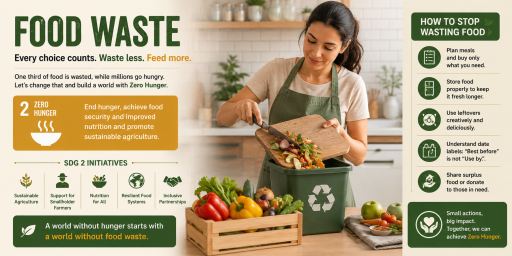
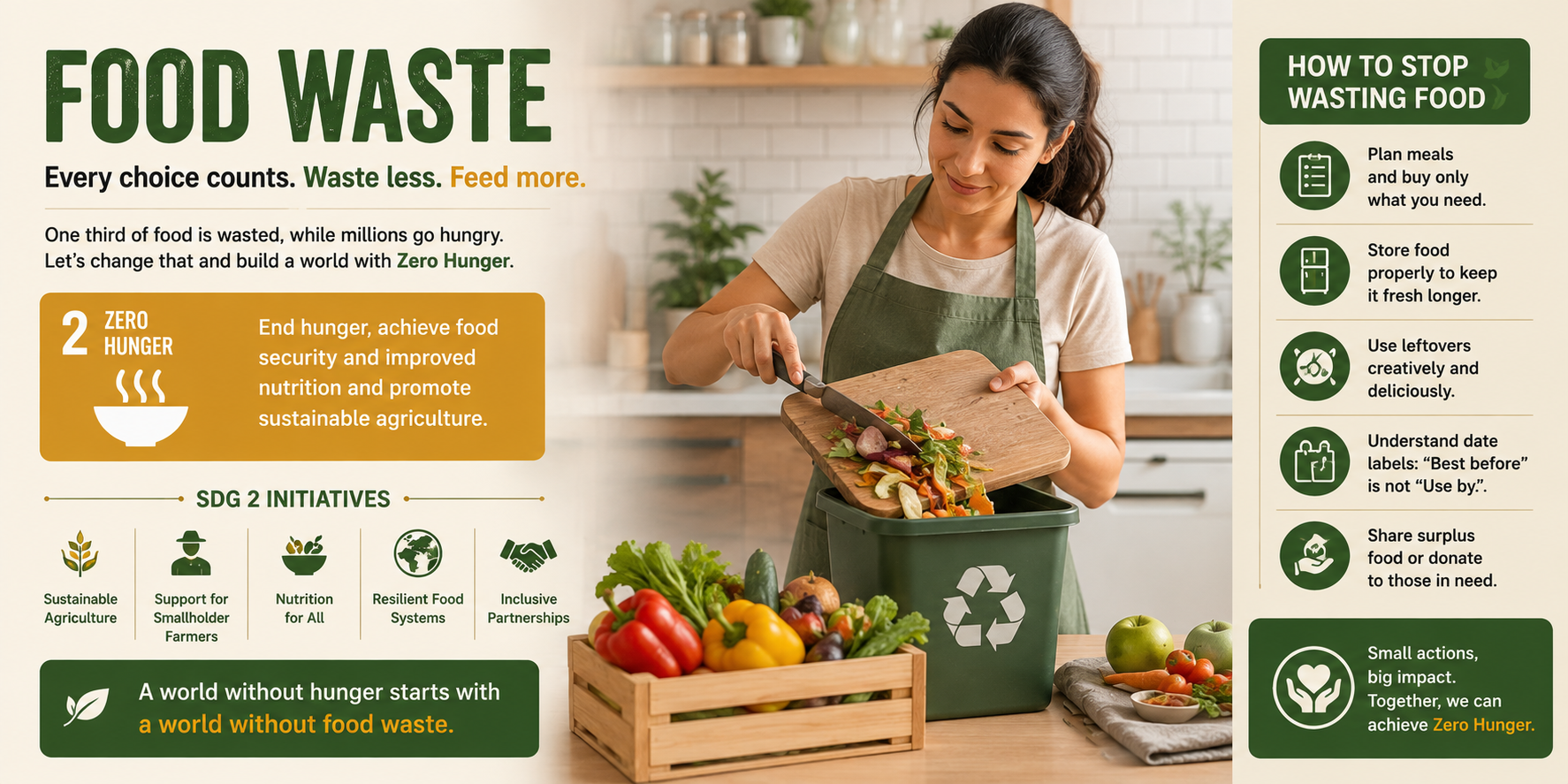
Imagine that nearly a third of all food produced globally never reaches a plate. That reality makes food waste one of the most overlooked barriers to ending hunger. It sits directly at odds with the goals outlined in SDG 2, which calls for zero hunger and universal food security by 2030.
While millions of people face food insecurity daily, vast amounts of edible food end up in landfills. Therefore, reducing food waste is not just an environmental concern. It is a critical piece of the puzzle for achieving lasting food security worldwide.
This article explores what food waste really means, how it undermines SDG 2, and what practical strategies can help build a more efficient food system.
Understanding Food Waste
Food waste refers to edible food that gets discarded, typically at the retail or consumer stage, even though it remains safe to eat. However, food waste differs from food loss in an important way.
Food loss occurs earlier in the supply chain, often during production, harvesting, or storage, usually due to inefficiencies or damage. Food waste, on the other hand, happens later, often because of overordering, spoilage, or consumer behavior. Understanding this distinction matters because each requires different solutions.
Globally, the impact on food security is staggering. Enough food is wasted each year to feed hundreds of millions of people. Consequently, addressing food waste represents one of the most direct ways to increase food availability without producing a single additional crop.
How Food Waste Affects SDG 2
Food waste undermines SDG 2 in several interconnected ways.
First, it reduces food availability at a time when many communities already struggle with access. Since wasted food never reaches consumers who need it, resources spent growing that food essentially go to waste too. As a result, food insecurity persists even in regions with adequate production capacity.
Additionally, food waste creates significant economic losses. Farmers, retailers, and consumers all lose money when food gets discarded rather than sold or consumed. Meanwhile, the environmental consequences are substantial. Wasted food that ends up in landfills produces methane, a greenhouse gas far more potent than carbon dioxide.
Finally, the impact on vulnerable communities is particularly severe. Low income households often face the highest food prices relative to income, and food waste higher up the supply chain effectively drives those prices even higher.
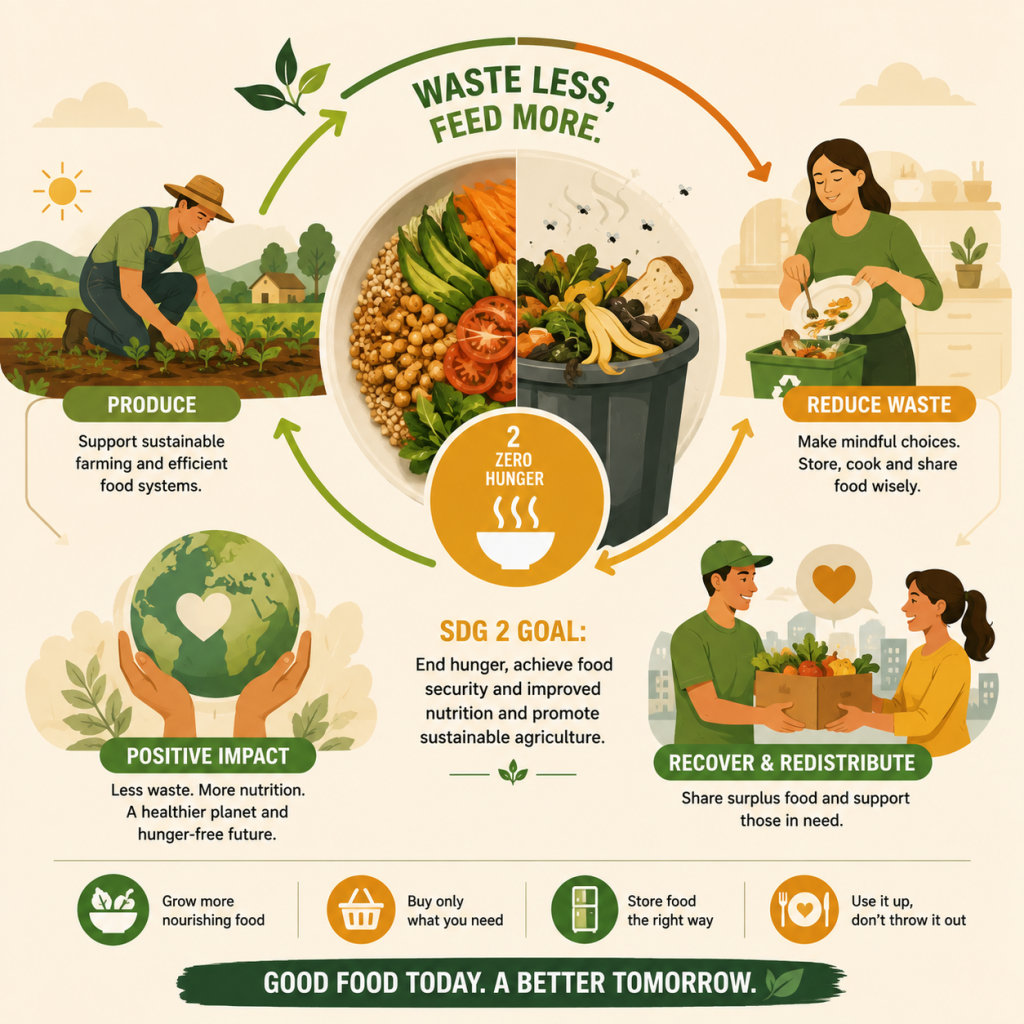
Major Causes of Food Waste
Food waste occurs at multiple stages throughout the food system, each with distinct causes.
- Production and harvesting waste happens when crops are left unharvested due to market oversupply or cosmetic imperfections
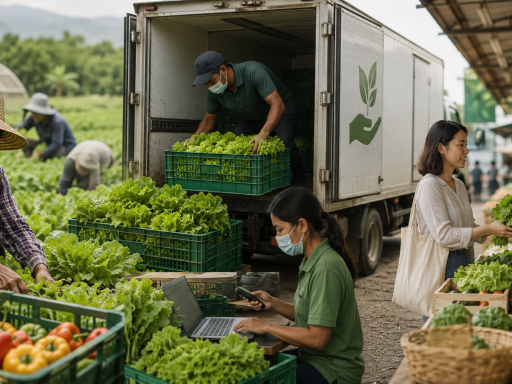
- Transportation and storage waste occurs through inadequate cold chain infrastructure, especially in developing regions
- Retail and food service waste results from overstocking, strict appearance standards, and buffet style overproduction
- Household consumption waste stems from overbuying, poor meal planning, and confusion over expiration date labels
Interestingly, many consumers throw away food that remains perfectly safe simply because they misread a best before date as a safety deadline. This single point of confusion contributes significantly to household level waste worldwide.
Strategies to Reduce Food Waste
Fortunately, practical strategies exist at every stage of the supply chain to reduce food waste meaningfully. Better supply chain management helps prevent waste before it starts. For example, improved demand forecasting allows retailers to order quantities that match actual consumer needs. Meanwhile, consumer awareness campaigns teach households how to store food properly and understand date labels accurately. Food redistribution initiatives also play a powerful role. Organizations that collect surplus food from restaurants and grocery stores redirect it to communities facing food insecurity. Additionally, sustainable consumption practices, such as meal planning and portion control, help households naturally waste less over time.
For instance, a regional grocery chain recently partnered with a local food bank to redirect unsold but edible produce daily. Within six months, the chain diverted several tons of food from landfills while simultaneously supporting food insecure families nearby. This simple partnership demonstrates how straightforward interventions can create measurable impact quickly.
The Role of Businesses in Reducing Food Waste
Businesses hold significant power to reduce food waste at scale. Inventory management systems help companies track stock levels precisely, reducing the likelihood of overordering. Similarly, sustainable packaging extends shelf life and protects food during transport, reducing spoilage related waste.
Responsible sourcing also matters greatly. When businesses commit to purchasing produce regardless of minor cosmetic flaws, they prevent unnecessary waste at the farm level. Furthermore, circular economy practices, such as converting food scraps into compost or animal feed, ensure that even unavoidable waste creates value rather than simply becoming landfill material.
Technology and Food Waste Reduction
Technology is transforming how businesses and consumers approach food waste. Smart inventory systems now use real time data to track expiration dates and stock levels automatically. Meanwhile, AI for demand forecasting helps retailers predict exactly how much product they need, reducing both shortages and surplus.
Digital food donation platforms connect surplus food from businesses directly with charities and food banks, streamlining a process that once relied heavily on manual coordination. Additionally, cold chain innovations, including improved refrigeration and monitoring sensors, help preserve food quality throughout transportation, particularly in regions with limited infrastructure. Together, these technologies make food waste reduction more efficient and scalable than ever before.
Future of Sustainable Food Management
Looking ahead, policy development will play a central role in shaping food waste reduction efforts. Governments that set clear waste reduction targets and standardize date labeling can drive significant systemic change.
Cross sector collaboration between governments, businesses, and nonprofit organizations will also prove essential. No single group can solve food waste alone, since the problem spans the entire supply chain. Meanwhile, continued innovation for zero food waste, from packaging design to redistribution logistics, will help close remaining gaps over time. As these efforts mature, sustainable food management will likely become a standard business practice rather than an optional initiative.
Conclusion
Reducing food waste is critical for achieving SDG 2 because it addresses hunger through efficiency rather than solely through increased production. Every ton of food saved from landfills represents a tangible opportunity to feed someone who needs it. Building sustainable food systems through collective action requires commitment from governments, businesses, and individual consumers alike. As awareness grows and technology continues advancing, the path toward a zero waste, food secure world becomes increasingly achievable.